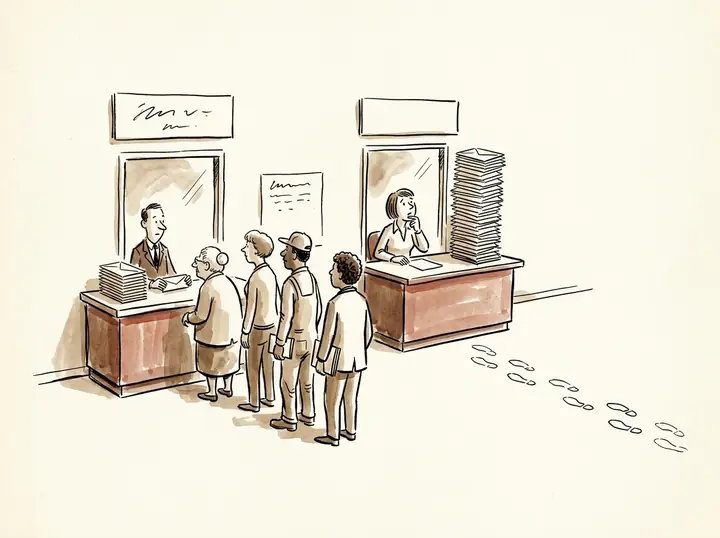
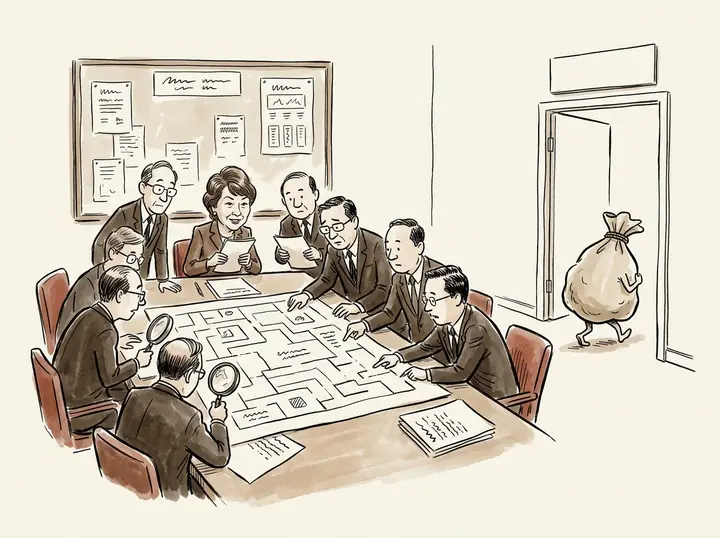
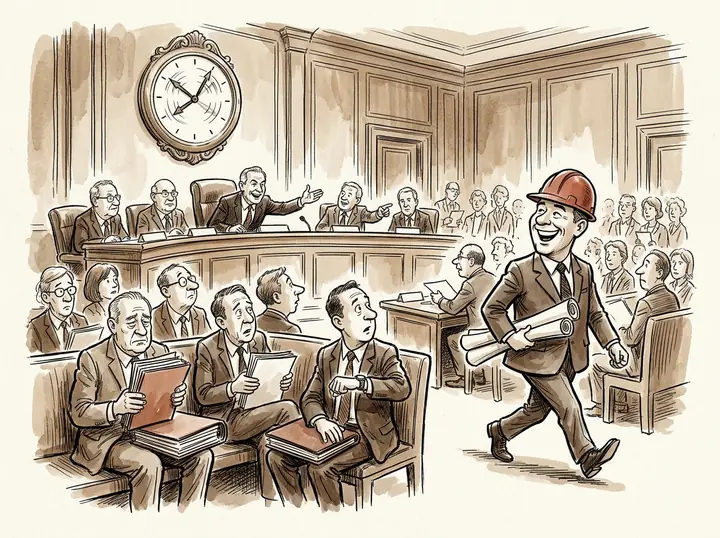
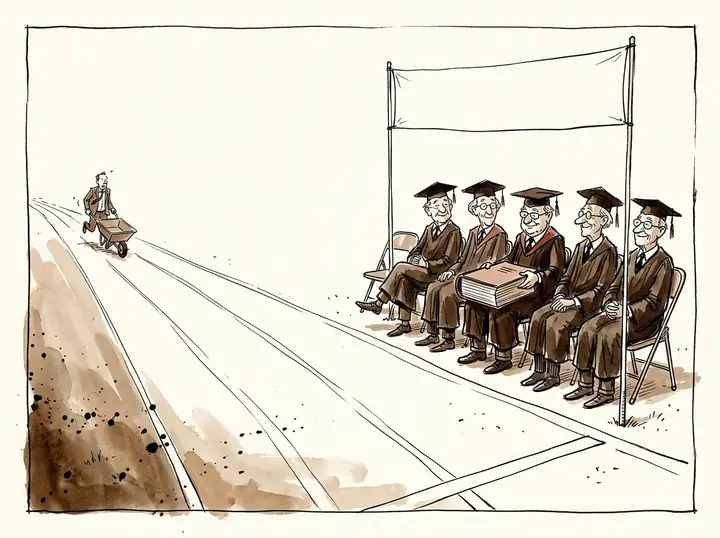
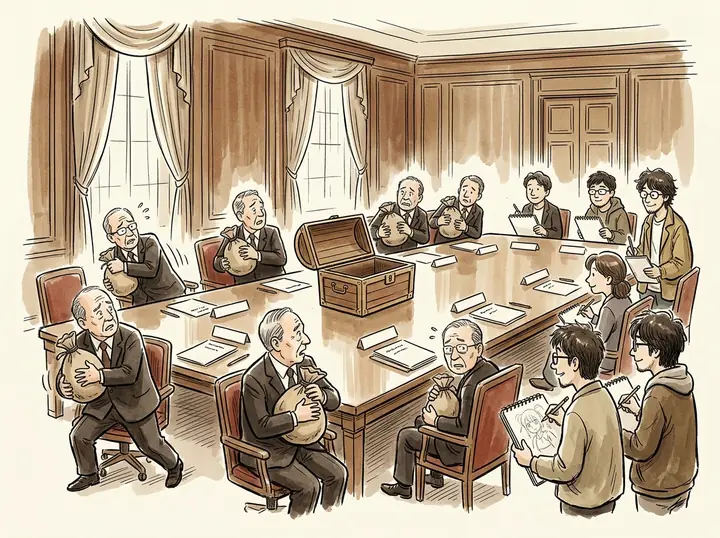
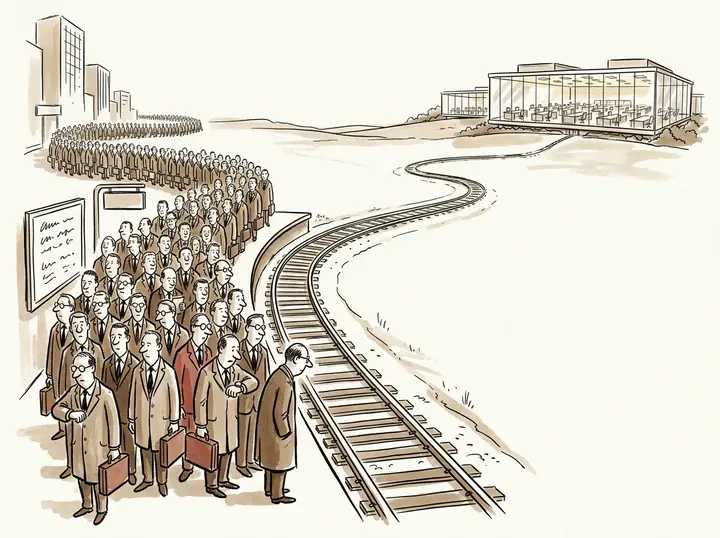
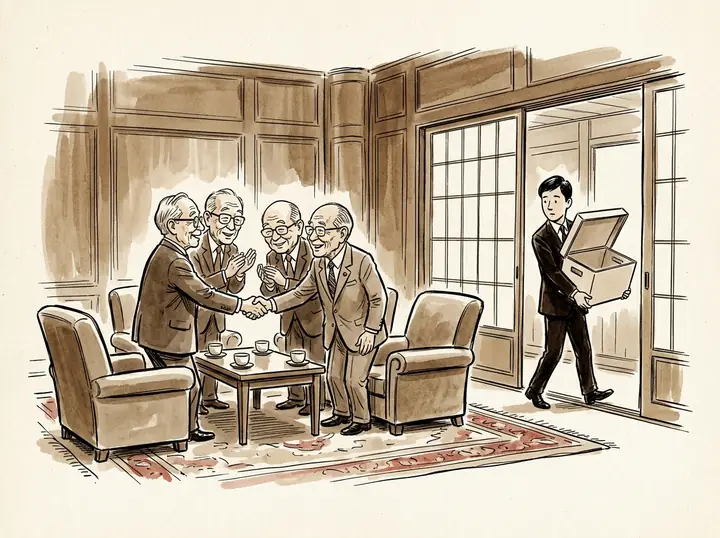
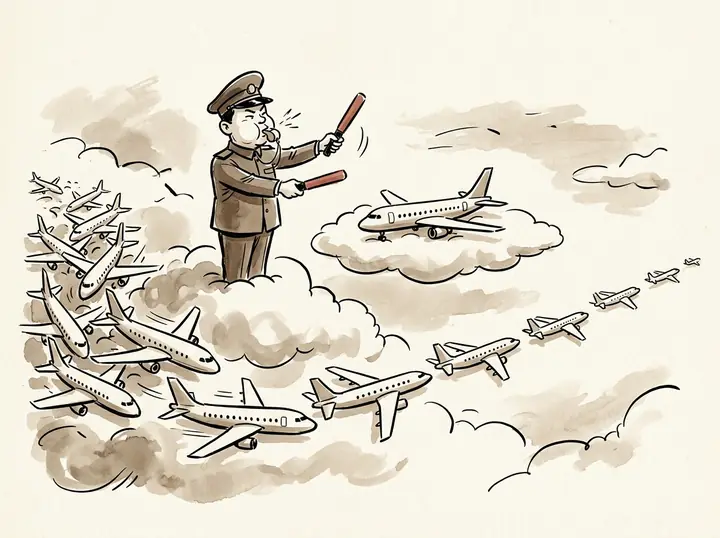
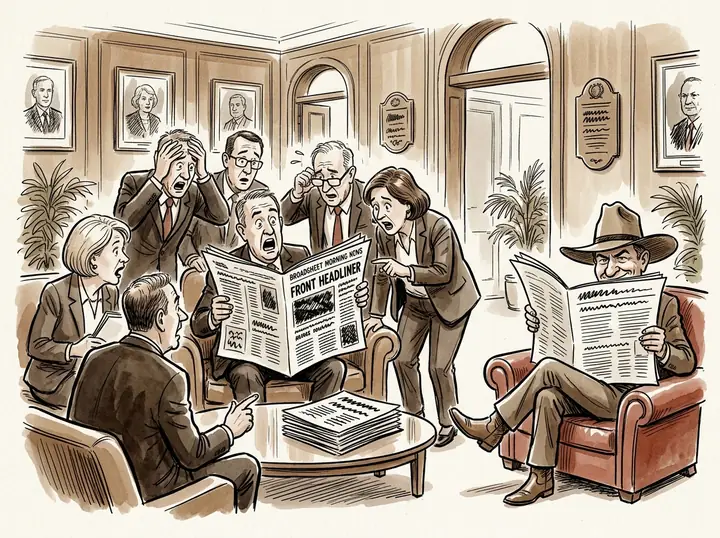
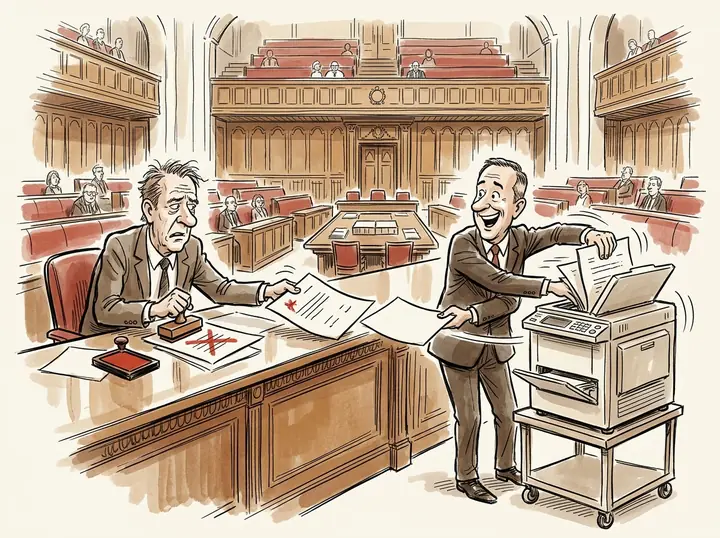
From Beijing to Canberra, Tokyo to Jakarta: plans with five-year horizons, parliaments with long memories and press releases with very tidy numbers. Every capital gets the same treatment.
Monday, November 2, 2026
Beijing
Planned Overnight
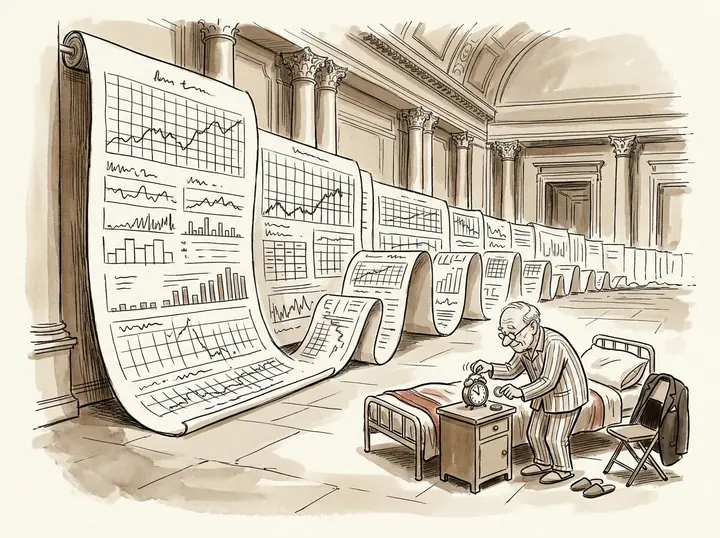
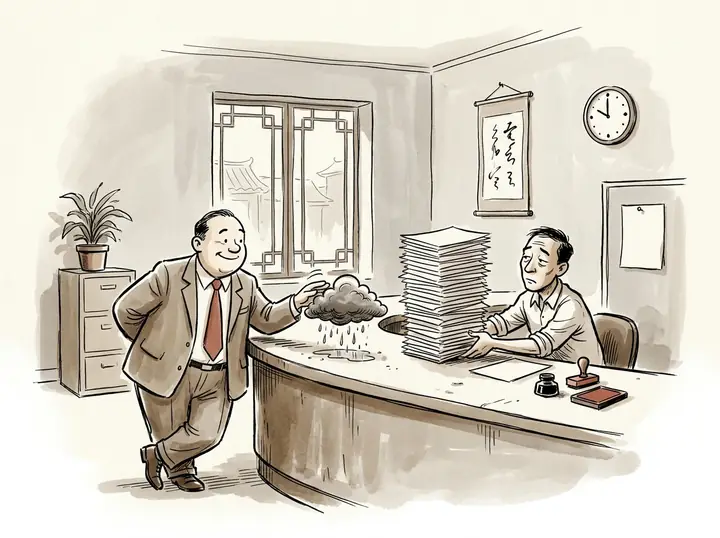
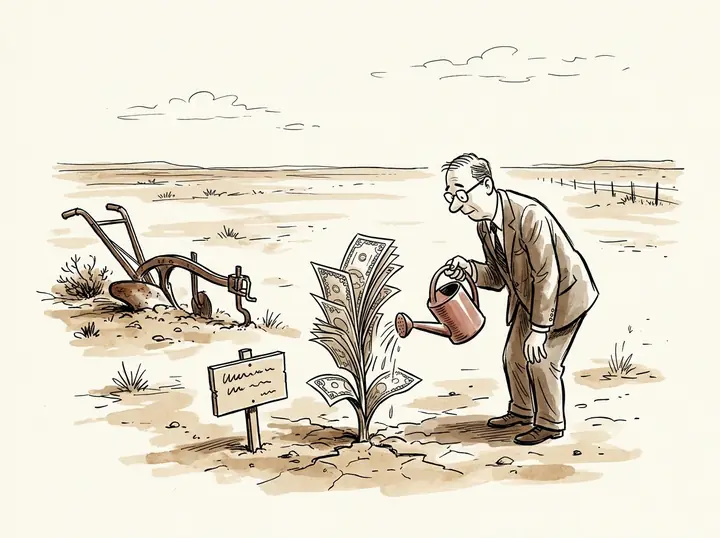
China’s central bank on Monday replaced the seven-day reverse repo rate with the overnight rate as its main policy rate, fixed at 1.25 percent and offered every working day. Seven-day operations will be kept mainly for tax deadlines and month-ends. A country that writes its plans five years ahead now prices its money one night at a time, with a week reserved for special occasions.
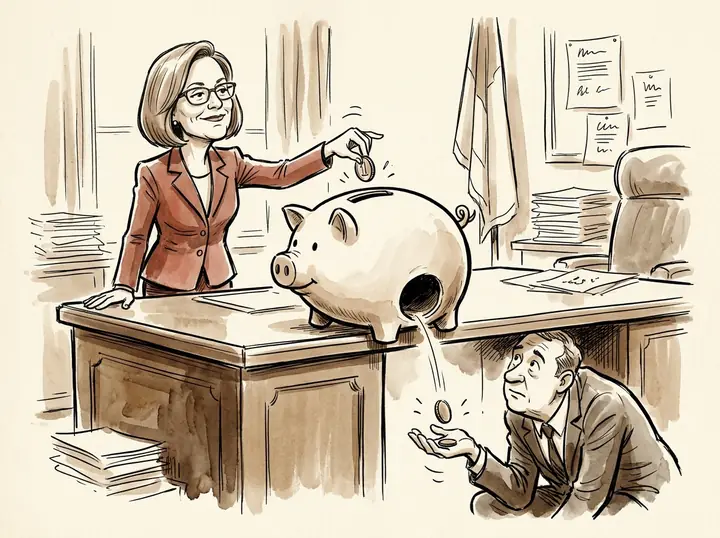
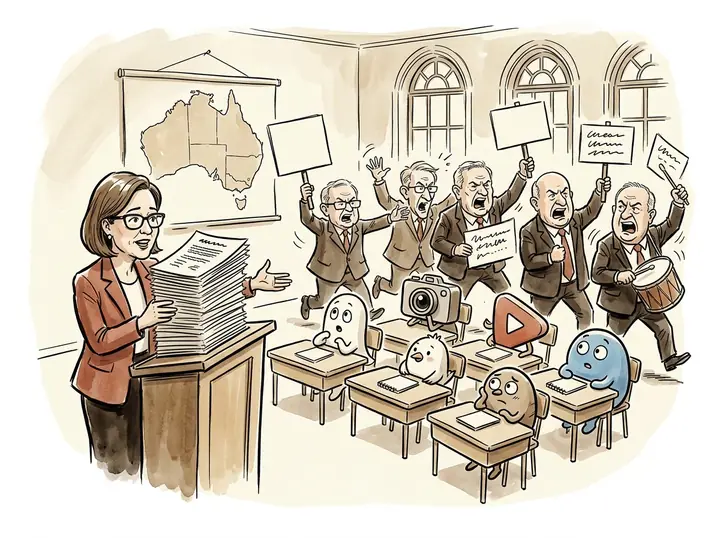
Australia’s finance minister, Katy Gallagher, said on Sunday that Labor was “doing a lot of work on the savings side” but would not promise net savings in December’s budget update, with inflation at 4.3 per cent. The Reserve Bank’s chief economist says its spending is “definitely” adding to demand. Without the word net, a saving is a cut that has already found somewhere new to go.
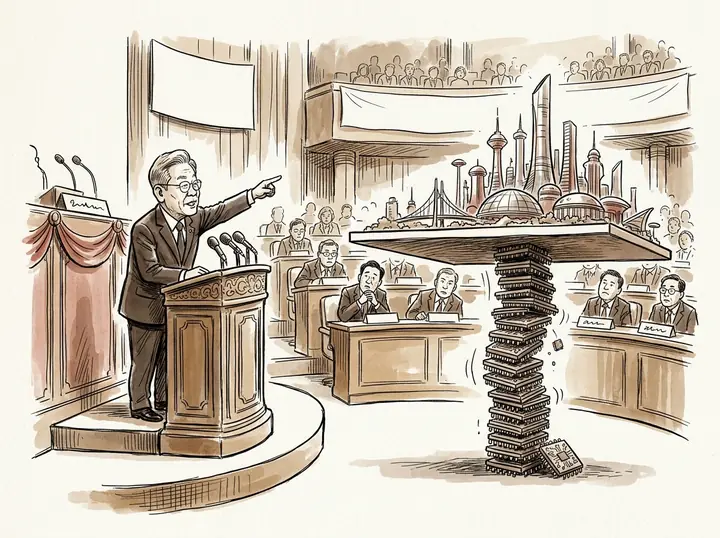
Lee Jae Myung asked South Korea’s National Assembly on Monday to pass a record 820.9 trillion won budget for 2027, up 12.8 percent, with a 162 trillion won future-oriented fund backed by windfall tax revenue from the semiconductor boom. Lawmakers have until Dec. 2. The future will be financed by the present, provided the present keeps selling chips.
At Saturday’s Taipei mayoral debate, the DPP challenger, Puma Shen, proposed a second: “If you can’t decide now, we can add each other on LINE later.” Mayor Chiang Wan-an said he would “wait patiently for the organizing media companies to send invitations and then carry out consultations.” The two have thus held their second debate, on whether to hold one.
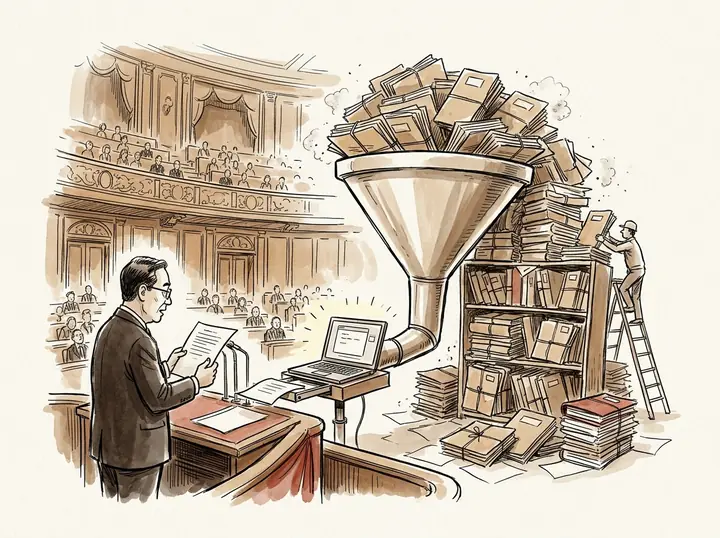
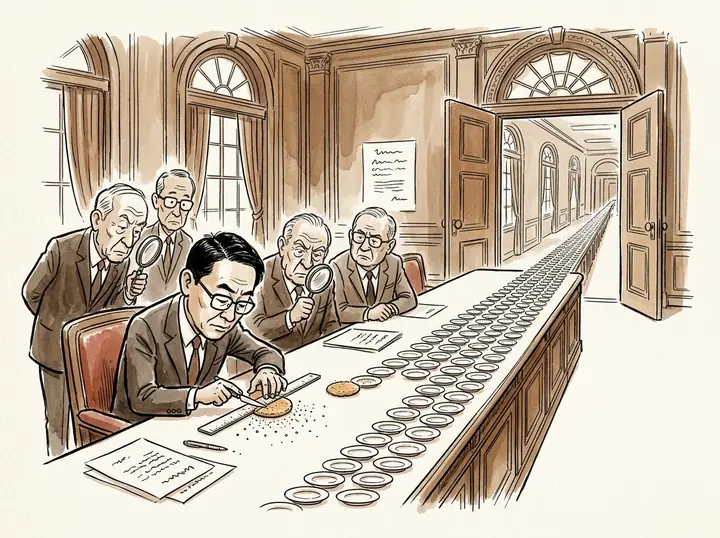
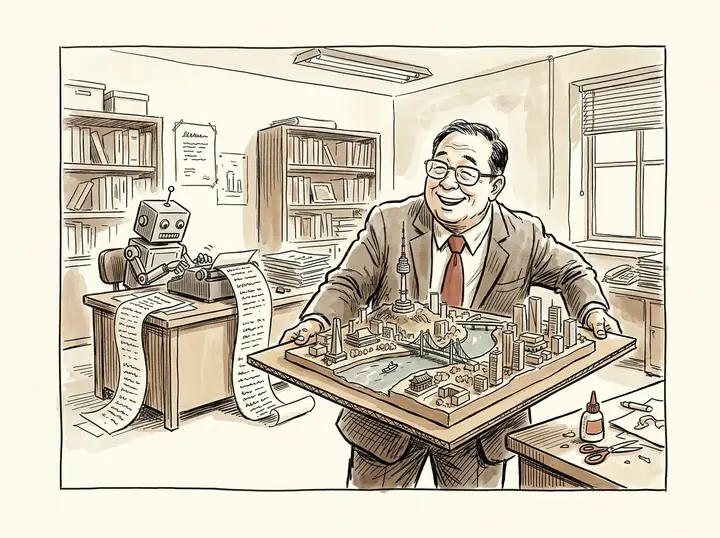
Japan’s Digital Agency is testing an app that drafts the government’s answers to lawmakers’ questions in the Diet, producing several versions within minutes from past government answers and the minutes of earlier deliberations. Officials can choose a “policy explanation” mode or a “political judgment” mode. Built entirely from past answers, the second can exercise judgment only in ways already exercised.
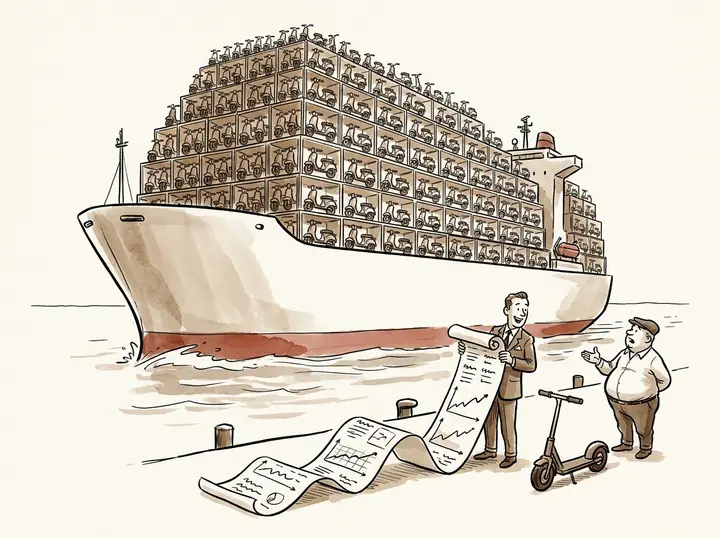
China shipped 26 million electric two-wheelers abroad between January and September, up 28 percent, while sales at home fell 4.8 percent. In Brazil, Didi’s subsidiary 99 has backed a fund aiming to put 600,000 of them on the road by 2035. At this year’s pace, Chinese factories export that many in under a week.
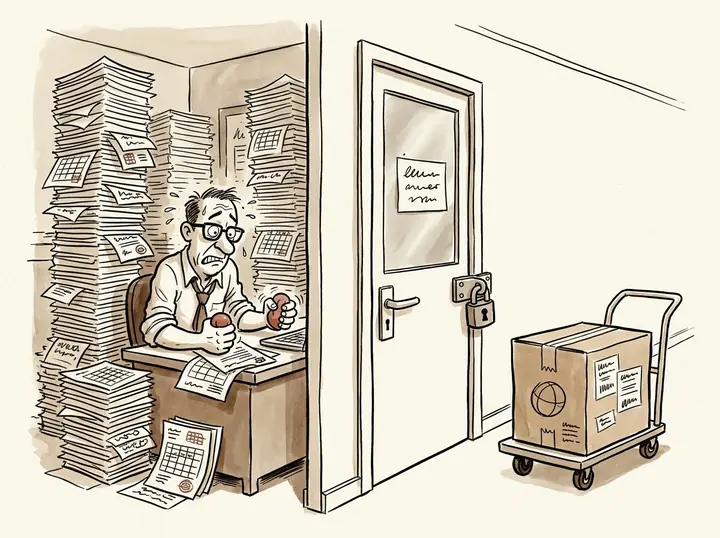
Australia’s federal agencies spent more than $3.4 million on promotional merchandise last financial year, including 5,000 stress balls and 220 yo-yos bought by the Department of Health to carry anti-vaping messages. Under the budget’s clampdown, agencies must now seek approval before buying any more. Every stress ball now comes with an approval process, which is how departments end up needing stress balls.
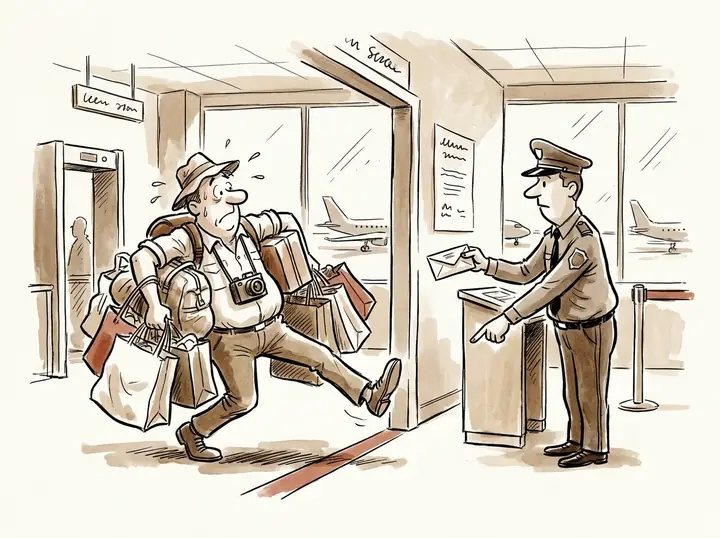
Japan’s tax-free shopping for tourists changed on Sunday: visitors now pay the full price, consumption tax included, and claim it back from customs on departure, for goods bought within 90 days. Suspected resale of tax-free goods inside Japan had been growing. The tax is still waived, but only for shoppers who can show they are no longer there.
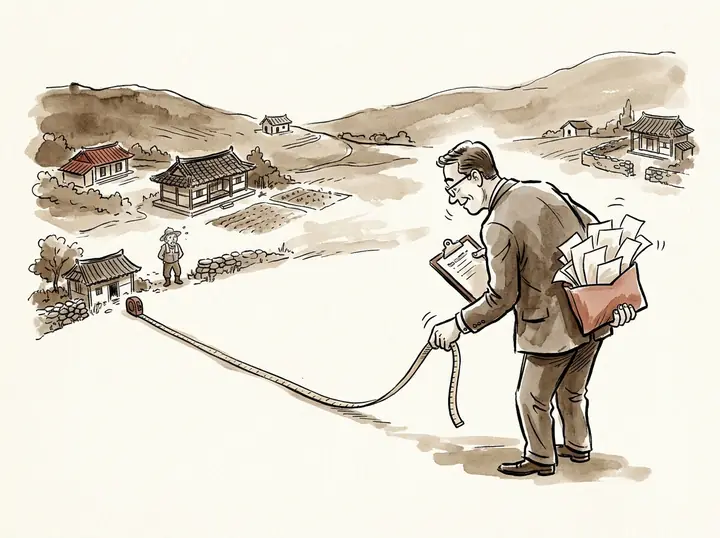
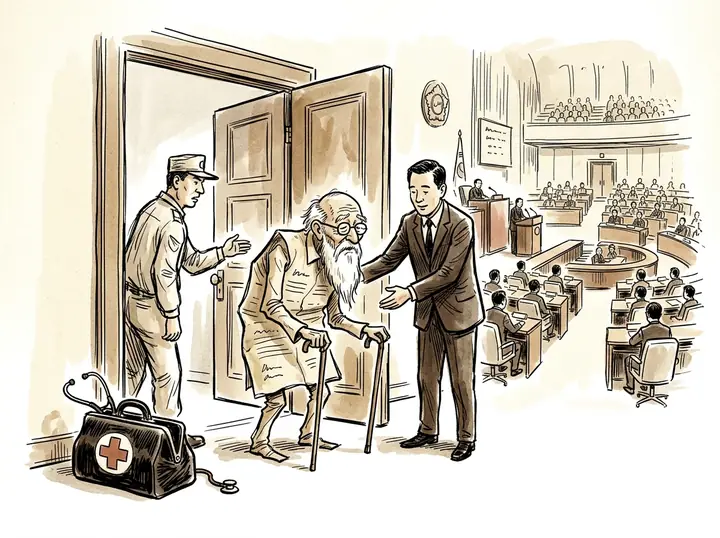
South Korean President Lee Jae Myung paid an unannounced visit on Saturday to a pilot basic income in North Gyeongsang, where residents of depopulating rural counties receive 150,000 won a month in gift vouchers. Seventeen of the 69 counties designated as population-declining take part, and Lee has promised more areas. The other 52 have already qualified, through the very shrinking the payment exists to reverse.
China’s Communist Party closed its fifth plenum, four days on full and rigorous party self-governance, by filling 10 vacant Central Committee seats from its ranked list of alternates. Caixin reports it again passed over several higher-ranked alternates, the third such round since 2022. The order of the list is itself only an alternate.
Australia’s government is drafting a replacement for Ministerial Direction 106, its 2024 student visa crackdown, after refusals reached 24.2 per cent last financial year and public universities face a $2 billion revenue hit over three years. Labor now warns against “overcorrection”, and universities will be consulted in November. Few governments manage to put a tariff on their own fifth-largest export.
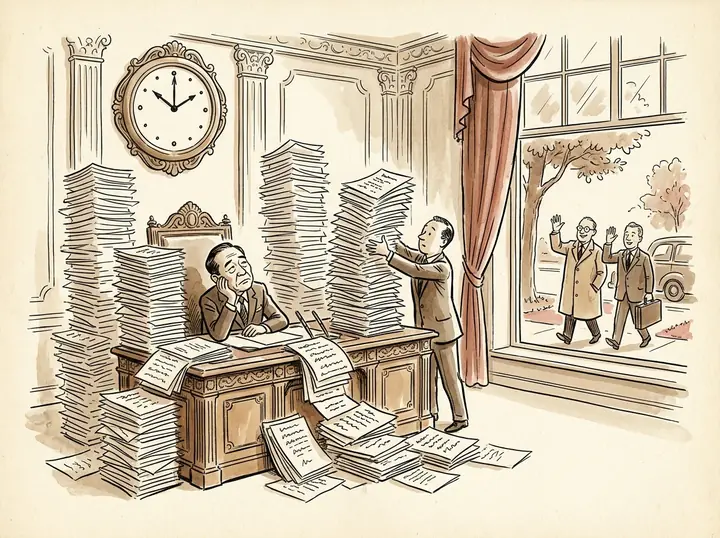
Japan’s 10 new cabinet ministers declared average assets of 99.81 million yen, a figure that leaves out bank deposits and shareholdings. The digital transformation minister reported 781.03 million yen on his own, while two ministers declared nothing in their names. Take one minister out and the cabinet’s average wealth falls by three quarters.
Japan’s government still declines to declare the end of deflation, although the Bank of Japan says underlying inflation has reached its 2 per cent target. The chief cabinet secretary says the matter “needs to be judged carefully”; aides add that a declaration “would have little meaning.” The government is meanwhile busy with measures against rising prices. Tokyo has a programme for inflation and no official view on whether prices are going up.
China’s foreign exchange regulator, SAFE, has published a draft notice of 11 measures to ease cross-border investment and financing, Caixin reports. One would cut the risk conversion factor for eligible foreign-invested companies that borrow from overseas affiliates, widening their room to borrow. Feedback is due by 22 November. The risk has not been reduced, only converted, and at a kinder rate.
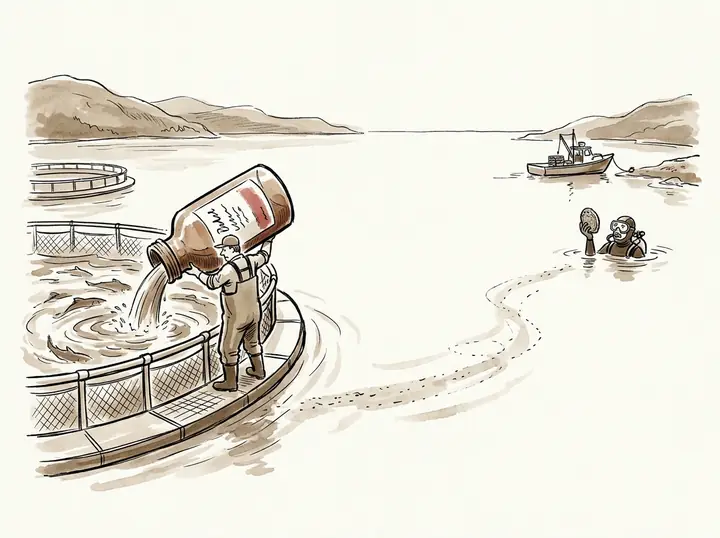
Abbey Animal Health has asked Australia’s veterinary medicines regulator, the APVMA, to “increase the dose rate” of the antibiotic florfenicol on Tasmanian salmon farms and extend its use to a second zone, ABC News reports. In March the regulator revoked the earlier permit over “unacceptable risk of residue exposure to non-target species,” after traces reached abalone 14 kilometres away. Told the dose travelled too far, the applicant would like it to travel further.
South Korea’s Fair Trade Commission will fine the biotech firm Celltrion 630 million won over unfair subcontracting, The Korea Times reports. In December 2022 the company cancelled orders for 37.17 million undelivered COVID-19 test kits, though its subcontractor was not at fault. Celltrion calls it a civil dispute and plans legal action. At about 17 won per cancelled kit, the fine is the cheapest test in the whole affair.
Japan’s government is considering a benefit of about 5,000 yen a year for low-paid workers, according to documents given to the lower house Financial Affairs Committee, Jiji Press reports, alongside the planned two-year drop in the food levy to 1%. The figure came from dividing 600 billion yen by the population. A benefit for the lowest earners was sized by sharing the money among everyone.
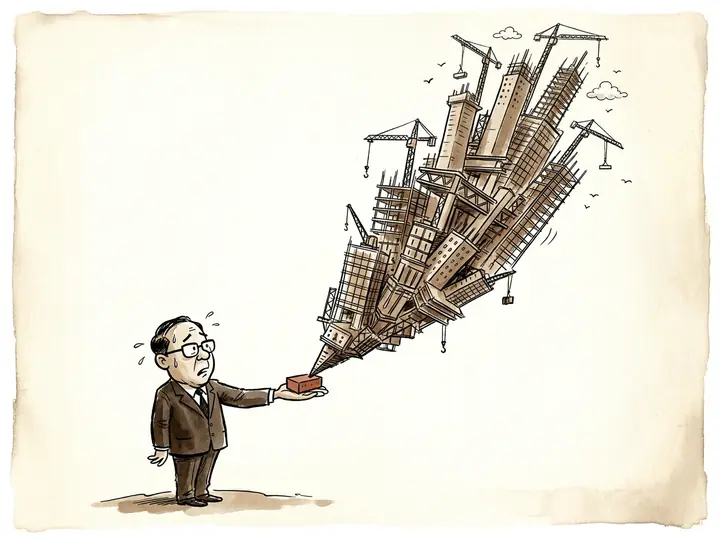
China’s three policy banks have finished issuing this year’s 800 billion yuan in new policy-based financial instruments, Xinhua reports. By their own figures, the money backs projects with total investment of more than 11.5 trillion yuan. About fourteen yuan of project now stands on each yuan of capital, a ratio that, at a property developer, was called the crisis.
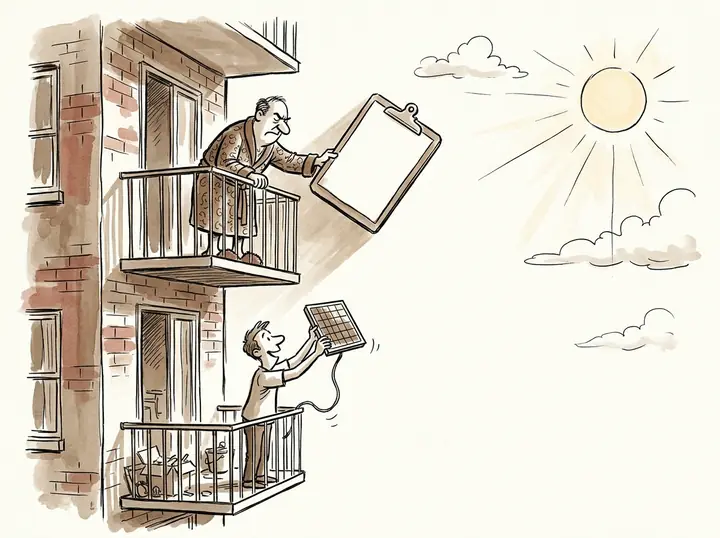
Western Australia will become the first state to lift its ban on plug-in balcony solar, ABC News reports. Energy Minister Amber-Jade Sanderson said “for too long, the benefits of cheap solar have been out of reach for anyone who doesn’t own their roof.” Landlords and body corporates must still agree to the panels. Renters may now have the sun, with the owner’s permission.
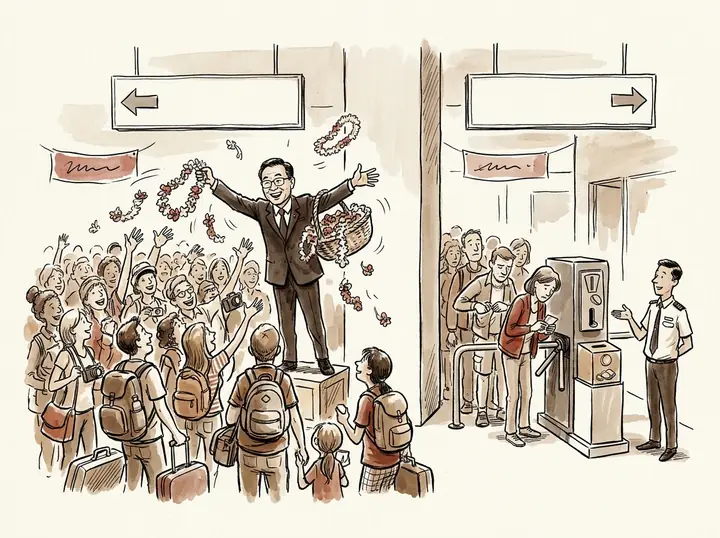
South Korea’s culture minister, Chae Hwi-young, said on 28 October that “Korea is fully preparing to welcome 30 million and eventually 40 million overseas travelers,” The Korea Times reports. He promised to address overtourism concerns, and said Korea should raise its departure tax to match international standards. Overtourism, it has been decided, will be handled at the exit.
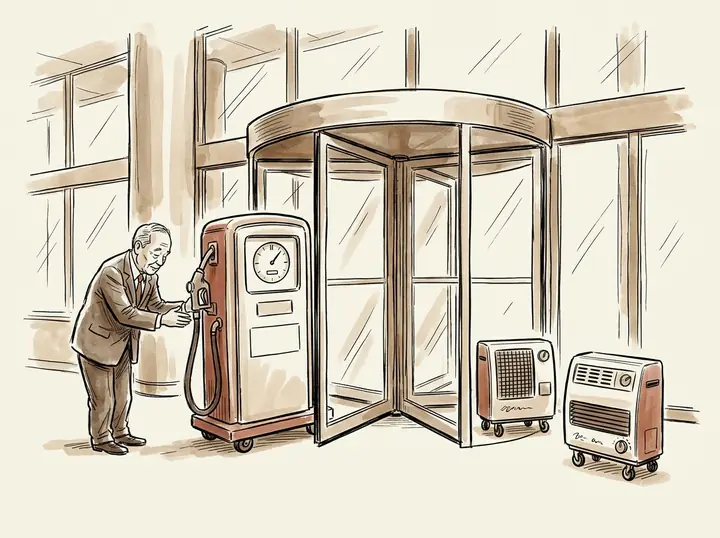
Japan’s ruling Liberal Democratic Party proposed on 26 October tapering the gasoline subsidy by about 5 yen a month from December, Jiji Press reports. The same proposal calls for resuming aid on electricity and gas bills for winter. The party wants “a smooth transition of the subsidy program to a sustainable one.” It will be sustainable in the sense that there will always be one.
New Zealand First’s ten-point rail policy, released on 27 October, includes ventilation and passing loops for the Kaimai Tunnel, 1News reports. The Greens’ plan, released earlier in October, also included Kaimai ventilation and passing loops. Leader Winston Peters said, “That sort of ideological idiocy is best left to the Greens.” The idiocy has been left with the Greens; the tunnel has been taken.
Australian independent MP Sophie Scamps plans to amend Labor’s platform duty of care legislation to create an online services ombudsman inside the Telecommunications Industry Ombudsman scheme, the ABC reports. The ombudsman “stands ready to expand our role to help people when things go wrong online.” The office that hears complaints about the connection would hear complaints about everything at the other end of it.
China’s chilli sauce maker Lao Gan Ma is under fire after an executive reportedly said one production line went “from over 600 to just 48” workers after AI pepper inspection, Sixth Tone reports; the State Council had just urged “slowing down the impact of AI-related job replacement.” On Monday the company’s HR said he had cited no staffing figures. The jobs were automated last year; the figures were retired on Monday.
Hong Kong’s securities regulator has approved the city’s first tokenized funds for round-the-clock secondary trading by retail investors, Caixin reports: two tokenized money market funds managed by China Asset Management (Hong Kong). A money market fund’s whole job is to sit still, and in Hong Kong it can now do so around the clock.
South Korea’s culture ministry said on 27 October it will merge the Gugak Broadcasting Foundation, which runs Gugak FM, with the Korean Traditional Performing Arts Foundation, under a plan to reorganize public institutions with overlapping roles, The Korea Times reports. No effective date or name has been set. For now the merged agency has no name, no date and, at last, no overlap.
Japan’s agriculture ministry plans to buy back another 100,000 tons of rice from the private sector to refill government stockpiles, Jiji Press reports. It has released 590,000 tons since March 2025, leaving reserves well below the 1 million tons considered appropriate, and now wants to store rice for three or four years instead of five. Lately, none has stayed long enough to find out.
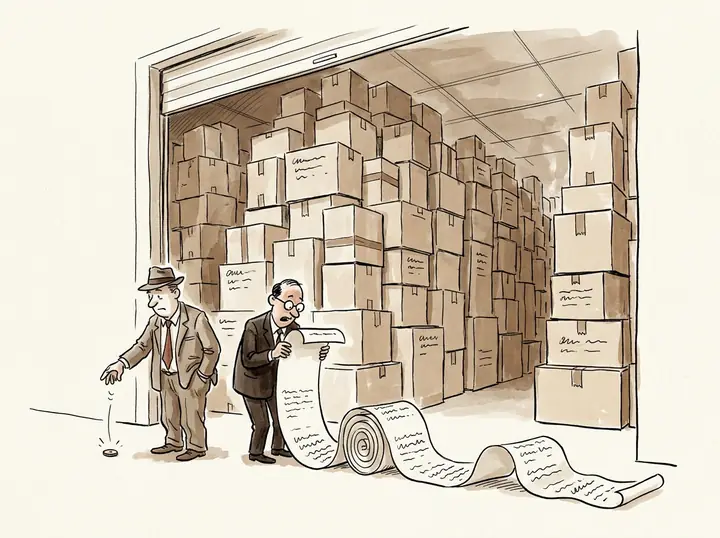
Australia’s National Emergency Management Agency told Senate estimates it had paid $924,664 to KordaMentha and KPMG for payroll reviews, remediations and audits, the ABC reports. KPMG found about $1.86 million in potential underpayments and $1.54 million in potential overpayments. Net, the staff are owed about $320,000, roughly a third of what it cost to find out.
China’s humanoid robot maker Unitree Robotics has warned investors of valuation risks after its shares surged more than 65% in seven trading days, Caixin reports. The rally is only a partial recovery from a steep fall after the listing, when the shares opened at 1,100 yuan. The company has warned of vertigo at a height its shares have not yet regained.
South Korea’s Ministry of Planning and Budget will start identifying spending cuts for its 2028 budget in November, Yonhap reports, after writing 88 cuts worth 44.2 trillion won into the 2027 proposal. AI assistants will help sift the candidates. The 2028 budget is being trimmed before the 2027 one has spent a single won.
Taiwan’s legislature on 27 October sent the government’s NT$3.92 trillion 2027 budget to committee, including NT$235.7 billion for NT$10,000 cash handouts, Focus Taiwan reports; the Executive Yuan lists five groups who qualify. The opposition Kuomintang’s rival bill offers NT$20,000, but refers only to “eligible individuals” without saying who they are. Twice the money, for persons to be announced.
Japan is reviewing the subsidies that hold regular gasoline near 170 yen a litre, Jiji Press reports; Prime Minister Sanae Takaichi will consider the amount “and an exit from the aid program.” The fund held about 560 billion yen in September and is expected to run out soon. The government is considering an exit; the fund has already found it.
Australia’s Senate environment committee ran about four hours behind schedule on the first day of estimates, the ABC reports, so it dropped the Climate Change Authority, the Australian Renewable Energy Agency and the energy infrastructure commissioner from its roster. Snowy Hydro was moved up to appear next. It was the first thing connected to Snowy 2.0 to arrive early.
Legal scholars at China’s Zhejiang University have published a model artificial intelligence law, 99 articles in eight chapters, down to a 15-working-day deadline for handling complaints, Caixin reports. It is an academic proposal, not a bill. The Ministry of Justice has said it will accelerate work on an AI law this year. The professors are already waiting at the finish line.
South Korea’s aid agency, KOICA, will sell the Yatamauca farm in Argentina, 20,882 hectares bought in 1978 for $2.12 million to help Korean immigrants settle and farm, The Korea Times reports. Surveys found the land unsuitable, so it was never developed; since 2001 it has cost 4.95 billion won to maintain, land taxes included. The farm never grew anything except its tax bill.
Japan’s government held the first meeting on Thursday of a panel planning a new body for the content industry, anime and video games included, aiming for a 2027 launch, Jiji Press reports. It would centrally administer subsidies now overseen by different ministries and agencies, and fight piracy. Several ministries surrendering their subsidies to one body is a plot even anime would call far-fetched.
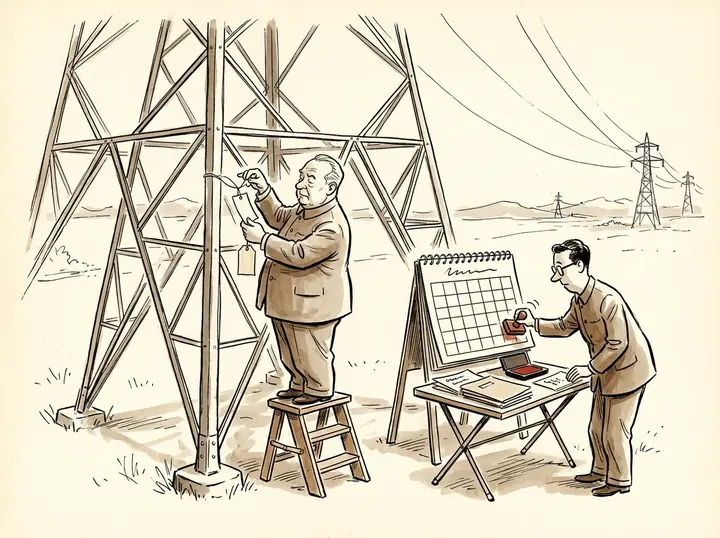
China’s National Development and Reform Commission has published draft rules for the spot electricity market, replacing interim regulations issued in 2023. The new rules would take effect on 1 January 2027 and stay in force for five years, paving the way for a unified national market by 2030. Comments close on 18 November. Interim has been promoted to temporary.
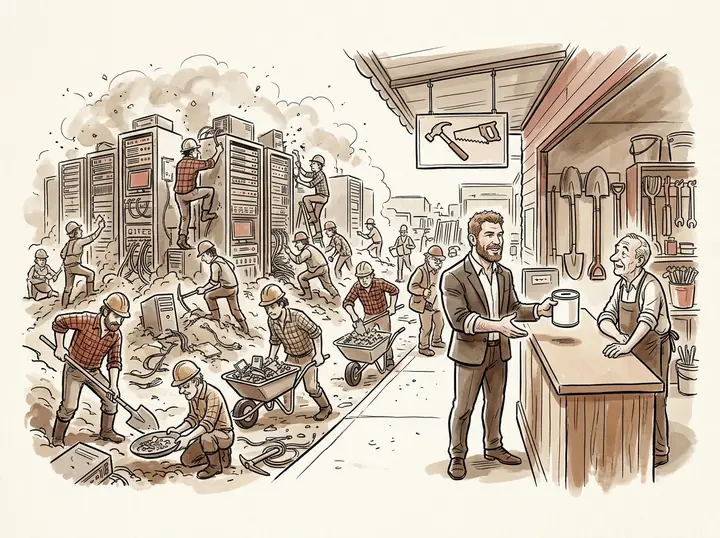
Australian independent senator David Pocock wants a 5 percent levy on the revenue of data centres operating in Australia, raising $500 million over four years. He calls the AI boom a gold rush and wants the country to avoid repeating the mistakes of the mining boom. In a gold rush the money is in the shovels, so the senator has gone to the hardware store.
South Korea-based accounts published 1,845 AI models on Hugging Face between January and August, and 49.3 percent were built on Chinese foundation models, against 14.9 percent on domestic ones, a Rockbridge Network Korea report found. Alibaba’s Qwen alone accounted for 864. Seoul has a national AI foundation model project. The foundation is in Hangzhou.
Japan’s opposition parties on Sunday urged Prime Minister Sanae Takaichi to explain her consumption tax cut bill to the Diet in person. The bill cuts the tax on food to 1 percent for two years and then returns it to 8 percent; Komeito said a bill creating a new system without specific figures was unprecedented. The bill has three numbers. The opposition would like a fourth.
New Zealand’s Opportunity party, campaigning for the 7 November election, would create a Future Generations Commissioner to hold governments to account for the long-term effects of their policies, at about $5 million a year. The commissioner would be appointed through Parliament for a five-year term. Parliamentary terms are three years, so the long view would finally have tenure.
China has proposed requiring cars with Level 3 or stronger autonomous driving to carry blue-green exterior lights showing that self-driving is switched on, Caixin reports. The same rules would phase out unauthorized exterior lights on existing cars, a move aimed at “curbing potentially distracting designs of smart vehicles.” For the first time, a car will signal what its driver is not doing.
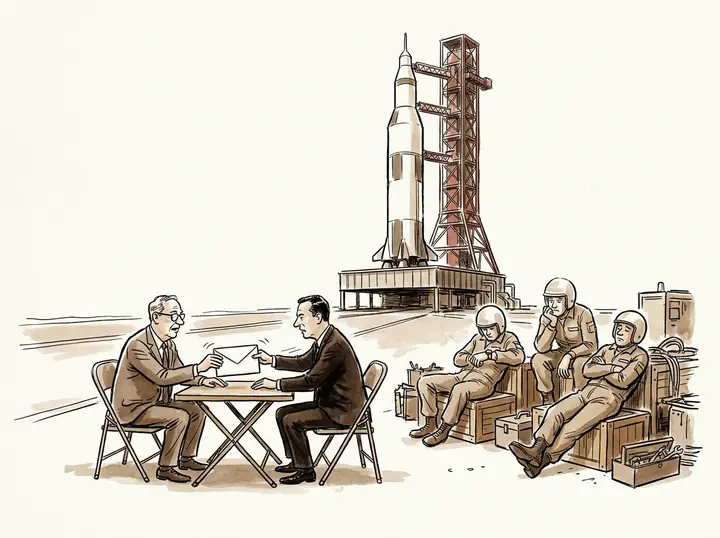
Australia’s science minister, Tim Ayres, said on Friday the government had “submitted a final bid” to the European Space Agency to send Australian of the Year Katherine Bennell-Pegg to the International Space Station. The agency’s first offer of a seat reportedly cost $100 million, and the government has not said what it bid. “It does require careful fiscal management,” Ayres said. Every launch has a countdown. This one has a counteroffer.
Australia’s Snowy 2.0 pumped hydro scheme will now cost up to $25 billion, the ABC reports, against $12 billion at its 2023 reset and an original budget of $2 billion. First power has slipped to early 2029. Energy Minister Chris Bowen called it “a geological and engineering fact that it is just impossible to deliver it any more cheaply.” By price, the project is now on about version 12.5.
South Korea’s science minister, Bae Kyung-hoon, told a National Assembly audit on Friday that the government would “swiftly come up with response measures from a pan-ministerial level” to smart glasses that can film covertly. Authorities have recorded three cases of illegal filming with the glasses so far this year, according to data from a ruling party lawmaker. With every ministry on the case, three cases may not go round.
Japan’s industry minister, Ryosei Akazawa, said on Friday he had told ministry staff to set up a team of white hat hackers at the government-affiliated Innovation Platform Agency within the next month, Jiji Press reports. The team will run simulated cyberattacks to find weaknesses. “We want to go with the idea of attacking more than attackers do,” he said. If it works, the busiest hackers in Japan will be civil servants.
China’s customs introduced an export category this year for “intelligent bionic robots,” and from January to September shipped 16,559 of them to 108 countries and regions, worth $206.95 million, the Korea Times reports. That is about $12,500 a robot, roughly half the price of Ubtech’s 1.68-meter U1 humanoid. Somewhere in the customs data, a good many robots are being counted from the waist up.
Several Australian government websites went offline after AI found a flaw in PHP, the ABC reports, and the Australian Signals Directorate said it was “making fixes to its own website.” Industry Minister Tim Ayres said, “This isn’t a breach,” and the shadow minister credited a “friendly AI agent.” The agency that tells Australians to patch quickly was, for a while, unable to tell them anything.
Hong Kong’s Election Committee poll on November 22 will be contested in 31 of 36 subsectors, up from 13 in 2021, with 1,115 candidates for 982 seats, the SCMP reports. Observers say Beijing aims to “foster competition within pro-establishment camp.” The committee picks the next chief executive in March. The race is open, provided everyone runs in the same lane.
Hong Kong’s Legislative Council has used AI for the first time to produce an overview of a six-session debate on the city’s first five-year plan and the policy address, the South China Morning Post reports. Talent and the Northern Metropolis were discussed most. The overview goes to the government and to lawmakers “for reference.” The lawmakers can now learn what they said.
South Korea’s President Lee Jae Myung posted answers from Google’s Gemini under the heading “I asked Gemini,” to defend having investigative chiefs attend Cabinet meetings, the Korea Times reports. The opposition answered with Gemini replies of its own, one read out at an audit. Gemini has now agreed with the president, the opposition leader and the audit, a coalition no human in Seoul has managed.
Japan’s industry ministry intends to put another 400 billion yen into the chipmaker Rapidus over three years through fiscal 2029, bringing the state’s total to 650 billion yen, Jiji Press reports. The money is meant to raise the company’s equity ratio so that commercial lenders find it easier to lend. The most reassuring thing Rapidus can show a bank is the government.
China’s central bank governor, Pan Gongsheng, said on 19 October the bank would study making overnight operations its main policy tool “at an appropriate time,” Caixin reports. He also said it would phase out the benchmark deposit and lending rates, unchanged since October 2015 and still used in some court calculations. China is retiring a rate that did not move for eleven years in favour of one that lasts until morning.
Australia’s Prime Minister Anthony Albanese told parliament the $6.05 million federal grant to Marrickville Golf Club was to fix sewage problems caused by flooding. Documents obtained by the ABC show the department’s brief to his office never mentioned sewerage; it described a refurbished clubhouse, an upgraded bar, a pro shop, toilets and a dog-walking station. The toilets, at least, are on speaking terms with the sewers.
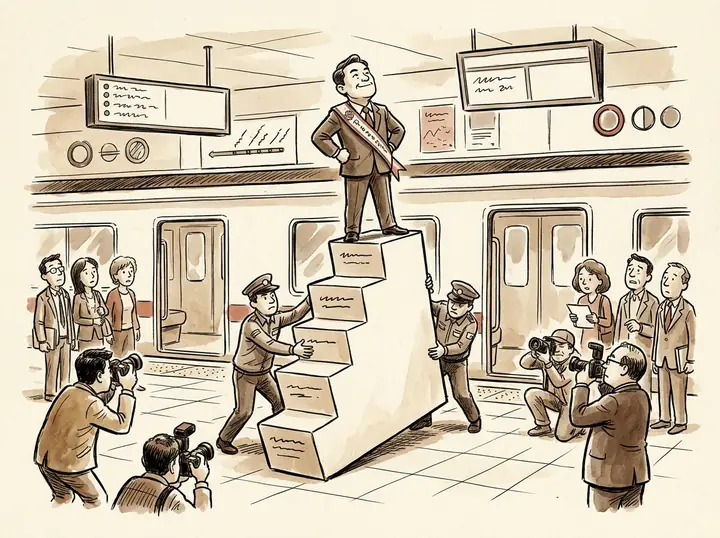
The Korea Times reports Seoul’s subway at the “top of global rankings.” Inside, Time Out’s 2026 survey places it fifth, up three spots, and CNN lists it among the world’s 18 best metro systems. The head of the city’s transport bureau calls the praise “the direct result of continuous investment.” The trains stop at every station; the headline ran express to first.
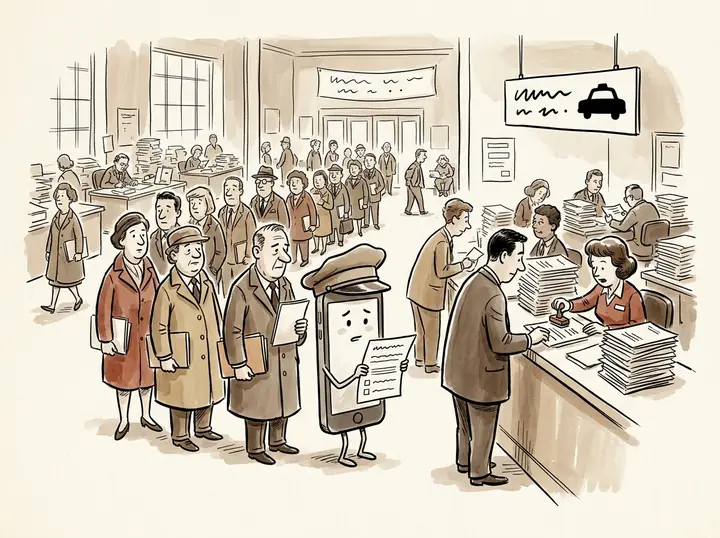
Taiwan’s transport ministry has drafted rules that would treat ride-hailing platforms as taxi operators from as early as late November, the Taipei Times reports. Unlicensed operators could face fines of NT$100,000 to NT$25 million, and drivers could join several platforms under a policy the ministry calls “one vehicle, multiple fleets.” The apps that disrupted the taxi now have one year to apply to become one.
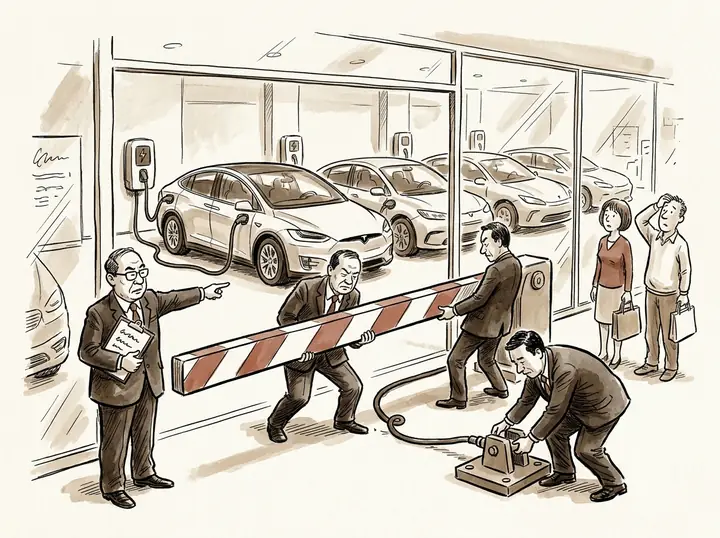
Japan’s industry ministry plans to cut subsidies for electric, plug-in hybrid and fuel-cell cars to 60 to 80% of current levels from 1 January, Jiji Press reports; the electric car maximum falls from 1.25 million yen to 750,000 yen. Sales have been so strong that applications may close in December rather than February. Tokyo has hit on a way to slow electric car sales that does not involve the cars.
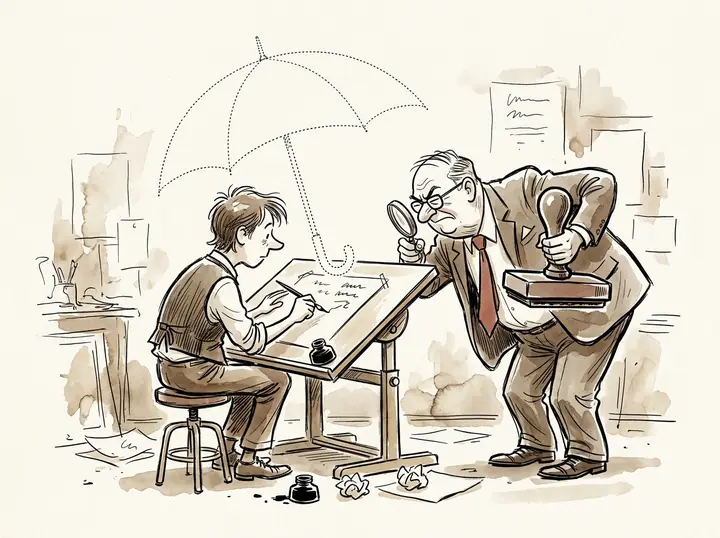
Australia’s shadow communications minister, Sarah Henderson, has raised concerns that political cartoons could be removed under the government’s proposed digital duty of care law, the ABC reports. Labor frontbencher Matt Thistlethwaite said cartoons would not be captured, citing “an implied freedom of political expression under the Australian Constitution.” The cartoonists’ protection, like their best work, is implied.
China’s biggest studio complex, Hengdian World Studios, now sells tourists the lead role: 388 yuan buys costume, makeup and a two-minute drama, with studio performers in support, Sixth Tone reports. Nearly 3,000 people have taken part since July, while weekly filming crews reportedly fell nearly 25% year on year in the first half. Producers have spent a century hoping for a star who pays them.
South Korea’s 22% tax on crypto profits, first set for 2022 and since postponed to 2023, 2025 and 2027, could face a fourth delay, The Korea Times reports; a ruling-party bill would effectively move it to 2029. A People Power Party lawmaker says “even the five major exchanges have not completed their tax systems.” So far the tax has collected only dates.
Taiwan’s opposition has passed amendments making the central government pay health insurance premiums for lower-income people aged 65 or older, the Taipei Times reports. The health minister says they also narrow subsidies for some poorer households; a DPP legislator says almost 140,000 disadvantaged people could be affected. The welfare expansion has arrived needing a safety net of its own.
Japan’s space agency, JAXA, launched its MMX probe toward the Mars moon Phobos on an H3 rocket at 4:41 a.m. on 20 October, Space.com reports. It plans to bring back a 10-gram sample, landing in Australia in 2031. The European Space Agency’s project scientist calls returned samples “the gift that keeps on giving.” At ten grams, it will have to.
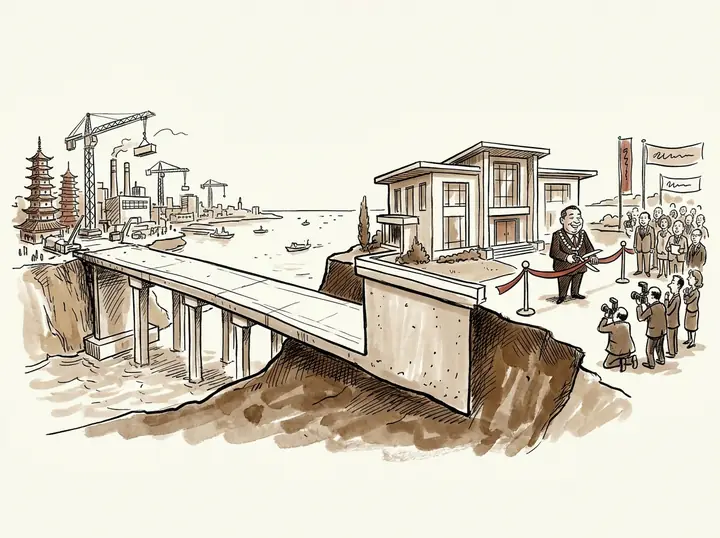
China’s four-lane bridge to North Korea across the Yalu opened to trucks on 15 October, twelve years after it was finished, Euronews reports; the North had not built the roads or customs posts at its end. Premier Li Qiang said relations were “entering a new stage and opening a new chapter.” For twelve years it was a bridge with only one bank.
South Korea’s most populous province, Gyeonggi, has run a deficit since 2022, while its matching contributions to programmes funded by the central government nearly doubled from 2018 to 2026, to about 2.7 trillion won, The Korea Times reports. “More than anything, this is a structural problem,” says a fiscal researcher. The centre chooses the dish; the province is invited to match the bill.
Australia’s New South Wales has picked a former coalmine at Teralba as the preferred site for its $12 billion state train factory, the ABC reports. The plan already lists its fleets: Tangara replacements first, then Millennium and OSCAR trains in the 2040s and Waratahs in the 2050s. The factory’s own completion date is not yet set. Every train has a timetable except the factory.
Japan’s farm minister, Kazuo Yana, quit Sanae Takaichi’s cabinet on Wednesday 14 October after confirming a recording in which he linked road budget cuts in two towns to their backing a rival, Reuters reports. He later said he had no power to influence such budget decisions. “I am the one who made the appointment,” said Takaichi. Since Wednesday, the defence has been entirely accurate.
China’s State Council, chaired by Premier Li Qiang, has approved a draft amendment to the Pricing Law to curb “disorderly low-price competition,” including on online platforms, and sent it to the legislature. The same meeting asked for artificial intelligence to become “real productive forces.” Low prices remain legal, so long as they are not seen running.
New Zealand First promises a commuter rail trial in Canterbury if re-elected. “We are not proposing to spend years and millions of dollars studying whether Cantabrians might catch a train,” said Winston Peters, who would rather “put the trains on and find out” over twelve months. The passengers will be the feasibility study, possibly the first ever to arrive on time.
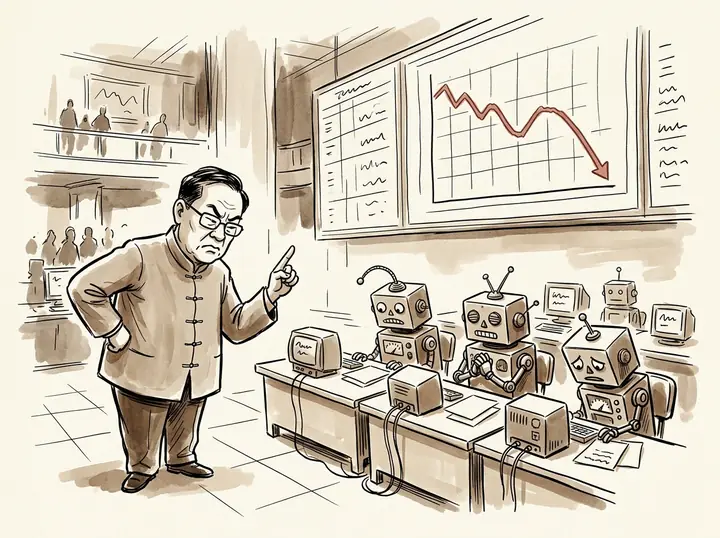
South Korea’s KOSPI fell for seven straight sessions to Thursday, losing 20.7 percent as foreign investors sold and the national pension fund, which had widened its domestic stock allowance during the rally, had little room left to buy. The market’s fear index read 56, well below June’s 97; one analyst says 45 has become normal this year. Seoul now grades panic on a curve.
Japan’s prime minister, Sanae Takaichi, has repeatedly said her cut in the tax on food would be funded without deficit-covering bonds. On Monday she told the upper house budget committee: “We are not ruling out bond issuance.” She promised to “appropriately control” the annual amount. The tax comes off the groceries in 2027 and goes back on, with interest, some decades later.
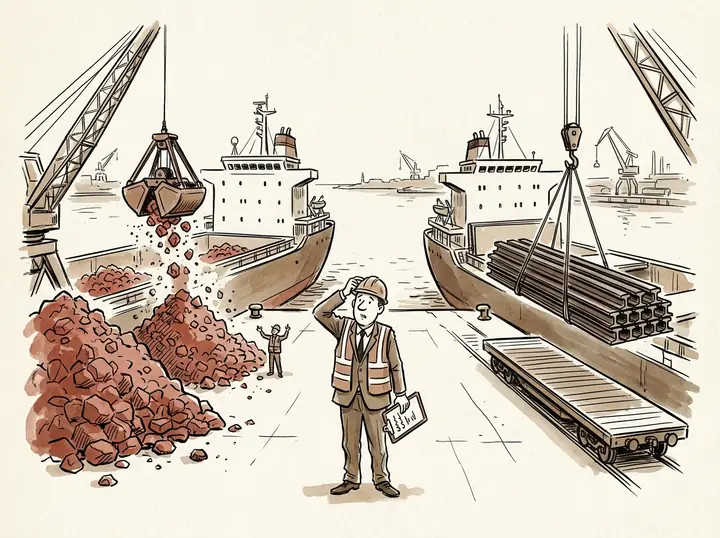
Australia could go up to five years without making structural or rail steel, unions say, after repairs failed on the 60-year-old blast furnace at Whyalla, source of 75 percent of the country’s structural steel. Canberra and Adelaide have pledged almost $2 billion toward an electric furnace. The iron ore mines keep exporting, so Australian ore can leave as rock and come home as rail.
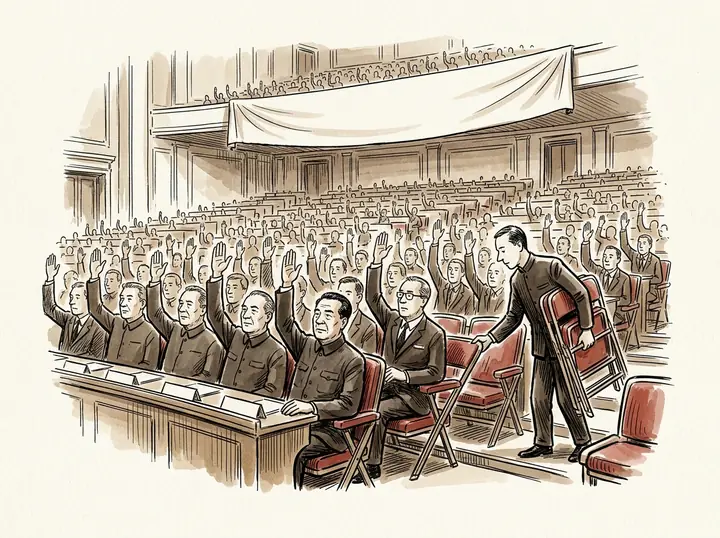
China’s Communist Party Central Committee, all 205 members, meets in Beijing for four days from 26 October, at a plenum that observers expect to focus on political and ideological “readjustment” before next year’s party congress. Hong Kong and Taiwanese media expect 30 to 40 members to be replaced. The committee ratifies such changes itself, in what will be, for some, a final vote.
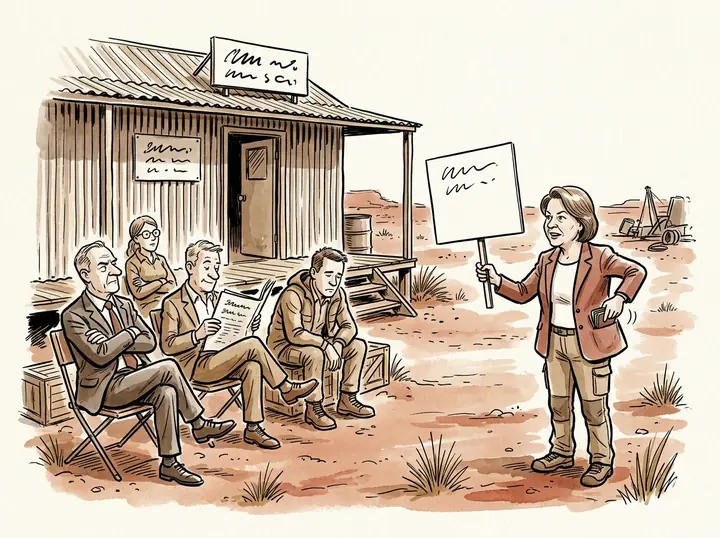
Australia ordered several China-linked investors to sell their shares in Northern Minerals, which is developing the Browns Range rare earths project in Western Australia, and some have not. Resources Minister Madeleine King now says “nationalisation remains one possible option,” an exceptional step for a company listed on the ASX. Having failed to find the investors a buyer, Canberra has found one.
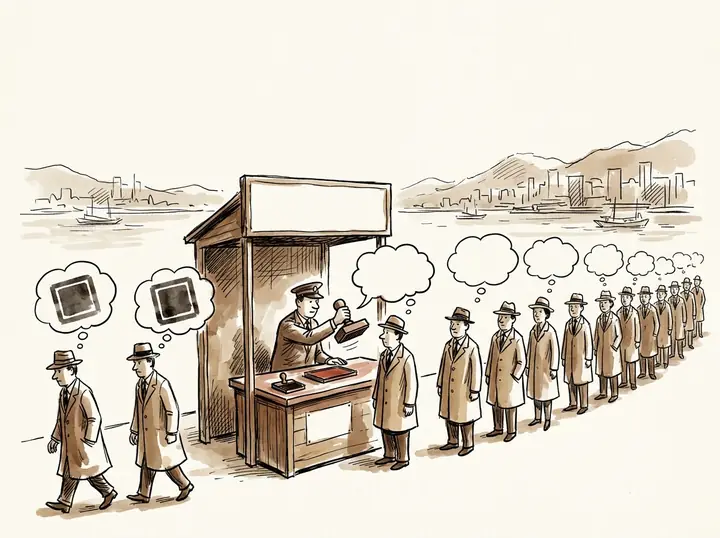
Hong Kong’s first five-year plan, for 2026 to 2030, rests on seven principles and five major objectives, among them faster development of the Northern Metropolis and deeper integration into national development. Its stated aim is to enhance “social expectation certainty.” Uncertainty, previously a feature of the future, is to be phased out by 2030.
South Korea lists repairability ratings among its 123 national policy tasks; the bill to create them has sat in a National Assembly committee since September 2025. The environment ministry would add fines and grades only once conditions have matured. Seoul offers furniture repair in one district of 25, a civic survey says. The bill, like a chair in the other twenty-four districts, is waiting for someone who fixes things.
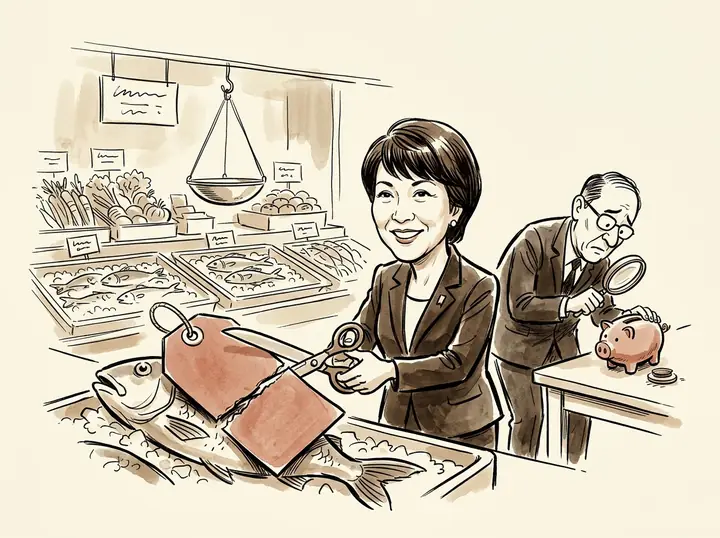
Japan’s government has approved a bill cutting the consumption tax on food from 8% to 1% for two years from April 2027, at an estimated cost of 10 trillion yen. Prime Minister Sanae Takaichi wants it passed by 12 December. Deficit-covering bonds are ruled out; what will cover it instead has not been said. So far the funding plan is the 1%.
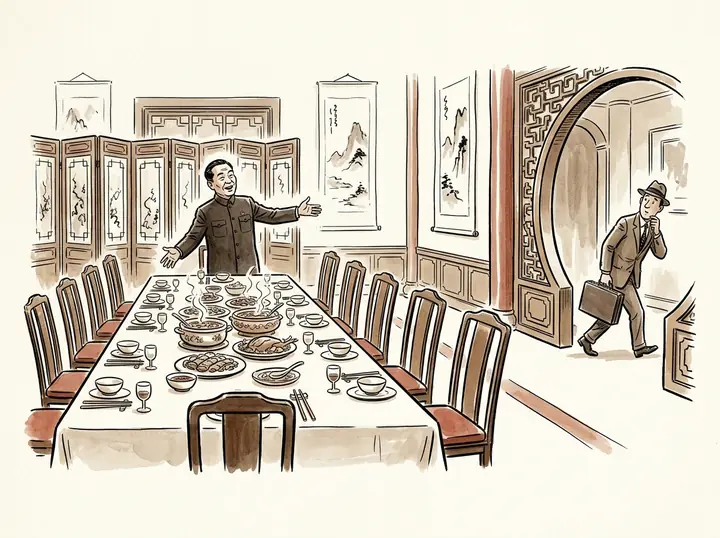
China has begun deploying 800 billion yuan in fresh policy-backed financing for investment projects, as Beijing steps up efforts to draw private capital back in. Private investment fell 10.1% in the first eight months of the year, according to the National Bureau of Statistics. The state has set the table and ordered for everyone; only the guests are missing.
Vietnam’s Decree 320 requires accounts in 12 sectors, from banking to social networks, to be linked to the national VNeID identity app by 31 December. The police newspaper explains that “electronic identification does not mean total surveillance.” The police ministry has also proposed a social network of its own. Verification is simpler when the host is also the guest list.
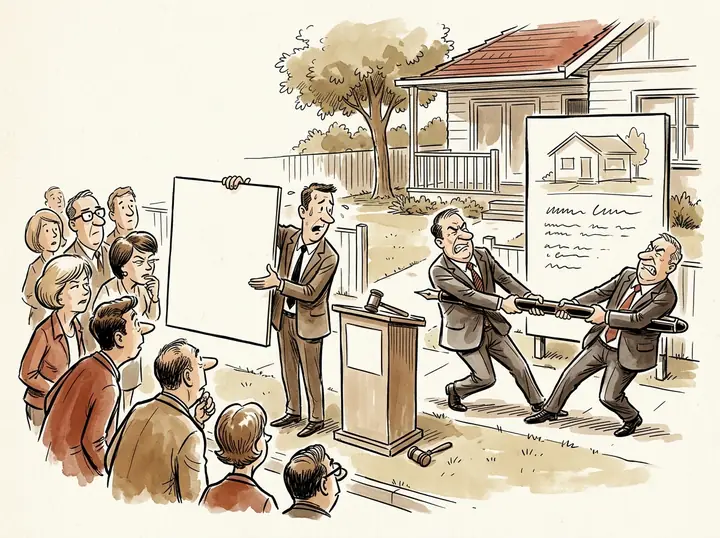
Victoria, in Australia, now makes agents publish a home’s reserve price at least seven days before auction, because, the minister says, “Victorians are sick of wasting their weekends chasing homes they were never going to get.” “The minister said you can change it, and the cabinet said you can’t,” says an agency executive. Buyers now know the seller’s bottom line, which is more than agents can say of the government’s.
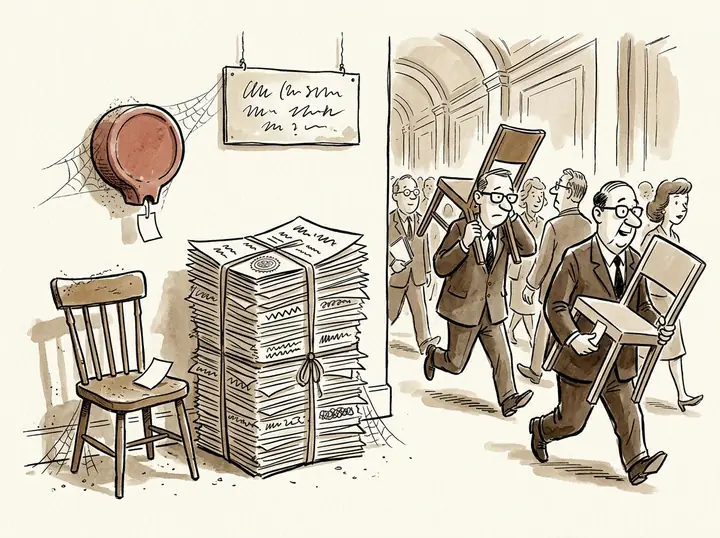
South Korea expects nearly 3,000 more civil servants to move to its administrative capital, Sejong, next year, and many will at first commute from Seoul. The rail corridor meant to double capacity has slipped to 2028. “Before the relocation of government agencies gets fully underway, we need to assess commuting demand,” says an interior ministry office. The government has moved to Sejong. It hopes to arrive by nine.
Japan’s House of Representatives will not release records of the closed-door talks among the two chambers’ speakers and deputies that produced a parliamentary “consensus” on revising the Imperial House Law, and will not confirm that any exist. Such records, it says, “concern the formulation of the legislature’s response,” so disclosure rules do not apply. The consensus is on the record. The record is not.
China’s civil aviation regulator will tighten controls on domestic routes and new flights from the winter-spring season, with power to limit how many airlines fly crowded routes. Excess capacity and falling fares have deepened losses: the three big state-owned carriers lost 8.16 billion yuan between them in the first half. The remedy for cheap fares has been found, and it is not cheap.
Australia’s Nationals leader, Matt Canavan, wrote in The Australian that “the Liberals and Nationals oppose the EU free-trade deal,” an agreement eight years in the negotiating. Some Liberals were surprised to read it, as their party room had not finalised a position. Canavan says the government has “got to be the world’s worst negotiators.” Eight years to negotiate with Europe; one newspaper column to negotiate with the Liberals.
The Seoul Metropolitan Government has unveiled a 3D poster, “Healthy Seoul, Shining Seoulites,” showing 32 landmarks and policies, from the Hangang Bus to an anti-loneliness campaign. The city stresses that every character and scene came from detailed 3D modelling, not quickly generated AI imagery. The Korea Times report on it notes that it was published with generative AI assistance. The poster was made by hand. The news of it was not.
Japan’s parties met on 15 October over electoral reform. The Liberal Democrats proposed cutting 45 proportional seats from the 465-seat lower house, the Democratic Party for the People wants none cut, and Komeito called the plan “totally unacceptable.” All agreed to produce a reform plan this month. “There is a wide gap,” said an LDP lawmaker. So far the deadline is the only thing in the plan.
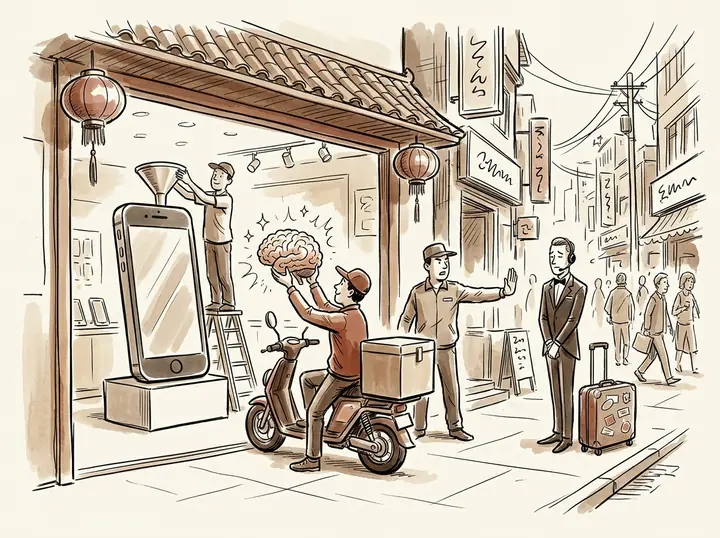
Apple plans to launch Apple Intelligence in mainland China in December, TechNode reports, running on Alibaba’s Qwen and Tongyi Wanxiang models, with Baidu helping on search. The first release brings writing tools and notification summaries. The redesigned Siri is not included. The intelligence arrives from Hangzhou; the assistant stays home.
Australia’s Senate struck the government’s private health insurance bill from its agenda on 14 October. It would cut the rebate for people aged 65 and over from April 2027, raising about $3 billion over four years for aged care. The health minister called the vote “an absolute travesty” and, the ABC reports, reintroduced the exact same bill. The Senate said no. The government took it as a request to repeat the question.
Australia’s government introduced its Digital Duty of Care bill on 15 October, making platforms responsible for protecting under-18s from listed harms and letting users opt out of the algorithms that order their feeds. A draft clause letting the minister define new harms is gone. “We are not controlling free speech,” the communications minister said. The opposition has promised to oppose it at every step, a duty of care it extends to all legislation.
Five employees of a South Korean state cyber security training centre played StarCraft on work computers between September and December 2024, for up to 90 hours in total, while their supervisor was away. When internet access was blocked, some carried on over the internal network. They lost annual leave, and all staff now get cybersecurity training. The five had arguably passed it already.
South Korea is reviving the Service Industry Development Framework Act, first attempted in 2011 and stalled ever since by fears of medical privatisation. The compromise leaves out matters under five statutes, including the Medical Service Act. After fifteen years, the bill may finally pass by excusing itself from the subject that stopped it.
China’s five futures exchanges are spelling out exactly which kinds of programme trading count as violations, with a “permanent market ban” as the stiffest penalty. The draft follows a stock slump and a securities regulator’s signal that it stands ready to steady prices. When the market falls in China, the first instruction goes to the algorithms: not like that.
Japan’s ruling coalition is questioning how long the prime minister spends answering questions in the Diet: about 72 days in a recent period, against 50 in Britain and 13 in Germany, according to figures cited by Japan Innovation Party lawmaker Fumitake Fujita. “The fact that our leader is confined for such long hours to parliament isn’t in line with the global standards,” he said. The question will be settled, naturally, in parliament.
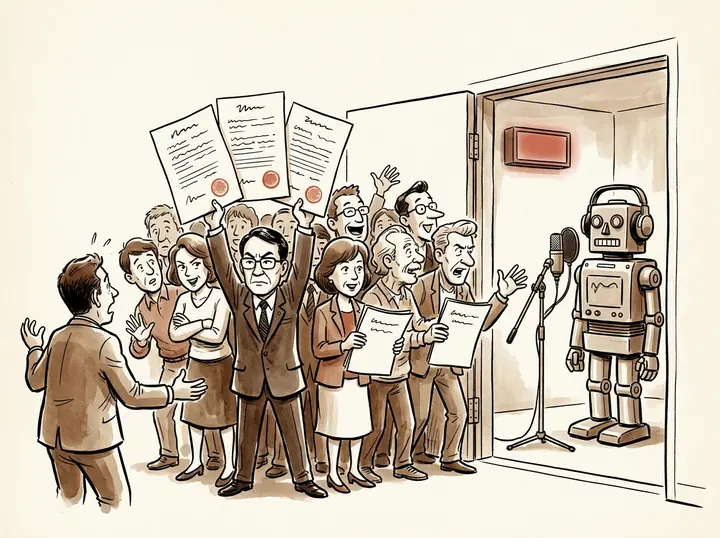
Japan’s council of performers’ organisations issued guidelines on 15 October saying generative AI should not, as a rule, use the voices of the dead in new works without the bereaved family’s permission, nor replace voice actors in dubbing. Consent is required at three stages: training, generation and sale. A 2025 survey found more than 40,000 unauthorised posts. Paperwork, it seems, outlives everyone.
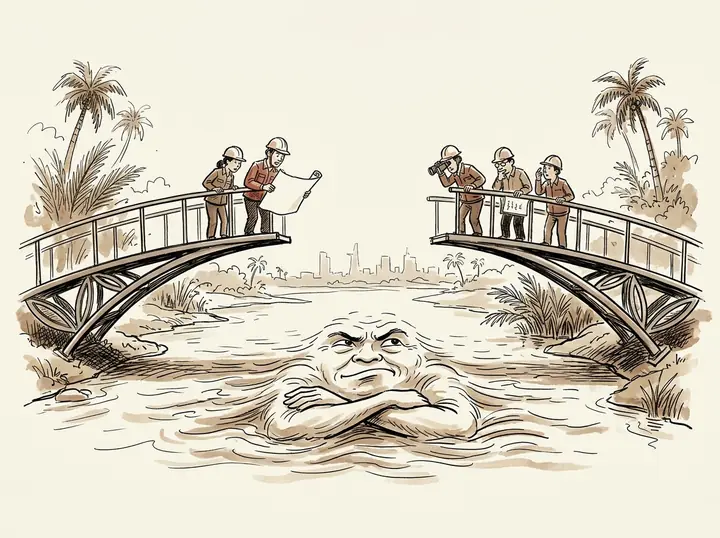
Ho Chi Minh City’s new footbridge, shaped like a nipa palm leaf, is to have its 3,400-tonne steel arch joined on October 21, subject to hydrological conditions. The river has not confirmed.
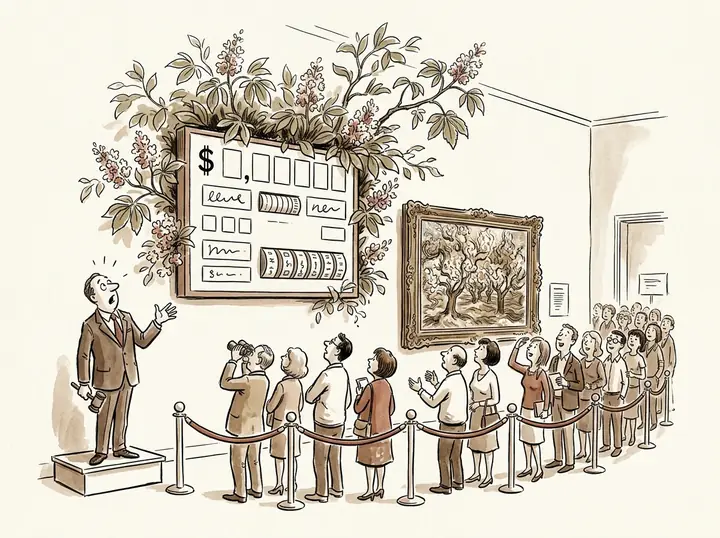
Hundreds queued in Hong Kong to see Van Gogh’s chestnut trees, unseen for 60 years and estimated at about $180 million. The chestnuts are in blossom. So is the estimate.
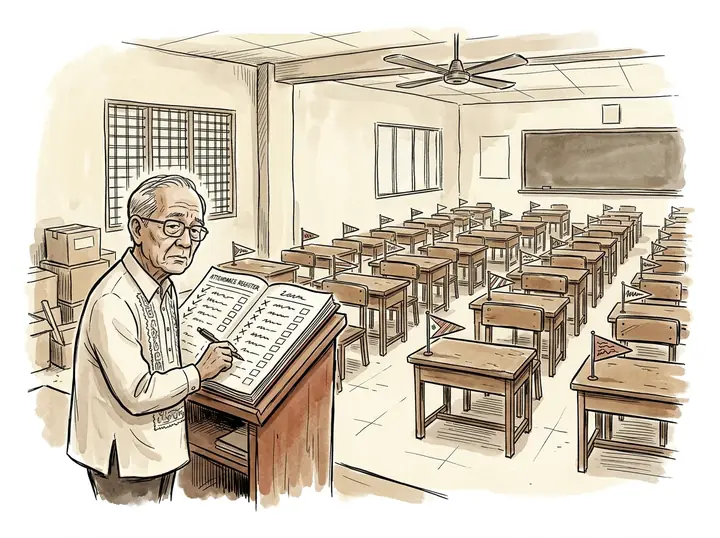
The Philippines’ election commission is moving to delist 50 party-list groups: ten that skipped the last two elections and forty that ran twice and won nothing. For forty of them, the commission has gently suggested a different hobby.
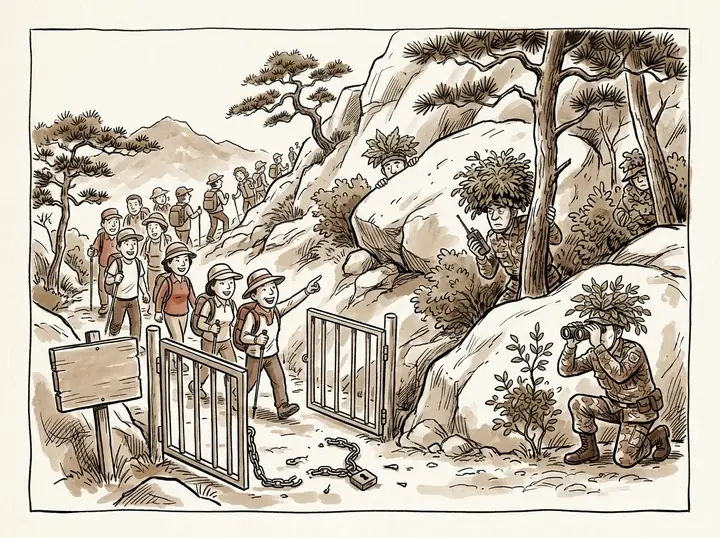
The last closed 1.32 kilometres of Bugaksan opens to the public on October 17, around the clock, with security promised to keep a low profile. Fifty-nine years to return a mountain that never left.
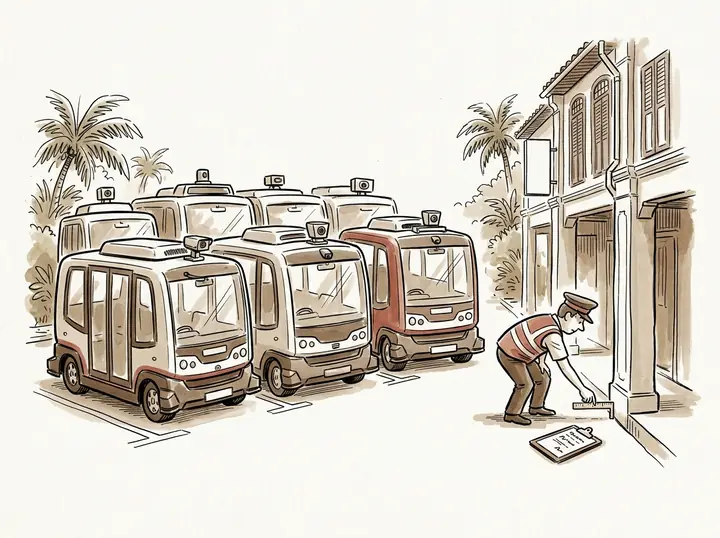
All six driverless buses for Singapore’s routes 400 and 191 have been delivered, and the pilot has been halted. The transport authority will explore narrower uses. Six buses are now looking for a road narrow enough to suit them.
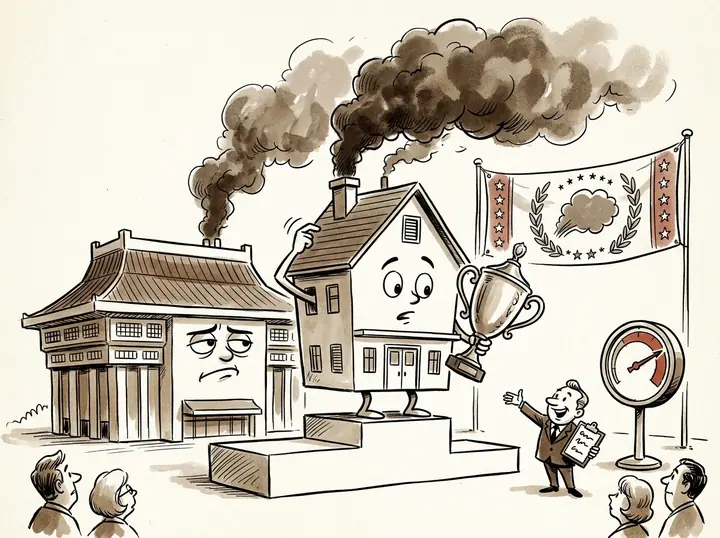
Taipei’s railway has counted its emissions. The biggest single source is not Taipei Station but Nangang: 6,923.95 tonnes against 6,859.48. The suburb has won a contest nobody entered.
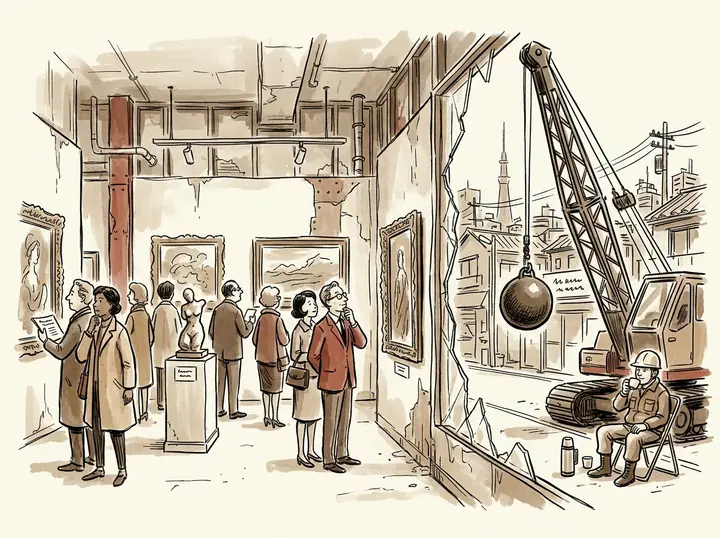
The makers of Not A Hotel are opening Not A Museum, inside a Tokyo building that is awaiting demolition and has four years left thanks to the delay. Soon it will be not a building.
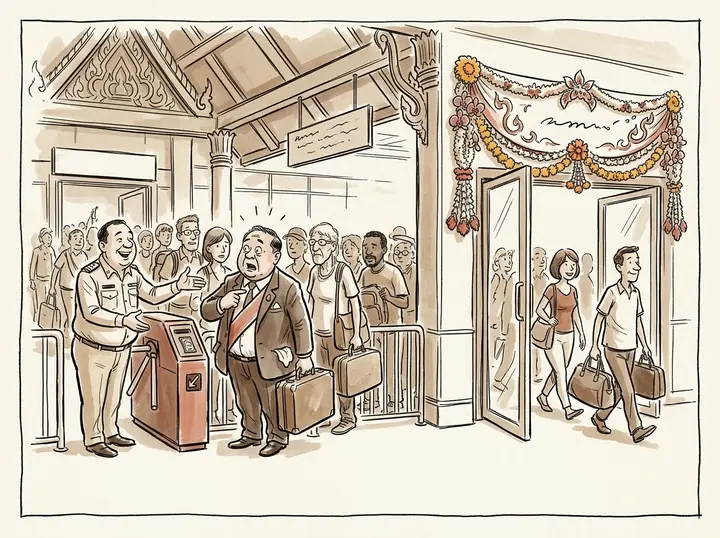
Thailand has drafted a departure tax starting at 1,000 baht. The tourism minister was reportedly unaware that it would apply to foreign visitors as well. Its stated aims include keeping Thais at home for the holidays. Guests are welcome; leaving costs extra.
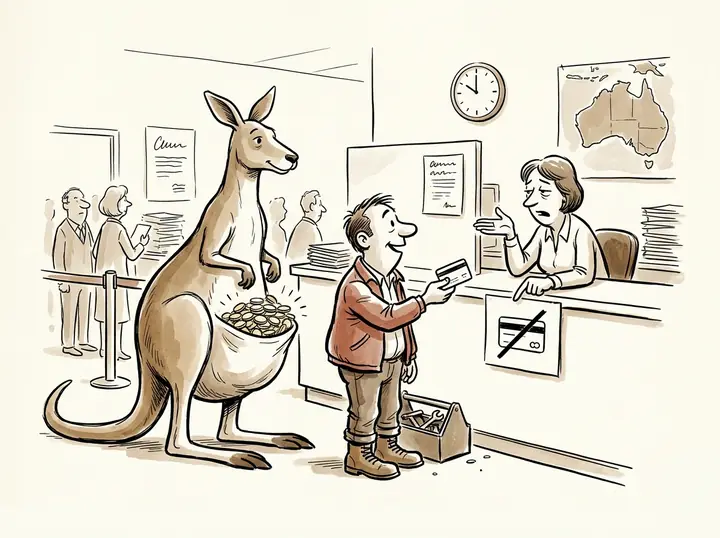
Australia’s tax office has stopped taking credit cards. The small business minister says she found out when it was announced. The ban on card surcharges is working; the payment, less so.
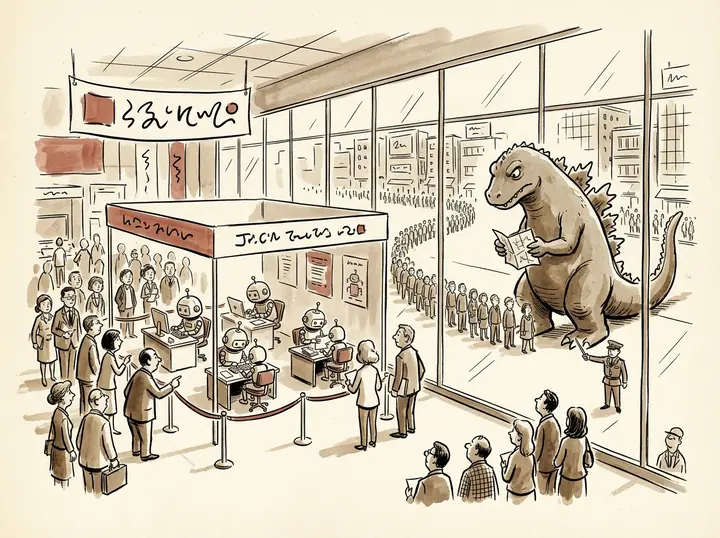
CEATEC has opened with 821 exhibitors. NEC showed a company department run entirely by forty AI agents; Fujitsu simulated the evacuation of Tokyo from Godzilla. Japan is now prepared for both, and possibly for the day they meet.
The 140th Canton Fair has opened with more than 12,000 exhibitors across 25,000 booths. Among the debuts: a fruit-peeling machine powered by AI. The monk continues with the older model, attached at the wrist.
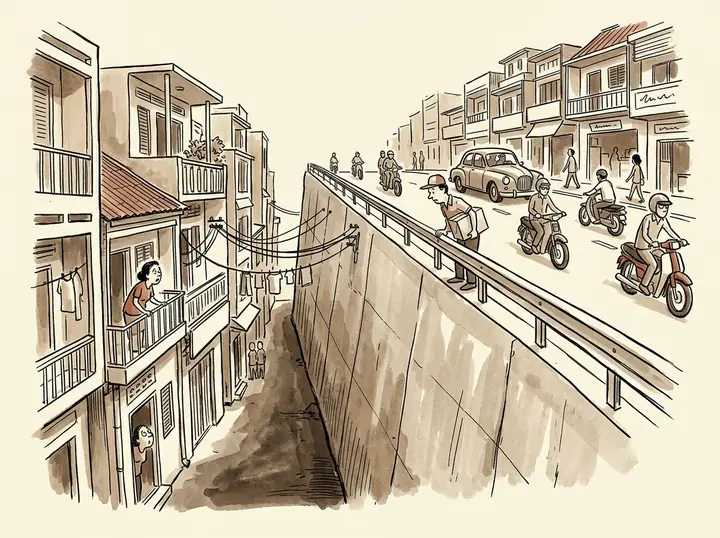
A flood project in Ho Chi Minh City has raised one street by up to 1.5 metres. The street will no longer flood. The houses beside it now sit below the road, and their situation is under review.
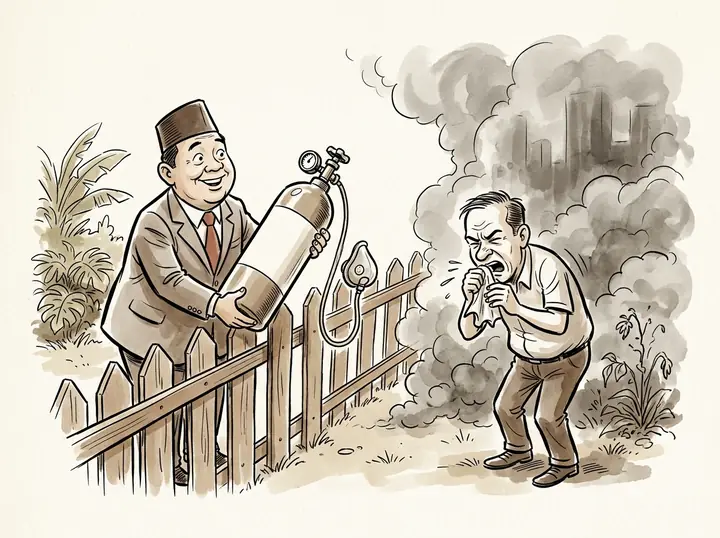
An Indonesian official says the country’s forests send their neighbours oxygen when they are not sending haze. Singapore was ranked the world’s most polluted city on October 9 and 12. The neighbours appear to be on the other plan.
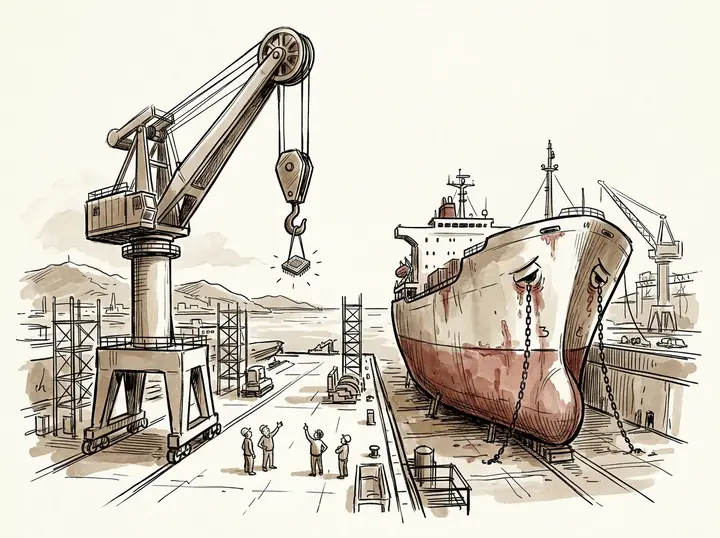
South Korea exported a record $26.1 billion in the first ten days of October. Chip exports rose 170.9 percent; ship exports fell 13.4. The country that built the world’s ships now mostly exports thinking.
An exhibition of AI art has opened in Kuala Lumpur under the title Art Without Boundaries. The artist calls the AI her partner. The partner did not attend the opening and was not available for comment.