Power, policy and the theatre of government, from Washington to Islamabad to Canberra. Every capital gets the same treatment.
Monday, November 2, 2026
Islamabad
Credit Without the Controls
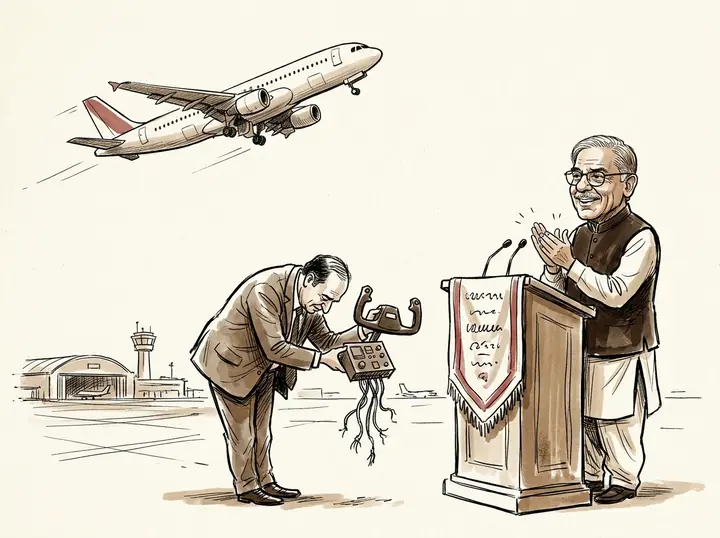
Pakistan’s National Assembly asked on Friday why PIA’s UK flights skip Karachi, Pakistan Times reports. The airline is privatised, a parliamentary secretary replied, so the government cannot direct its routes; he then credited Prime Minister Shehbaz Sharif for the resumed UK service. The state no longer chooses where the airline flies, only which of its flights were the prime minister’s doing.
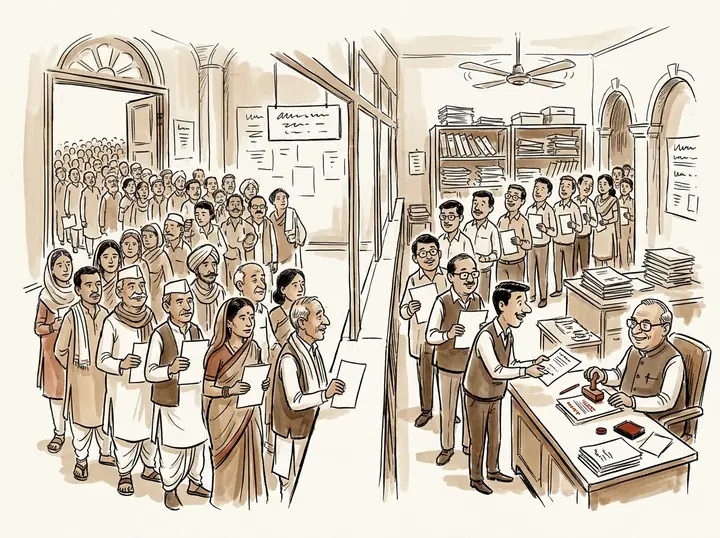
India’s Election Commission has extended its Special Intensive Revision of electoral rolls in Delhi and five states “following representations from the respective chief electoral officers,” The Week reports. Delhi’s deadline for claims and objections moves from 30 October to 25 November, and its final roll to 22 December. The revision’s most successful claim so far was filed by the people conducting it.
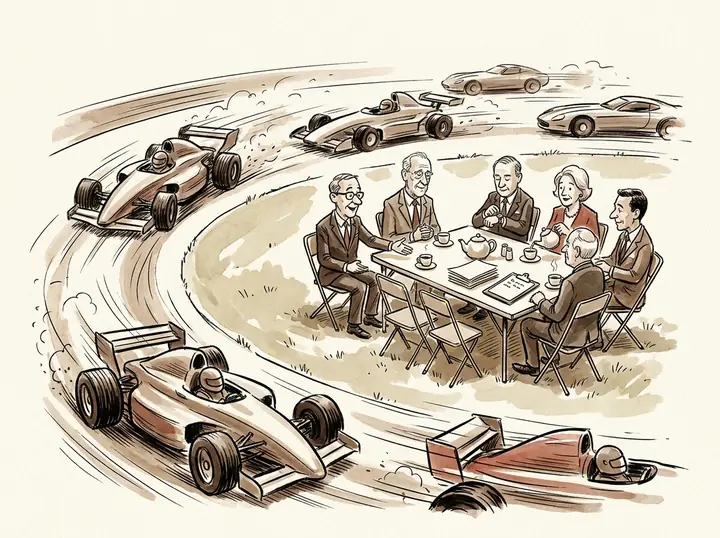
UN rights chief Volker Türk told a summit in Oxford that companies and countries are locked in a “ruthless race” and that “Too few are walking the talk,” UN News reports. He welcomed, in reply, a UN Global Dialogue on AI Governance. Against a ruthless race, the UN has entered a dialogue, the one event in which nobody can be overtaken.
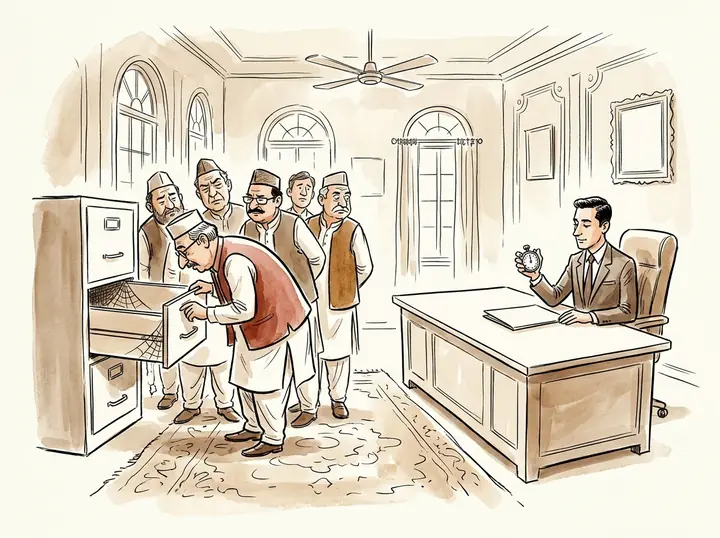
Pakistan’s Senate Standing Committee on Economic Affairs asked why hiring a consultant for the foreign-funded Lahore Wastewater and Drainage Management Project took more than two years, The Nation reports. The project director could not provide the consultant’s terms of reference. The committee recommended a dedicated monitoring desk. A consultant hired for work nobody can show on paper is at least in no danger of falling behind on it.
India’s opposition alliance planned a mock Parliament to debate impeaching Chief Election Commissioner Gyanesh Kumar, then renamed it a “People’s Impeachment” to avoid any hint of contempt of Parliament, News Arena India reports. A former Lok Sabha Speaker presides over a motion, with five-minute speeches from 19 parties and a livestream. To stop it resembling Parliament, the organisers kept the Speaker, the motion and the clock, and dropped the word.
Bangladesh’s ICT minister promised one million digital jobs within five years at TechConnect 2026 in Dhaka, The Daily Star reports, with a national AI policy due in three to four months. On the same programme, an operator’s executive said infrastructure-sharing guidelines had failed for 15 years for want of enforcement. The jobs target needs about 550 a day; the guidelines would settle for one inspector.
Pakistan’s government used Cybersecurity Awareness Week 2026, run by the telecom regulator with the UN Development Programme, to announce a Cybersecurity and Social Media Awareness Council, Dawn reports; the council has not yet been established. The IT minister added that a social media regulatory authority would be set up soon. The first thing the public is to be made aware of is the council.
India’s new GST rules for delivery services, cutting the rate from 18% to 5% without input tax credit, start on 1 November; Nasscom has asked the Finance Ministry to wait until January, MediaNama reports. Earlier in October the government’s fact-checkers declared that “the claim of a newly imposed tax is false.” The tax that never existed has now been asked to arrive later.
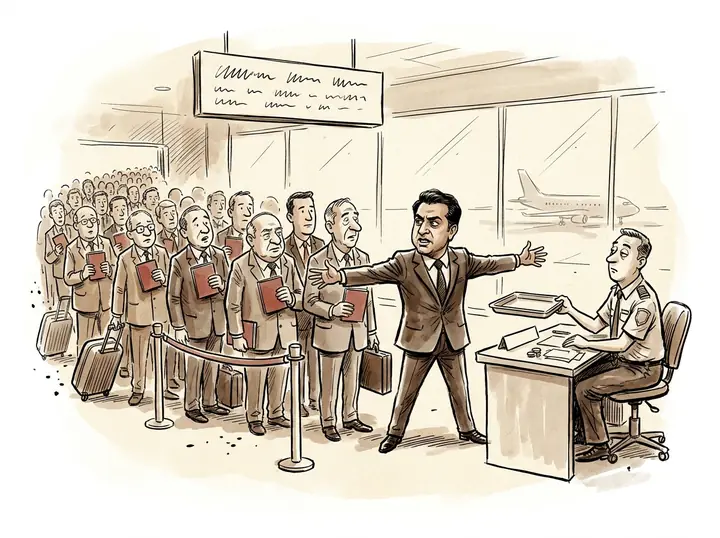
Pakistan’s Senate on Monday refused even to let a bill be introduced that would have kept diplomatic passports for full ministers alone. Minister of State Tallal Chaudhry objected that it sought to “curtail the authority of the cabinet.” Advisers, special assistants and senior bureaucrats keep their red covers. The cabinet’s authority, so stoutly defended, will mostly be exercised at the diplomatic counter in departures.
India’s Election Commission has told Goa, Manipur, Punjab, Uttar Pradesh and Uttarakhand to move every election officer serving in a home district, or who has spent three of the last four years in one, by 30 November. All five vote in 2027. By the Commission’s own reasoning, the most impartial officer in any district is the one who arrived last week and cannot yet find the polling stations.
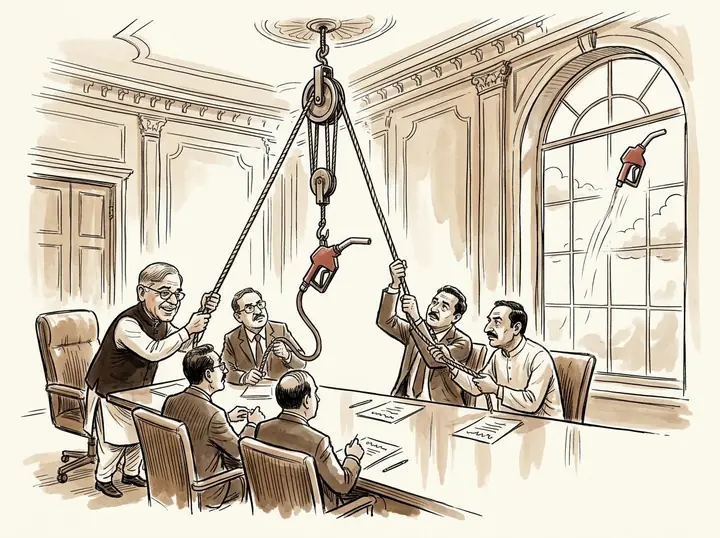
Pakistan’s government and Jamaat-e-Islami agreed on Tuesday to form a six-member committee after the party demanded the petroleum levy’s withdrawal. It will explore a phased reduction and report in time for the upcoming budget. Shehbaz Sharif, the prime minister, linked recent price rises to regional and international developments. The increases arrived from abroad without a committee. The reduction will need one of six.
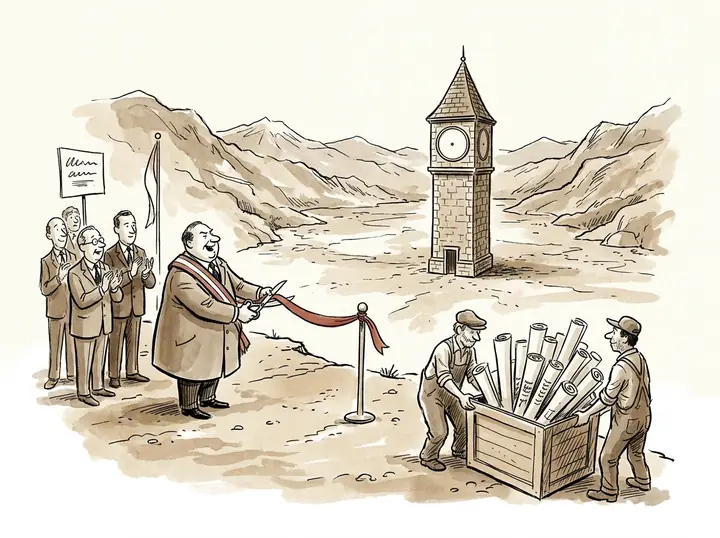
Nepal’s Cabinet has approved drafting a bill for a Budhigandaki Development Authority, its hydropower project’s latest model after a public-private partnership plan. Named a national pride project in 2012-13, it was due for completion in fiscal year 2026-27, and its cost estimate has grown from Rs260 billion to about Rs374 billion. Of everything planned for 2026-27, only the deadline has kept to schedule.
Pakistan’s prime minister has formed a committee to draft, within four weeks, a plan to reorganise the Small and Medium Enterprises Development Authority, which Dawn says “had remained dormant for years”. At its first meeting on Tuesday, the committee observed that “SMEs needed easy access to finance, business advisory services and institutional support”. Its first finding was the authority’s job description.
Pakistan’s Prime Minister Shehbaz Sharif said on Wednesday that “the secret to Pakistan’s development lies in artificial intelligence and digitalisation,” and ordered a 15-day AI training programme for IT graduates with Alibaba. Ministries were told to complete the necessary measures by November and report on their progress. The secret has been kept for 79 years; it will now be taught in 15 days.
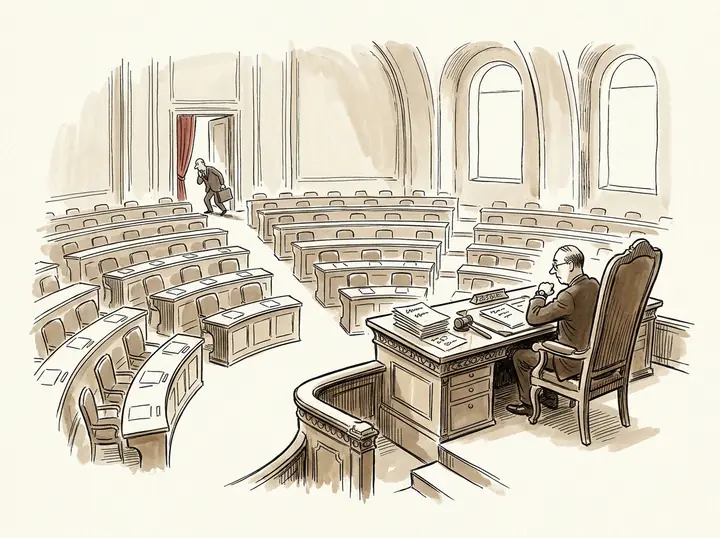
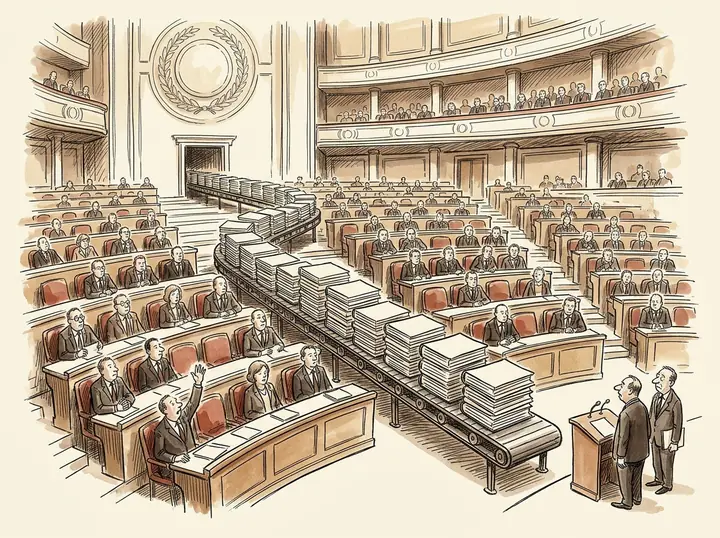
Pakistan’s National Assembly passed seven bills on Monday amid what Dawn calls low attendance and the absence of ministers. When the parliamentary affairs minister argued that parliamentary secretaries have a minister’s status and may answer questions, the speaker replied that in that case “ministers have no need to attend NA proceedings.” The ministers who did attend had come to explain why the rest need not.
Pakistan’s power minister, Awais Leghari, told the Senate on Tuesday that the government will scrap the slab system, under which a household using one unit over 200 in a month loses its subsidy for six months. Finalising the new plan, he said, will take about a month and a half. One unit over earns six months of penalty; the ministry that drew the line has given itself six weeks.
Pakistan’s National Assembly was told that 5G has launched in 24 cities and will spread further only once it stabilises there. Aseefa Bhutto Zardari said neither 4G nor 5G was working in Nawabshah. The presiding officer, Abdul Qadir Patel, asked: “Has 4G passed away that 5G has been introduced?” In Nawabshah the heir is missing too.
India’s IT minister, Ashwini Vaishnaw, said on 8 October that a draft on regulating artificial intelligence would be out within a month. At the NDTV World Summit he said: “We will be issuing a consultation paper in the coming weeks.” Most of the month has now gone, and the month is still a few weeks away.
Pakistan’s Senate spent Friday’s question hour asking whether petrol would be available in December. Minister of State for Finance Bilal Azhar Kayani said “there was no fuel supply problem”. Finance Minister Muhammad Aurangzeb had said the week before that energy supplies were procured to last through November. Between them, the two ministers have covered November with fuel and December with confidence.
India’s Cabinet Secretariat declined to act on letters from Election Commissioners Sukhbir Singh Sandhu and Vivek Joshi complaining that a senior official reassigned duties without consulting the Commission, an RTI reply shows. The letters, it ruled, “cannot be seen as a formal communication from the Commission as a whole”. The Commission reportedly says the order was never implemented. It has three members, so two thirds of it is now nobody in particular.
Pakistan’s National Assembly had 16 items on its agenda on Thursday and passed one bill before falling short of the 88 members needed for a quorum, Dawn reports. The bill turns State Life into a company and protects the pensions of employees with at least one year of continuous service. Continuous service was the one standard the House set that day and did not meet.
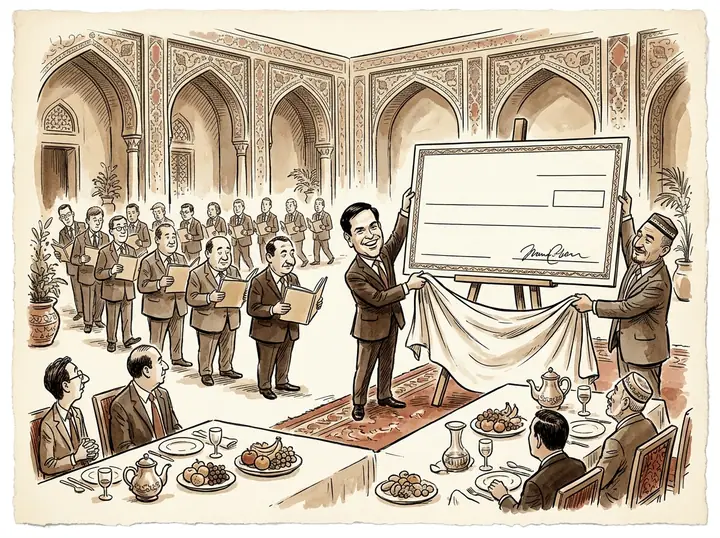
Uzbekistan’s investment ministry says at least 54 business deals worth $12 billion were signed during US Secretary of State Marco Rubio’s visit to Samarkand on 19 October, Eurasianet reports. No single deal’s value has been disclosed. The total has arrived. The deals that add up to it are expected to follow.
Bangladesh’s Local Government Division has suspended all government work-related tenders and procurement, new and ongoing, until new rules and a revised rate schedule are issued under the Public Procurement (Amendment) Ordinance, 2026. The suspension holds “until further instructions.” The ordinance was written to amend public procurement; for now it has replaced it.
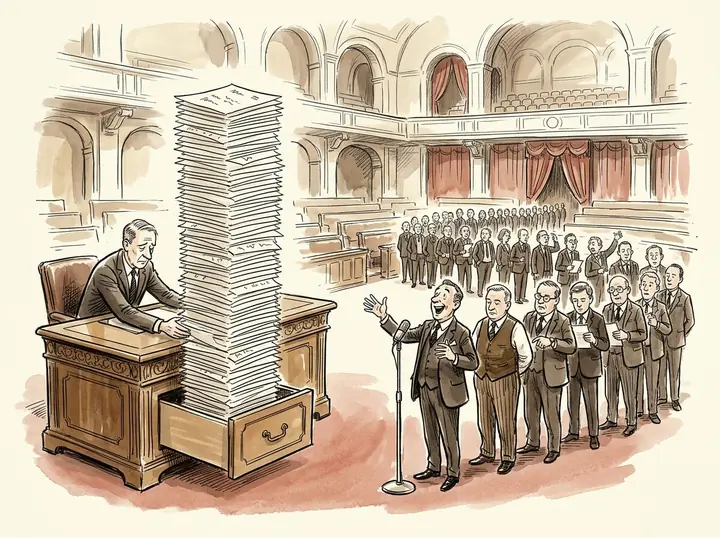
Pakistan’s National Assembly set aside its 64-point Private Members’ Day agenda on Tuesday, 16 bills included, so that more than two dozen members could make speeches instead. One member objected that members’ bills were “intentionally ignored.” It was still Private Members’ Day; the members had simply kept their bills private.
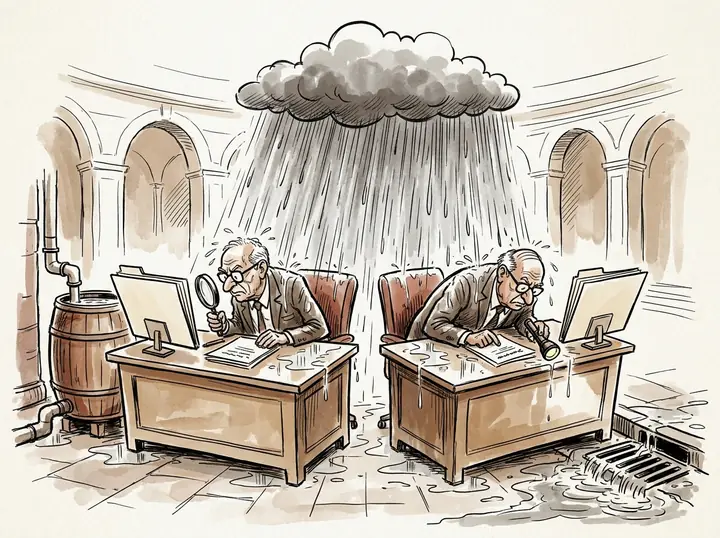
India’s Parliamentary Standing Committee on Housing and Urban Affairs has selected 25 subjects for detailed examination during 2026-27, from Smart City command centres to the Master Plan of Delhi 2047. Rainwater harvesting and urban flooding appear on the list as separate subjects. The monsoon usually examines both in the same afternoon.
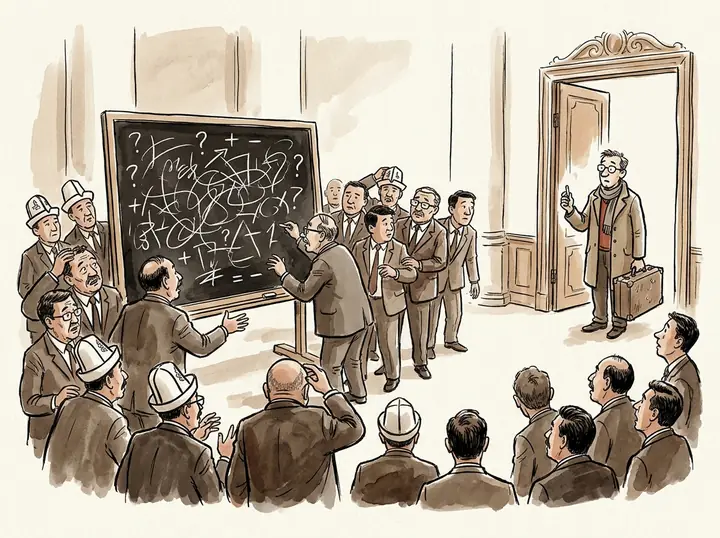
Kyrgyzstan’s parliament on 21 October backed, at first reading, a bill waiving income tax and social contributions for foreign teachers in engineering, technology and other short-staffed subjects. Schools ended the last academic year 947 teachers short, mainly in mathematics. One lawmaker has asked for an assessment of the lost revenue, a sum that may have to wait for the teachers.
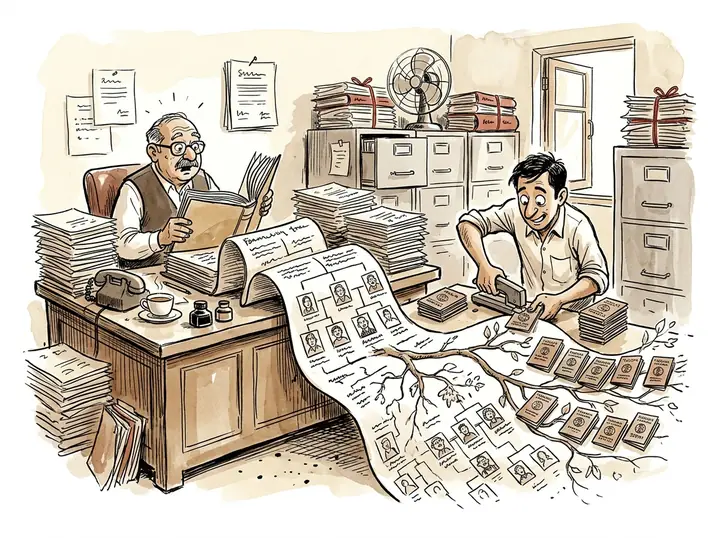
Pakistan’s federal government has told civil servants to declare any foreign citizenship, foreign travel documents and marriages to foreign nationals, their dependents’ included. A memorandum dated 21 October allows 90 days from the rules’ notification in the Gazette; a missing or false declaration counts as misconduct. The file on each officer now has a section for the in-laws.
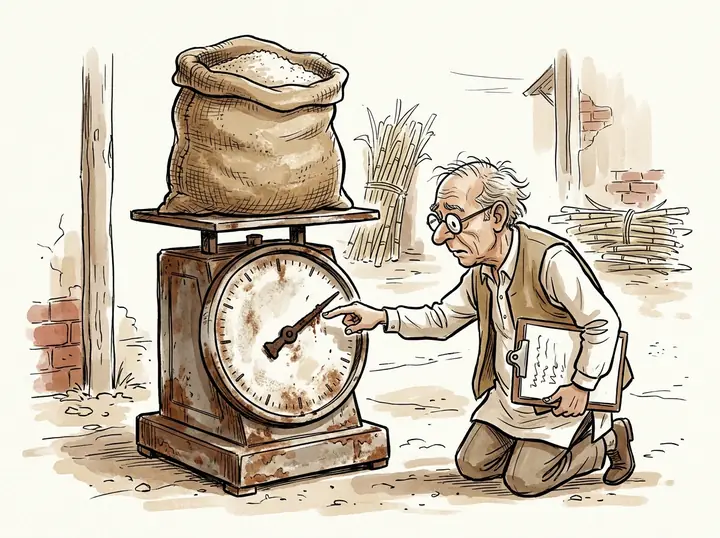
India’s government has constituted a committee under Ramesh Chand, a former NITI Aayog member, on sugarcane farmers’ issues, from cane weighment to the minimum ex-mill price of sugar. That price was raised to ₹31 a kilo in February 2019 and has not changed since. Most prices in India manage to rise unassisted; this one has been sent a professor.
Vietnam’s National Assembly opened its second session in Hanoi on 17 October and expects to review and approve 43 laws, legal resolutions and decisions in 28 days. One day, 12 November, is set aside for questioning, with two ministers answering. Each minister questioned will therefore be answering, on average, for twenty-one and a half laws.
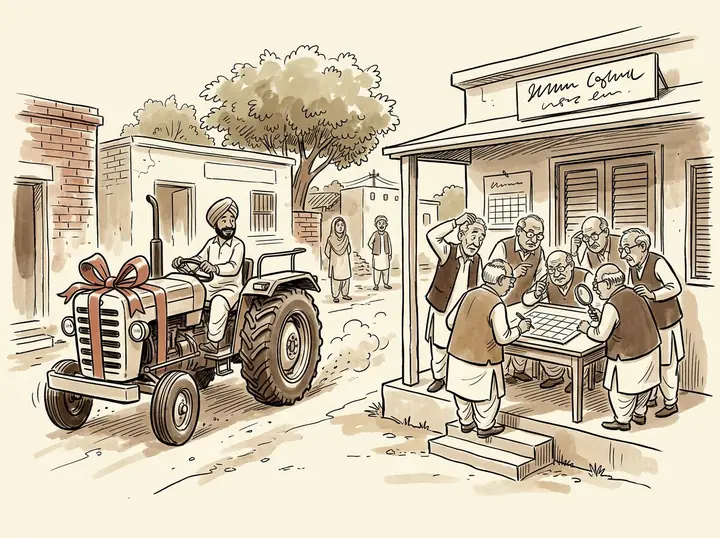
Pakistan’s Punjab cabinet on Monday approved a Rs1.995 trillion industrial programme, 10,000 high-powered tractors, 1,500 electric buses and a medical college in Mianwali. It also formed a committee to consult on a date for local government elections. The province can now get a tractor to a village faster than it can get the village a council.
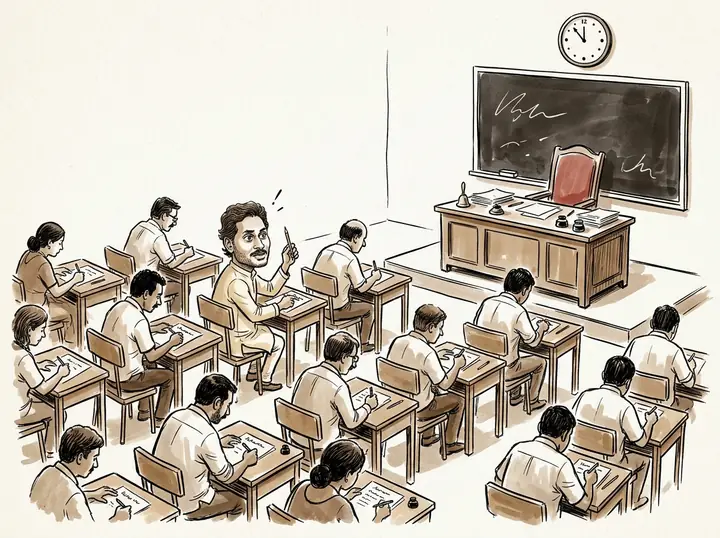
India’s YS Jagan Mohan Reddy, former Andhra Pradesh chief minister, says he regrets his party backing the 2023 law on appointing election commissioners, and wants a neutral body to choose them. “An examiner cannot be appointed by the student,” he said. Local polls begin on 28 October. The analogy is sound, and like most, it occurs to the student on the morning of the exam.
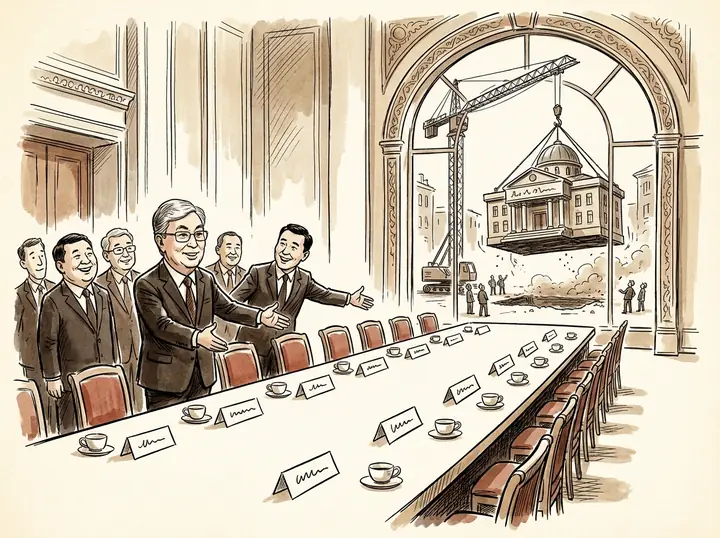
Kazakhstan’s President Kassym-Jomart Tokayev signed a decree on 12 October ending the powers of the maslikhats, the local assemblies, after their dominant Amanat party merged into Adilet; snap elections must be held by 12 December. Five days earlier the national Kurultai had voted to establish a Council for Cooperation with Maslikhats. Until December it will be cooperating with an empty room.
Pakistan’s Senate on Monday unanimously passed a bill ending the automatic issue of blue official passports to the children of government officers. Its mover argued that either the perk should end or senators should get it too. The interior ministry says 30,000 blue passports have already been cancelled, none belonging to political representatives. Equality has passed unanimously; its direction of travel is still under discussion.
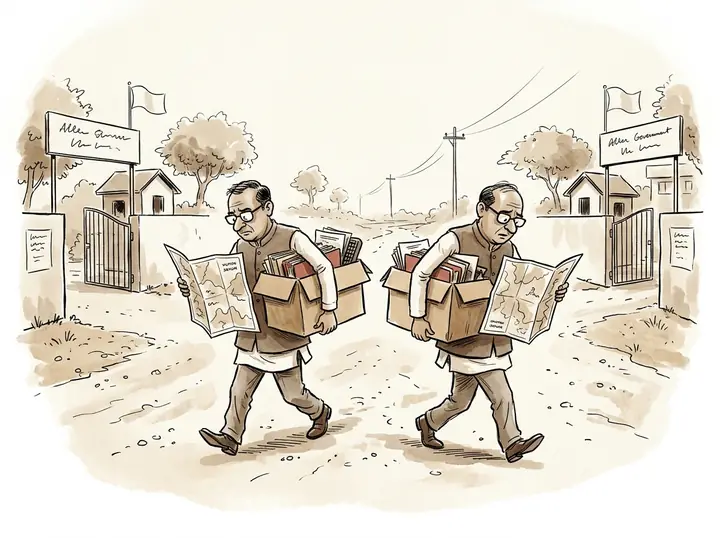
India’s Delhi High Court has told voters missed in the city’s special revision of electoral rolls to apply through Form 6, as the Election Commission suggested. The petitioners wanted Form 8, which corrects an existing entry. Form 6 is mainly for new voters, such as those just turned 18. The Commission has found the one reform that makes an electorate younger: delete it, then sign it up again.
A public audit of 258 households in Delhi’s Okhla constituency found at least 100 voters in two polling booths wrongly classed as absent, shifted, dead or duplicate during the special intensive revision of India’s electoral rolls. One voter, at the same address for more than five decades, was listed as untraceable. The auditors found him by the novel method of going there.
Pakistan’s Supreme Court on Monday opened a Legal Aid Cell at its Public Facilitation Centre, where a dedicated legal assistant will guide eligible litigants towards appropriate legal assistance. The centre already serves as a one-window facility, so that visitors need not approach the court’s branches separately. The one-window facility now has a second window.
India’s Andhra Pradesh has adopted a Social Media Influencers Policy that empanels content creators to publicize government schemes on digital platforms, according to the States Weekly tracker of the Center for Strategic and International Studies. The tracker lists no budget and no number of creators. Spontaneous praise for the state’s schemes now arrives with an empanelment letter.
Pakistan will chair the Boards of Governors of the IMF and the World Bank Group in 2027, for the first time since 1953, with Economic Affairs Minister Ahad Cheema as chair. Earlier in October, Pakistan reached a staff-level agreement on the fourth review of its $7 billion IMF loan. Few chairs will have studied the agenda so closely from the other side of the table.
Pakistan’s Election Commission has rejected Punjab’s request to delay local government polls to April 2027, citing “smog, dense fog and adverse winter weather” in December and January. Punjab last held these polls in 2015, and in August it had agreed to vote between December 15 and January 15. Eleven winters without a vote, and the province has just noticed they are foggy.
India’s Home Ministry suspended mobile internet within 4 km of a central Delhi crossing for 24 hours on 9 and 10 October, during protests demanding the Chief Election Commissioner’s resignation. Its notice, marked “Top Secret,” went unpublished; the news agency ANI posted a copy. The Supreme Court then ordered that “internet facilities should function unhindered.” The notice, unlike central Delhi, stayed online.
Kenya’s President William Ruto has signed a law, at Eldoret State Lodge, giving the managing director of the Kenya Ports Authority a seat on the board of the Kenya Revenue Authority. The managing director is currently Captain William Ruto. Parliament’s brief called it “an efficiency measure.” Efficient indeed: nobody at the revenue authority has a new name to learn.
Pakistan is considering a new tax collection agency because the Federal Board of Revenue keeps missing its targets. It missed last year’s by over Rs1.1 trillion; this year’s needs growth of over 17 percent, and the first quarter managed about 7. The FBR will not be dissolved, an official said, and officers who do not join the new body would stay until retirement. The cure for one tax office is two.
A Pakistani Senate sub-committee has asked for the complete record of the 5,000 jobs announced under the Aghaz-e-Huqooq-e-Balochistan package: how the posts were created, how many were filled, where things stand. One senator asked for “accurate and verified figures.” The package’s name promises the beginning of rights. Parliament would settle, for now, for the beginning of a list.
Nepal marked World Post Day with a minister’s assurance that postal services have not been scrapped anywhere, and news that the government is buying 100 motorcycles. Letters will soon travel faster than the reasons to write them.
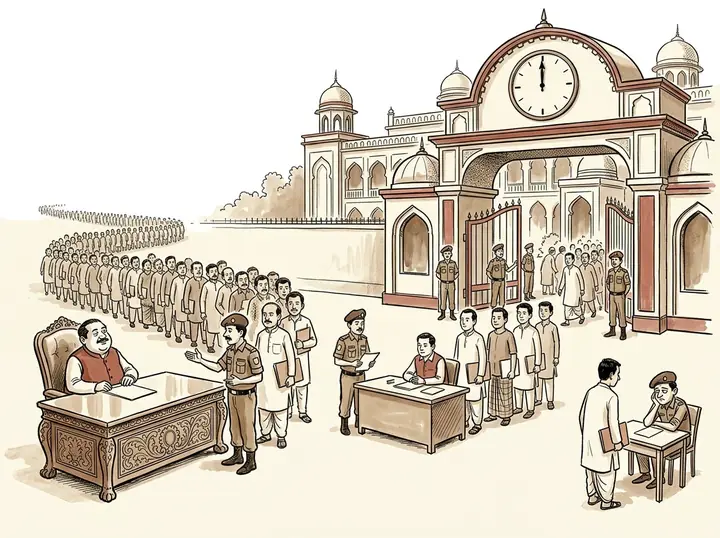
Bangladesh’s Secretariat now caps visitor passes by rank: ten for a minister, five for a secretary, two for a joint secretary, and no visitors before noon. Seniority, at last, can be measured by the number of people waiting outside.
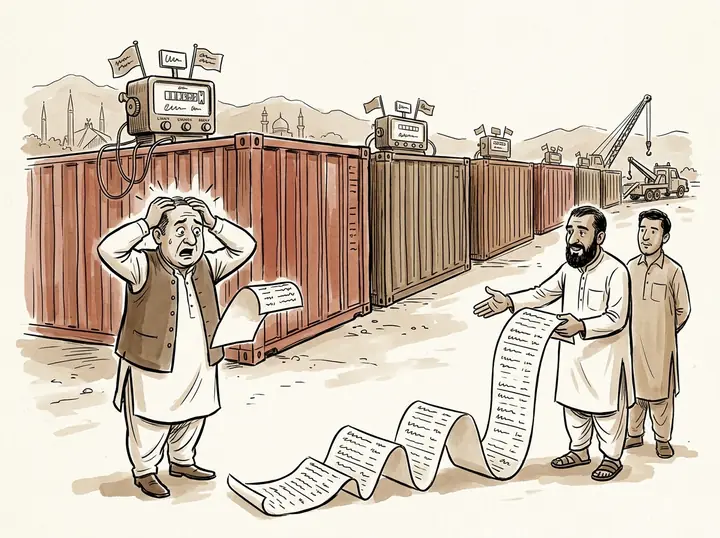
Islamabad has begun removing the shipping containers it used to block a protest march. Their owners have now asked the state for rent: 40,000 rupees a day for each 40-foot box. The barricade, it turns out, was on the meter.