Budgets, procurement, alliances and the art of buying things that arrive late. Never the fighting: the monk covers the paperwork.
Monday, November 2, 2026
Levanger
Ten Days for the Last One
Norway’s Leopard 2A8 tanks are now being built in Levanger, where Germany’s KNDS and Norway’s Ritek will make 37 of the army’s 54, Defense News reports. The plant took 18 months to set up and can produce up to 36 tanks a year. Run flat out, it finishes Norway’s order in a year and about ten days, the last ten spent on one tank.
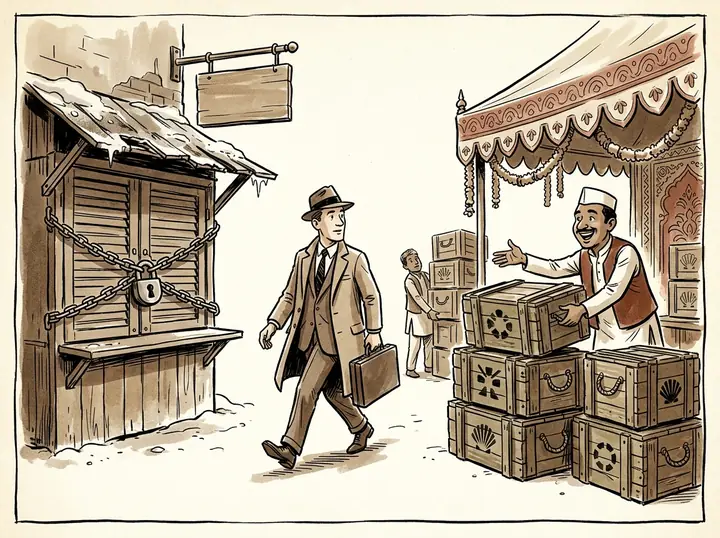
India’s Ministry of Defence has signed contracts worth Rs 53,866.50 crore for eight Next Generation Corvettes, five from GRSE in Kolkata and three from Goa Shipyard, Business Today reports. The ministry estimates 532 lakh person-days of work in shipyards and their suppliers over ten years. No delivery date is given. The ministry has counted every day of the project except the last one.
South Korea’s Hanwha has signed a $269 million contract to build a 2,687-ton medium landing ship for the US Navy, Reuters reports. The work goes to Philly Shipyard, which Hanwha bought in December 2024 and which had not won an order since. Seoul’s arms exports usually travel by sea. This one will be built, launched and delivered without leaving Pennsylvania.
Japan’s defence minister Shinjiro Koizumi says Tokyo and Washington have agreed on “a final assembly and inspection facility in Japan” for the American AMRAAM missile, Breaking Defense reports. No partner or timeline was named. The Pentagon’s readout of his meeting with Pete Hegseth mentions neither deal, only a pledge to coordinate on “critical munitions production.” The first thing still awaiting coordination is the readout.
Textron says the Army’s first low-rate production contract for the MV-75 Cheyenne II tiltrotor may slip under a continuing resolution, Breaking Defense reports. Bell had put the cost of funding delays at $60 million to $110 million; a further wait would raise it to between $110 million and $150 million. Flight testing is due next year. Of everything on the programme, only the delay is ahead of schedule.
Montréal’s MDA Space has signed an authorisation to proceed with Thales Alenia Space, worth more than $100 million, to supply digital antennas for 66 satellites in Europe’s IRIS² constellation, Defence Industry Europe reports. The first set launches in 2029. The definitive contract covering the full scope is still being finalised. Europe has paid over $100 million for permission to start; what exactly has been started arrives in a later document.
India’s Defence Acquisition Council has approved buying special helicopters for the air force’s VVIP flights, which Mi-17s fly for now, Asian Military Review reports. The last attempt produced a contract for twelve AW101s in February 2010, cancelled in 2013 to 2014. The requirement has now lived about four times as long as the contract written to satisfy it.
Türkiye’s annual presidential programme for 2027 lifts the defence export target from $8 billion to $11.5 billion, though exports have already reached $10.1 billion, Quwa reports. Localization, 82.3% in 2025 and up from 20% in 2002, is asked to climb one point, to 84%. At one point a year, the Turkish defence industry will become entirely Turkish in 2043.
Queensland is paying $6.38 million from its Sovereign Industry Development Fund for a mobile launch platform to test flight at Mach 5 and above, Defence Connect reports, starting with boosters below Mach 5. “This $6.38 million investment in Lockheed Martin will help establish a critical rocket testing capability,” said Deputy Premier Jarrod Bleijie. The sovereign fund has invested in sovereignty, made payable to Lockheed Martin.
Türkiye’s state shipyard firm ASFAT will deliver five boats to Jordan’s navy in 2027, Quwa reports, its ASBOT patrol boat stretched from 10.2 metres to 13. The new moulds for the longer hull will take about eight months. At the baseline boat’s 40 knots, the finished article will cover those extra 2.8 metres in about a seventh of a second.
EU ministers have signed off €4.9 billion from the European Peace Facility, according to The Defense Post, with €4.7 billion of it partly repaying member states for military aid they have already sent to Ukraine. Most of the money covers past deliveries rather than new purchases. Europe has perfected the present that finds its way home to the giver.
Under AUKUS, more than 30 Australian civilian technicians are maintaining a Virginia-class submarine at HMAS Stirling in Western Australia for the first time, as USS Colorado becomes the first American boat assigned to rotate there. Officials say it readies Australia for a sovereign fleet. Australia now runs the garage; every submarine in it belongs to a customer.
The US Army is sounding out industry for a 10-year contract for 20,787 more Infantry Squad Vehicles, which GM Defense builds from commercial pickup components, The Defense Post reports. The Army also wants unlimited technical data rights so it can maintain the vehicles in house. The world’s best-funded army has joined the right-to-repair movement.
Finland wants to invest in Australian satellites, uncrewed vehicles and undersea cable protection, its ambassador in Canberra, Arto Haapea, told Defence Connect, a week after the two defence ministers signed a joint statement. Finland has about 300 to 400 defence companies, he said, many of them “topnotch”. A country that cannot count its own defence firms to within a hundred has plainly mastered stealth.
Britain’s Budget promises to cut the time to contract for major military platforms by “two-thirds”, Defence Eye reports. In the same pages, defence land is to provide capacity for “over 100,000 new homes”. Of everything the defence estate is asked to deliver, the most ambitious target is for the space where the defence used to be.
India’s Defence Acquisition Council, chaired by Rajnath Singh, on Monday granted Acceptance of Necessity to proposals worth about Rs 2.12 lakh crore, from helicopters to mobile weather radars, DD News reports. The approval is in principle and administrative. India has now formally agreed that all of it is necessary. Urgency is a separate form.
Britain’s Chancellor, John Healey, told Parliament on Wednesday that a £4.7 billion gap in the Defence Investment Plan will be covered by “capital reprioritization across Whitehall,” adding: “I am fully funding the Defence Investment Plan.” In June he quit as defence minister, saying the government’s defence spending was inadequate. Resigning from defence over the money has turned out to be the quickest route to the money.
Saab has named three Canadian partners, IMP, Magellan Aerospace and CAE, for assembly and training if Ottawa buys the Gripen, Breaking Defense reports. Canada’s planned purchase of 72 more F-35s has been under review since March 2025; Defence Minister David McGuinty said in July it would stay under consideration “until we take the time to get it right for Canadians.” The fighter review has lasted long enough to grow an industrial base of its own.
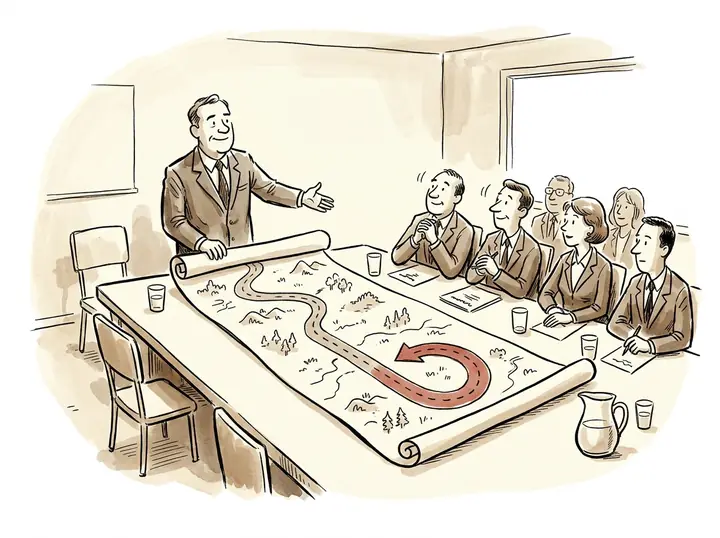
The US Air Force has given Lockheed Martin $694 million to put the AGM-183A hypersonic missile, ARRW, into production, Defense News reports, without saying how many, citing operational security. The service stopped buying ARRW in 2023 after unsuccessful tests. Air Force Secretary Troy Meink calls the award “a turning point in our advanced weapons roadmap.” On this roadmap, the turning point was a U-turn.
Britain will not join the Canada-led Defence, Security and Resilience Bank, Reuters reports, after the two could not agree on its headquarters, joint buying, lending or membership rules. Instead they will build a framework for cooperation between the bank and Britain’s own Multilateral Defence Mechanism. Unable to agree on one defence bank, the allies now have two, and a framework for them to be polite to each other.
India exported at least $872 million of ammunition in the four years since Russia invaded Ukraine, a rise of more than 1,600% on the previous four, Defense News reports, citing Bloomberg, with Romania and Poland among the buyers. “Russia is not an option for Europe, that is over,” says Dinakar Peri of Carnegie India. Europe has stopped buying shells from Moscow and started buying them from one of Moscow’s oldest customers.
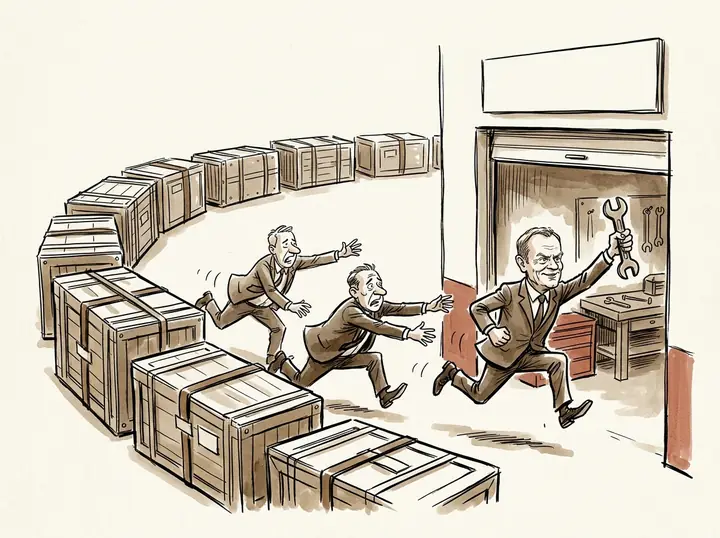
The United States has chosen Poland to host a European maintenance hub for PAC-3 interceptors, with Germany, the Netherlands and Sweden leading supply chain integration, Defense News reports. “We were contending against several ambitious competitors,” said Prime Minister Donald Tusk. In 2018 Warsaw paid about $4.75 billion for two Patriot batteries of its own; it has now beaten its allies for the right to fix theirs.
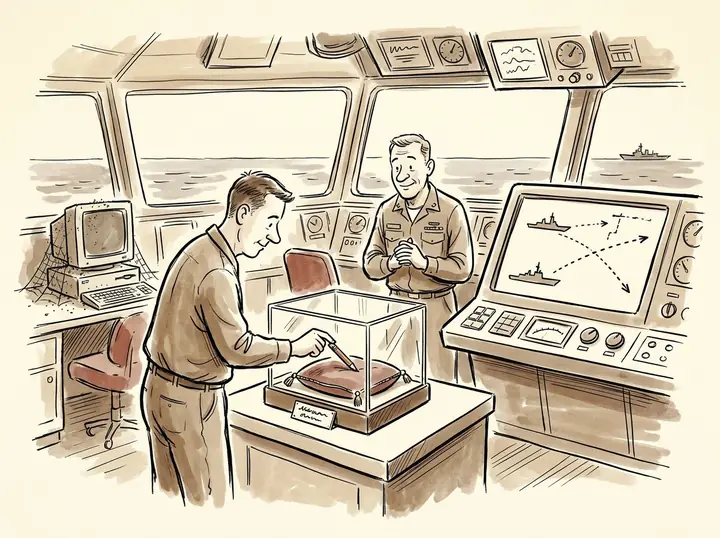
The US Navy has hired Applied Intuition to install an AI system that detects and tracks nearby vessels, “starting with five Arleigh Burke-class destroyers,” The Defense Post reports; no contract value was given. The Intelligent Perception System will predict other ships’ paths and keep digital records of the vessels it sees, replacing handwritten logs. The fleet is going from the pencil to artificial intelligence without stopping at the spreadsheet.
Britain’s Defence Science and Technology Laboratory is running a trial called HEADS UP, in which soldiers from four regiments wear rigs that simulate the weight of night vision, augmented reality and radio gear, since too much of it impairs decisions. The project lead says the trial “puts the soldier at the centre of new equipment design.” Until now the soldier had mostly been the hat stand.
Denmark’s Export and Investment Fund will guarantee a 750 million kroner loan, about $113 million, for the Danish subsidiary of Ukrainian arms maker Fire Point, because war risk keeps commercial lenders from offering normal terms. Moving production to Denmark was meant to put it beyond the war’s reach. The factory made the trip; its credit rating is still waiting at the border.
Australia is paying $22 million toward a $60 million plant in Pascagoula, Mississippi, making submarine propellers and rotors, part of the $3 billion Canberra has pledged to expand US submarine production. Under AUKUS, Australia is due to buy Virginia-class boats from that same industry. Canberra is now paying for the shop while still queuing outside it.
Pakistan’s new Defence Industrial Production and Regulatory Authority, launched in June, can dissolve state enterprises that duplicate private-sector work. Quwa reports that its priority is courting Turkish and Saudi investors for new plants at Pakistan Ordnance Factories, with private ownership of up to 49 percent. The overlap between state and private industry is being removed by putting both in one factory, at 51 to 49.
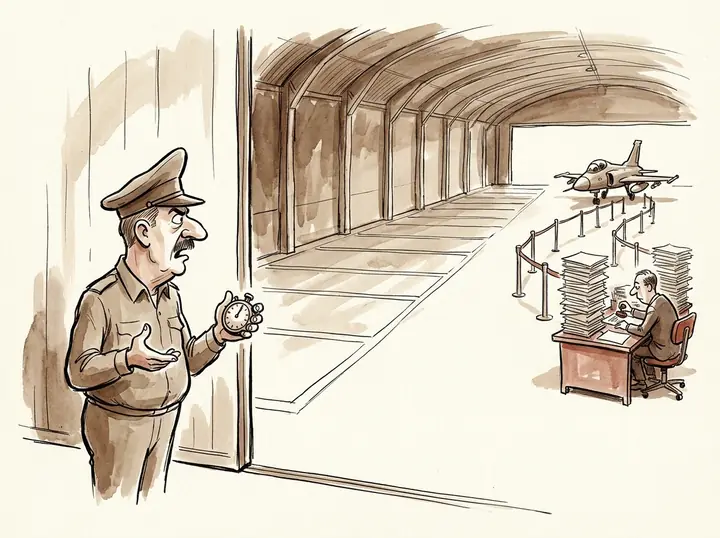
Australia is buying three Japanese-built Mogami-class frigates, with eight more to be built at Henderson in Western Australia. Defence’s David Hanley told a Perth summit the frigates’ sustainment solution “will need to be done in three years,” against a normal period of seven, and that the facilities will need “an inordinate number of approvals.” Four years have come out of the schedule and, by the sound of it, gone straight into the paperwork.
Australia has given Northrop Grumman $126.9 million to show it can make solid rocket motors at the government’s Mulwala munitions factory, with production for GMLRS due by 2030. Both sides aspire to motors that are 100 per cent Australian-made. In the meantime, the ignition safety devices will come from the United States. Every part will be Australian except, for now, the one that decides whether it lights.
Canada’s Department of National Defence has signed a C$20 million, 10-year agreement for access to NordSpace’s Atlantic Spaceport Complex in Newfoundland and Labrador. Construction is due to finish in spring 2027, and the company’s first orbital launch is targeted for no earlier than 2028. No particular launch was purchased. Of the ten years Ottawa has bought, the first two come guaranteed quiet.
Japan’s Ministry of Defense has bought interceptor drones from the Ukrainian start-up SkyFall under its new Fast-track Procurement model, which asks winning bidders to reach mass production within three months. How many drones, and at what price, has not been disclosed. Procurement has finally moved fast enough to leave the quantity behind.
Pakistan’s defence minister Khawaja Asif signed the Badr memorandum in Doha this week with Turkey, Qatar and Indonesia, to link their defence industries, The Defense Post reports. It follows an August mutual defence pact between Pakistan, Turkey and Saudi Arabia, which Turkey is still seeking to have ratified. The alliance now has two agreements, and one parliament still reading the first.
Italy’s army has reportedly awarded the Leonardo and Rheinmetall joint venture two contracts worth $4.16 billion for combat vehicles and new tanks, Defense News reports. Leonardo’s chief executive could not confirm the contract had been signed, but said: “The programme is ready to enter production from our side.” The factory is ready to build the tanks. It is the contract that is still in development.
The Pentagon and Lockheed Martin agreed on Thursday to a 10-year framework guaranteeing at least 850 F-35 jets, Defense News reports. Neither side disclosed a total value or a price per jet. The stopgap funding law now in force runs through 11 December and generally bars multiyear buys. Lockheed has been promised a decade of orders by a government funded for seven weeks.
Türkiye has signed $15 billion in new defence contracts so far in 2026 and aims for $20 billion by year-end, Haluk Görgün of the Presidency of Defense Industries told a subcontractor workshop in Bursa. Defence and aerospace exports reached $6.92 billion in nine months, worth 40 times the national average per kilogram. By that measure the perfect Turkish export weighs nothing at all.
NATO will let Ukraine buy weapons, ammunition and equipment through the NATO Support and Procurement Agency, possibly faster and more cheaply, the Financial Times reports. The agency’s Jacqueline Borsboom called it “a more structured framework to leverage a broad range of capabilities that we offer.” Kyiv has waited years at the alliance’s front door; it has now been let in at the loading dock.
Britain’s parliamentary Defence Committee found on Thursday that the Royal Navy has five anti-submarine frigates in service against a requirement of eight, Defense News reports. Eight Type 26 replacements are on order. If two British-built ships go first to Norway, which is buying five, the navy reaches eight in 2037. For several years Britain’s newest frigates will be best admired from a Norwegian quay.
Australia will spend A$65 million on a pilot to recruit 100 Papua New Guineans into its Defence Force over two years under the Pukpuk Treaty, the ABC reports, with applications opening on 16 November. Deputy Prime Minister Richard Marles said the pilot “will have smaller numbers to begin with”. Divide A$65 million by a smaller number and each recruit only gets dearer.
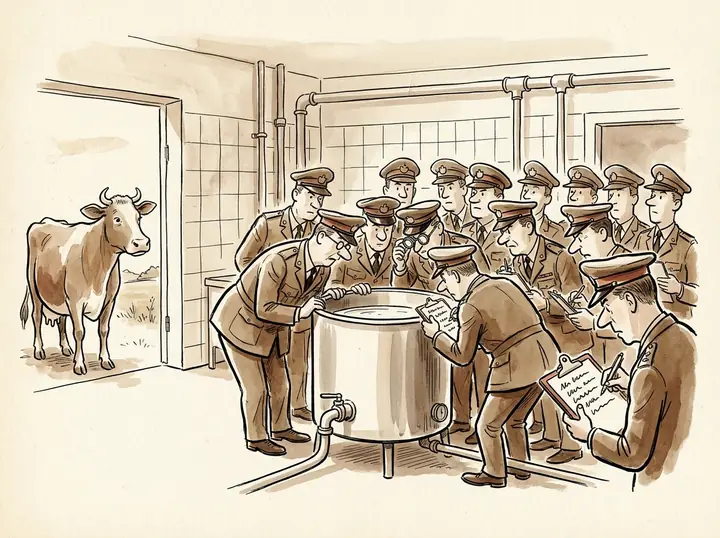
Thirteen US Army Veterinary Corps officers have completed a pasteurizer audit course in Kolding, Denmark, inspecting eight Danish dairies approved for American military procurement, Defense News reports. The course, revised since 2004, provides “progressive and sequential auditor development training”, and its leader calls the skill “essential to force health protection”. The Army now has thirteen more officers qualified to tell Denmark how to make milk.
China built 636,208 tons of combat ships in 2024 and 2025, more than twice the United States’ 270,509, according to a World Defense Shipbuilding report released in Paris ahead of Euronaval. The American fleet still outweighs China’s, 3.11 million tons to 1.44 million, though it weighed 3.22 million two years earlier. America’s shipyards have kept pace admirably with its scrapyards.
South Korea will put four military reconnaissance microsatellites on the 11th mission of its home-built Nuri rocket, in 2031, Korea AeroSpace Administration chief Oh Tae-seok has said, as Seoul moves away from relying on foreign rockets. Nuri is to fly at least once a year through 2032. Reconnaissance satellites exist to see things coming; these four can already see their own launch five years out.
Theon International says two European NATO member states have awarded it night vision contracts worth about €45 million, with deliveries due to begin this year. The release names neither country, gives no quantities and cites “strong demand for Night Vision systems across NATO countries”. Both buyers prefer to stay in the dark, the one place the product was built to find them.
India’s Air Force has 29 fighter squadrons against an authorised 42, and Air Chief Marshal A.P. Singh says it needs about two new ones a year; deliveries of 180 Tejas Mk1A jets are behind schedule. “There is some extra delay,” he said. At two a year the gap closes in six and a half years, provided the old jets agree to stop ageing.
Japan wants to sell the Philippines air defense systems its own Self-Defense Forces use, shown by Mitsubishi Electric and Toshiba, USNI News reports; revised export guidelines now allow it, and Manila wants dozens of batteries. One analyst warns Japan’s expanded production “may still be insufficient to meet export demand”. The guidelines permit the sale, but nobody put the factories on the drafting committee.
The US Army has “earmarked” an air defense unit for Golden Dome, Lt. Gen. John Rafferty told the AUSA annual meeting, without saying which. The Pentagon has requested $17.5 billion for the shield in fiscal 2027, through a reconciliation package now in doubt; the base budget holds about $400 million. The shield is still waiting for an earmark of its own.
Germany will no longer buy Boeing’s MQ-28 Ghost Bat directly, citing contracting laws and parliamentary review. Berlin had meant to be Europe’s first to field a loyal wingman, by 2029; competitive flight tests now start in 2027 and fielding slips to the early 2030s. Germany may still be first, provided the rest of Europe also consults its parliaments.
Australia’s Defence Department has asked industry for a medium-range air defence system under Project Land 6504, which its 2026 strategy wants introduced in an accelerated fashion. The solicitation asks for a “proven capability”; a choice is due late in 2027 and initial operational capability in the early 2030s. Whatever is chosen will have had plenty of time to prove it.
India’s defence ministry has signed a ₹661.5 crore (about $68 million) contract with BrahMos Aerospace for fire-control systems and launchers for two Veer-class corvettes and two Ranvir-class destroyers, Naval News reports. The ministry says the project has over 68% indigenous content. The destroyers, commissioned in 1986 and 1987, were built by a country that no longer exists.
Hanwha says two of its lasers downed all three target drones at a South Korean Army demonstration on 14 October, watched by about 500 people. A shot from its Cheongwang laser costs about $1.50. The five or so units fielded so far guard major government sites, including the defence ministry, settling at last what a defence ministry defends first.
DAPA, South Korea’s defence acquisition agency, is feuding with the Army over colonels: about 6% of its Army officers were promoted for 2027, against about 17% at the defence ministry, and the Army refused it more slots. The commissioner assigns the officers; promotions belong to the Army chief of staff. The commissioner may recommend them, a power he shares with their mothers.
Turkish Aerospace has finished a second production line for its Anka 3 drone, due to open in November, to build a larger variant carrying 1.75 tons instead of about 1.3. The armed forces have ordered 80, with first delivery expected in 2027, and the original prototype is still in flight testing. The Anka 3 is getting its mid-life upgrade before its first delivery.
Pakistan’s navy wants a naval air arm linked by manned-unmanned teaming, AI, sensor fusion and a mesh network, Quwa reports, citing its chief, Admiral Naveed Ashraf. The Shahpar-3 drone is still in development and the new Sea Sultan patrol aircraft has not been inducted; the networking is to follow them. The network is ready to connect everything except, for now, anything.
The US Army inactivated its 8th Psychological Operations Group at Fort Bragg on 29 September, nearly thirteen years after activating it. Inactivation, Defense News explains, sets a unit aside for an unspecified period and does not necessarily mean it is dissolved. A psychological operations unit has been closed in a way that leaves everyone unsure whether it has been.
India’s navy commissioned INS Samarthak at Karwar on 16 October, the first of two multi-purpose vessels ordered from Larsen and Toubro in March 2022 for ₹887 crore. Its jobs run from patrol and trials to firefighting, hospital duty and mine countermeasures. The navy has no minehunters; efforts to buy 12 have been delayed for decades. After decades waiting for twelve minehunters, the navy has one ship that hunts mines part-time.
Britain’s government calls reports that it will not decide when to raise defence spending until autumn 2027 “pure rumour and speculation,” since no date was ever announced. Britain awarded the Ajax armoured vehicle contract in 2010 for a requirement identified in 1996; full service is expected in 2028 or 2029 at the earliest. A date never set is the one deadline Whitehall has never missed.
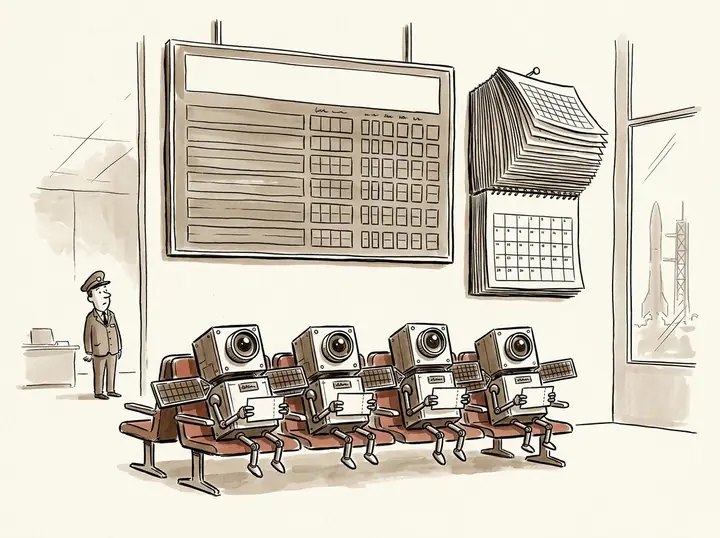
Saab has unveiled Sweden’s first GlobalEye surveillance aircraft, ordered in 2022, which must still pass testing and verification before its first flight. Canada picked Saab as its preferred supplier in May, and in September Saab and Canada’s Defence Investment Agency signed a preliminary agreement to negotiate the purchase of six. Ottawa’s six have reached the cruising altitude of a preliminary agreement.
Turkey’s ASELSAN plans ASTRALINK, a constellation of 198 low Earth orbit satellites for Türkiye and its allies. Chief executive Ahmet Akyol says the first satellite should launch within two years, and the company aims to build up to four spacecraft a month. At that rate the other 197 take a little over four years, starting in two.
France will build its next fighter, the Avion de Combat du Futur, alone: Paris and Berlin agreed in June to scrap the joint FCAS programme after years of industrial quarrels. Air force chief Jérôme Bellanger says the halt “doesn’t mean we’re throwing everything away”: cooperation with Germany should continue on the combat cloud. Of Europe’s shared fighter, the part still shared is the cloud.
South Korea’s Hanwha has an order from the US Army for nine wheeled K9 howitzers, prototypes for a gun the Army designates the XM-1776 Mobile Tactical Cannon. A Hanwha executive says the company will “expand America’s artillery industrial base,” though most of the work on the guns will take place in South Korea. Independence, made mostly in Korea.
Lockheed Martin will spend $300 million on its plant in Grand Prairie, Texas, to raise output of PAC-3 MSE interceptors from about 600 a year to roughly 2,000 over seven years. Part of the work turns 85,000 square feet of offices into factory floor. A $4.7 billion Army contract signed in April became a seven-year deal worth about $58.6 billion by July. The fastest thing built in Texas this year was the contract.
India’s defence ministry signed contracts worth about Rs 4,106 crore on 15 October: Rs 2,563 crore to New Space India for the GSAT-7C communication satellite for the air force, and Rs 1,543 crore to Bharat Dynamics for Varunastra heavy-weight torpedoes for the navy. The announcement gives no quantities and no delivery dates. Every rupee is accounted for; the torpedoes are taking it on faith.
Thales Australia unveiled BladeHaul, an extra-large uncrewed ground vehicle built on a Bushmaster chassis and able to carry more than 10 tons, at the Land Forces show in Perth. Development began about 18 months ago, and it “does not yet have a working autonomy system”; Thales has signed a memorandum with Deakin University to work on one. A driverless truck, in the sense that nobody has finished the driver.
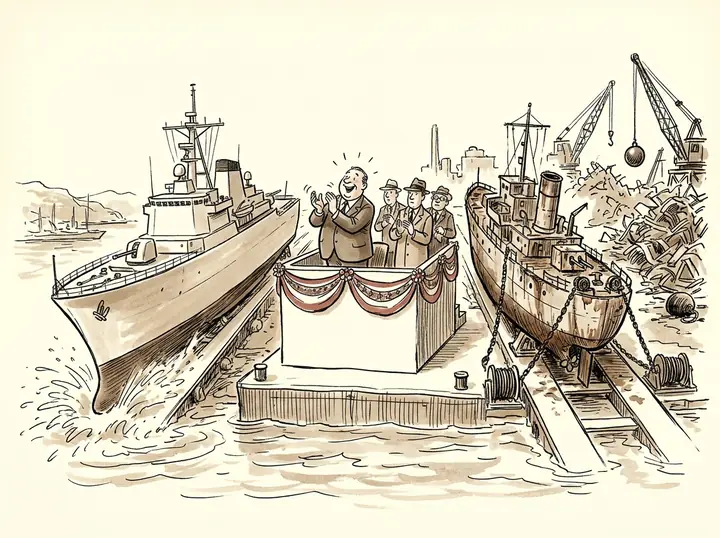
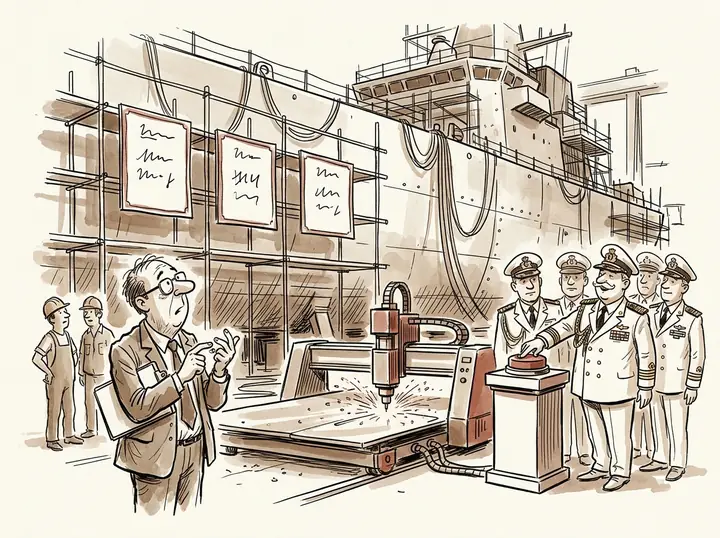
Fincantieri has cut the first steel for PPA 9, the ninth of Italy’s multipurpose patrol ships and the seventh and last to be delivered to the navy, under Contract Amendment No. 10. Five of the seven are in service. To mark the start, “the laser cutting machine was ceremonially activated by representatives of the Italian Navy.” In Liguria a ship can be ninth, seventh and tenth at once.
Estonia’s new defence minister says the country should study buying light jet aircraft against jet-powered drones, and has named no type, budget or timeline. Estonia leases two L-39 trainers, and a former air force chief said in April that their civilian status and lease terms would complicate arming them. An air force, subject to the landlord’s approval.
Australia’s $36 billion guided weapons and explosive ordnance programme paid $8.1 million and $5.2 million in June 2023 before the required legal sign-off, then approved both payments retrospectively in July 2025, Defence documents show. The staff involved are “no longer within the Contract Management Team.” The defence industry minister says “the rot has to stop.” At Defence, approval is a form of history.
Norway’s Kongsberg will invest €45 million in a counter-drone factory in Poland’s Pomerania region, creating more than 100 jobs. Construction starts once a contract is signed, expected by the end of 2026, and serial production in the first half of 2028. The exact site has not been disclosed. An urgent factory, with a start date and no street.
Kuwait has agreed to buy a £370 million air defence system from MARSS, a Bristol firm owned by Australia’s Electro Optic Systems, with integration to take 24 months. The deal supports 100 jobs in Britain, which a British minister called proof of the UK delivering for its regional partners. A British export, owned in Australia, sold in the Gulf: the paperwork travels further than the radar.
South Korea’s arms procurement agency has counted 63 defence data leaks at domestic defence firms and their partners since 2021, 14 of them so far this year. Fifteen are classed as untraceable and remain unresolved. The agency that tracks every weapons programme now keeps a column for what it cannot track.
Washington has restated that Turkey gets its F-35s only once conditions tied to its 2017 purchase of Russia’s S-400 system are met. Turkey was suspended from the programme in 2019. Six jets originally built for its pilot training wait in American storage, among the costliest things ever kept in someone else’s garage.
Austria wants 36 fighter jets for about €10 billion, roughly €200 million each. Brazil signed for 36 Gripens in 2014 at an estimated €98 million apiece and had received 11 by March. Same number of jets, about twice the price, a decade later. In procurement, waiting is the costliest optional extra.
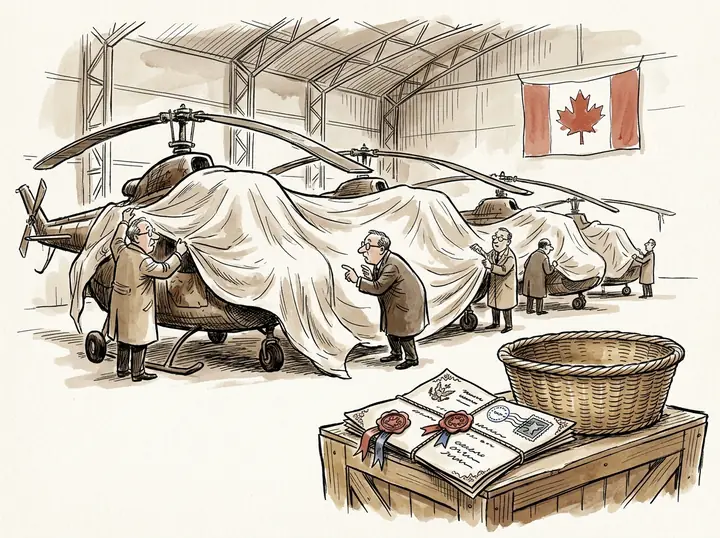
Ottawa has halted the purchase of 16 Black Hawk helicopters for its special forces after the deal had already been approved by the US State Department; they were to replace ageing Griffons. The responsible minister warned against “putting all our eggs in one basket.” Canada’s procurement has now paused both its fighter jets and its helicopters. The basket is very safe; it is empty.
France may keep the carrier Charles de Gaulle sailing past 2038, the year its €10 billion successor, France Libre, is due. The two are meant to overlap from 2036, and studies on stretching the old ship’s life report in early 2029. The navy has found the cheapest way to own two carriers: wait.
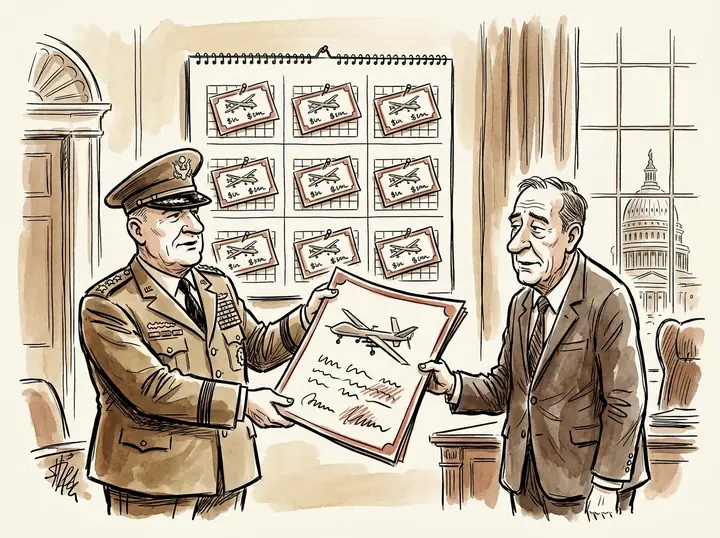
The Pentagon has asked Congress for a one-off $50 billion to mass-produce drones, separate from the $53.6 billion already requested for next year under a programme called Drone Dominance. The defense secretary calls the $50 billion a one-time investment. In Washington, one time is a recurring event.
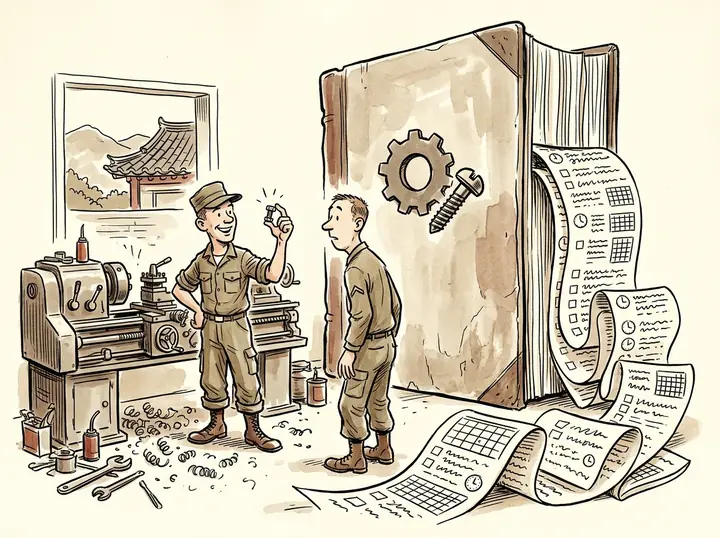
A US Army team in South Korea machined a turret bolt for $1.27 because the official part is back-ordered until February 2027. It built another assembly for $82 that would have cost a unit in Guam $36,000. The Army now hopes to make Korea a manufacturing hub. The bolt is expecting a promotion.
Pakistan’s 2026-27 budget of $67.4 billion sets aside $10.77 billion for defense and $28.91 billion for interest, about 2.7 times as much. Agriculture is nearly a quarter of the economy and under 1 percent of tax revenue. The army is large. The creditors are larger.
India has sold Akash air defense missiles to Tajikistan and Turkmenistan and declined to say for how much or how many. Its defense exports rose about 62 percent last financial year, to $4.1 billion. Sales are growing briskly. Disclosures are holding steady at zero.
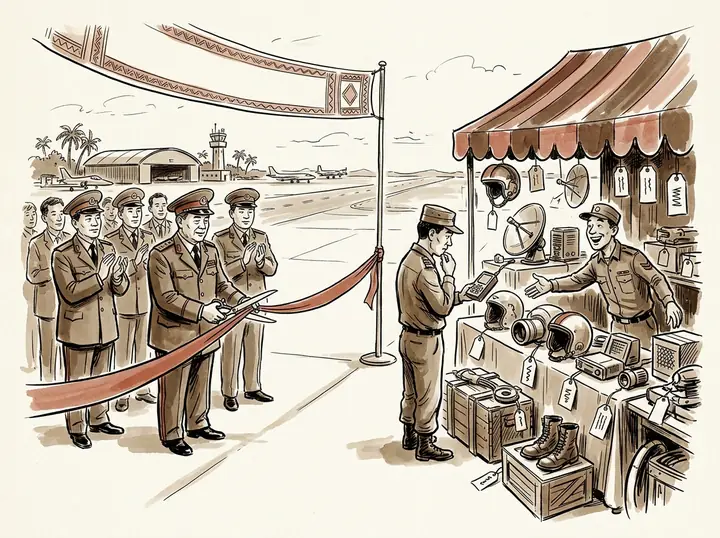
China and Laos have opened a joint training centre at an upgraded airport about 50 kilometres from Vientiane, with a 2,000-metre runway. Beijing says it is not directed against any third party. A study suggests it may help steer Laos’s purchases toward Chinese equipment, in which case the third party is the shop.
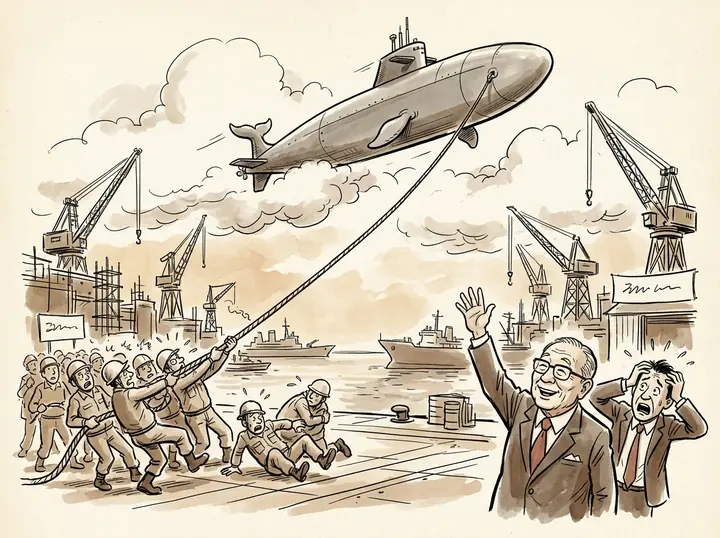
Japan has launched its seventh Taigei-class submarine, built by Mitsubishi Heavy Industries and named Shōgei, which translates as soaring whale. The defense minister chose the name himself. Delivery is due by 2027. A submarine called the soaring whale is either very confident or slightly lost.
Canada agreed in January 2023 to buy 88 F-35s. A review ordered in March 2025 is still going, and Ottawa is so far committed to 16. Its one F-35 in the air is in Texas. The other 87 exist in the purest state of Canadian procurement: under review.