Westminster, Whitehall, the devolved capitals and the town halls: consultations, audits and the art of the U-turn.
Sunday, November 1, 2026
Staines-upon-Thames
Built First, Debated Later
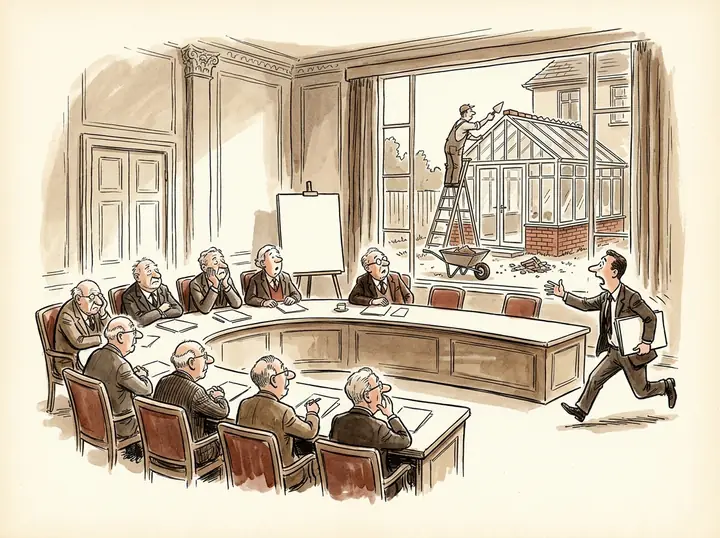
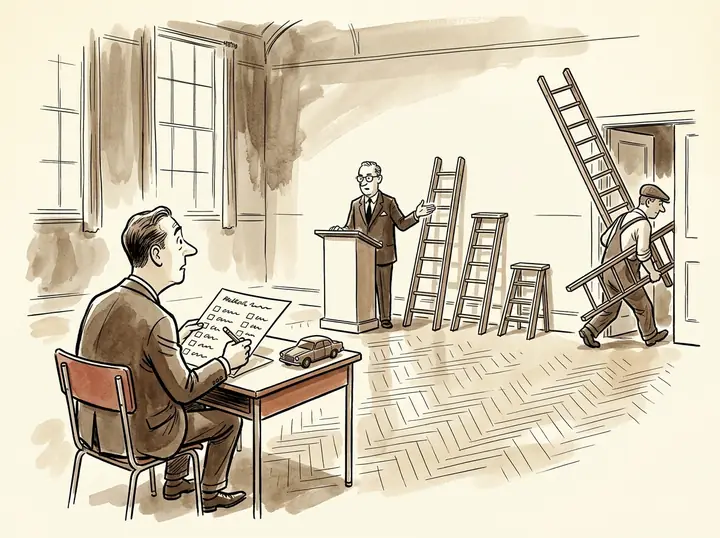
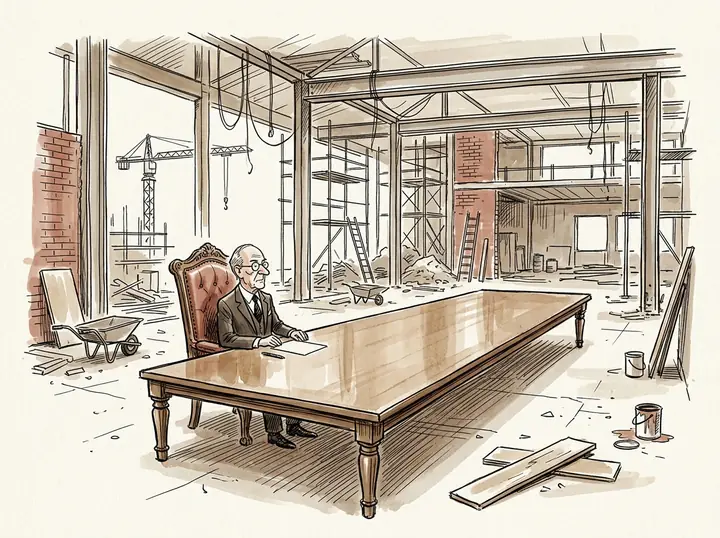
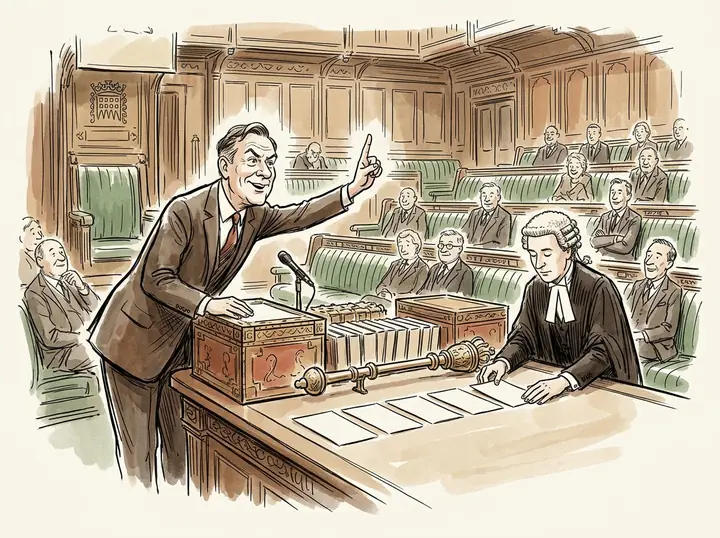
From Saturday, councillors in England may no longer call most small planning applications in to committee, Spelthorne Borough Council has told residents: house extensions and schemes of fewer than 10 homes now go to officers alone. Committees keep major proposals, listed buildings and retrospective applications. A councillor who wants a say on the neighbour’s conservatory must now wait for the neighbour to build it.
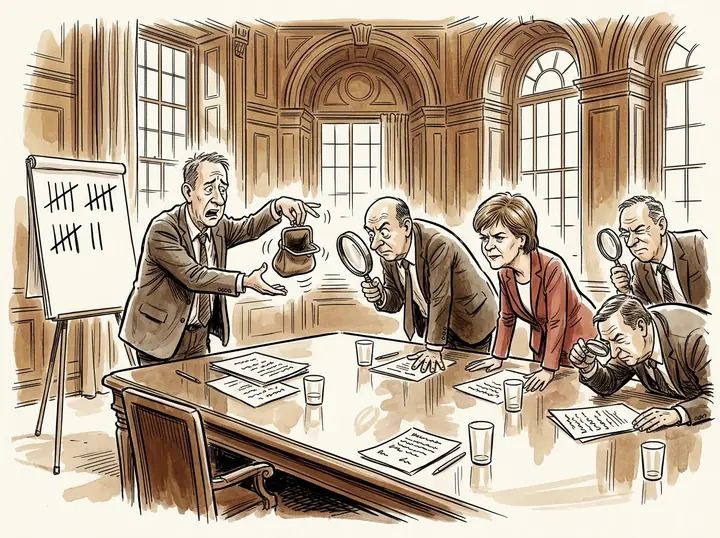
The UK Budget scrapped import tariffs on more than 100 goods, including baked beans, chocolate, gherkins and kerosene heating oil. The Treasury estimates households could save up to £21 a year on groceries, depending on how much businesses pass on. Monk has done the division. That is up to forty pence a week, payable to whoever owns the till.
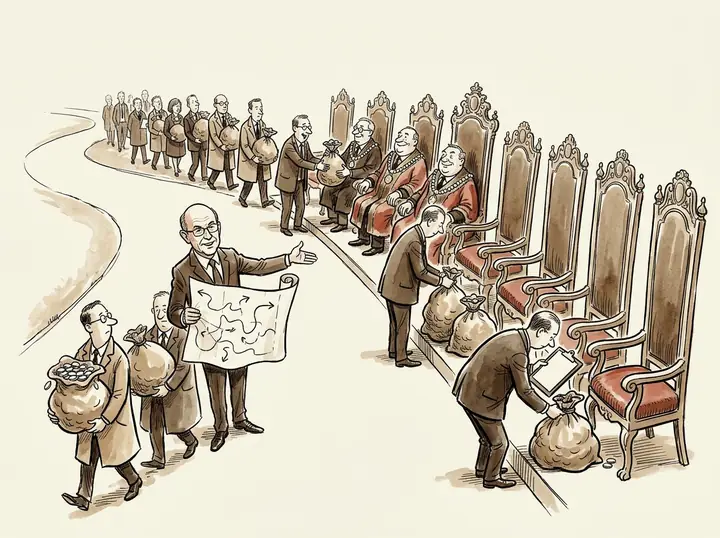
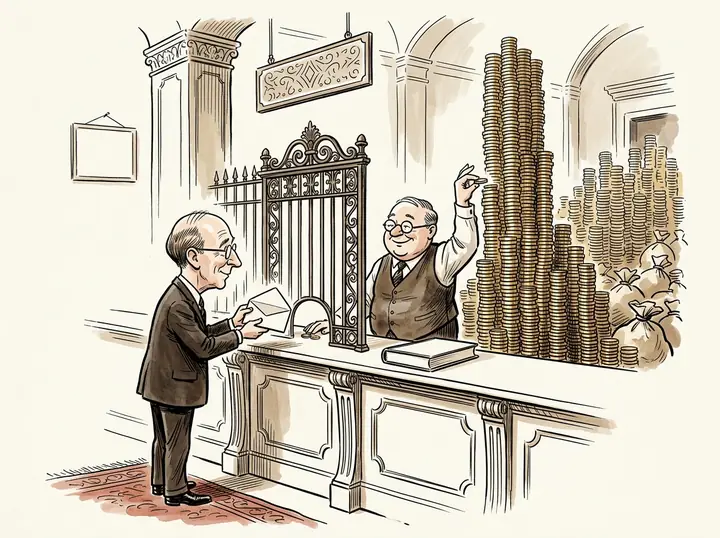
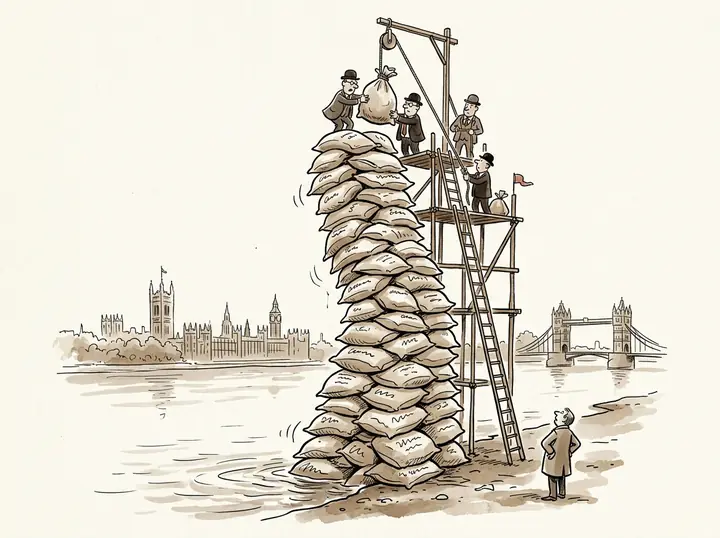
Britain’s Chancellor, John Healey, says he is “looking to our banks to help fund breathing space for British families,” including a £100 payment to 20 million households this winter. The Treasury’s note doubles the bank surcharge to 6% from January 2027, for fifteen months, and books most of the money, £950m, in 2027 to 2028. The breathing space arrives this winter; the banks are asked to supply the air the winter after.
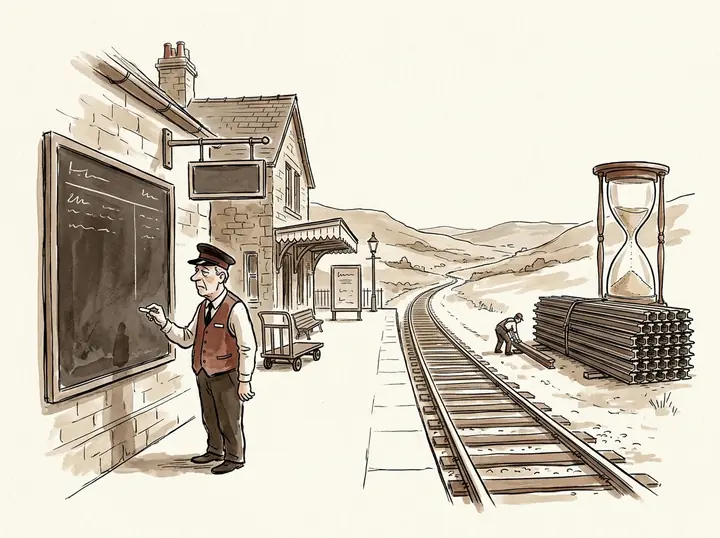
Wales’s finance minister, Elin Jones, says this “was not a UK Government Budget that delivered for Wales.” Of Westminster’s £14 billion commitment to the Welsh rail infrastructure it controls, £302m is allocated in the spending review period running to 2029-30. At four years per £302m, the last of the £14 billion arrives around 2211: late, but for once with a published arrival time.
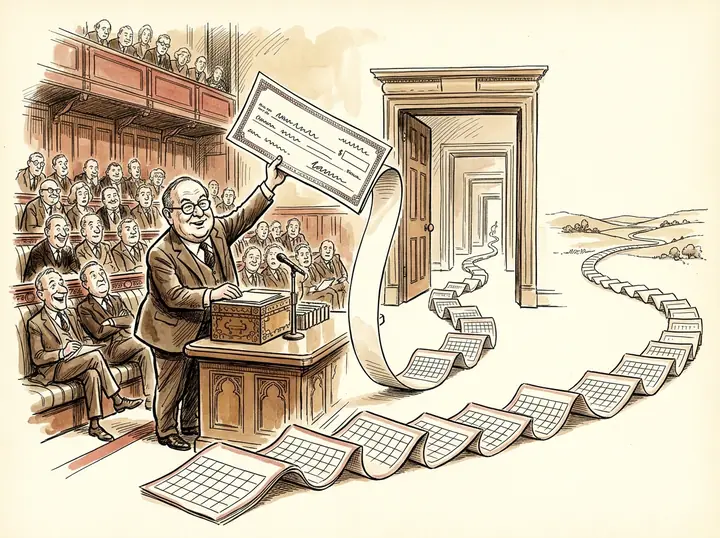
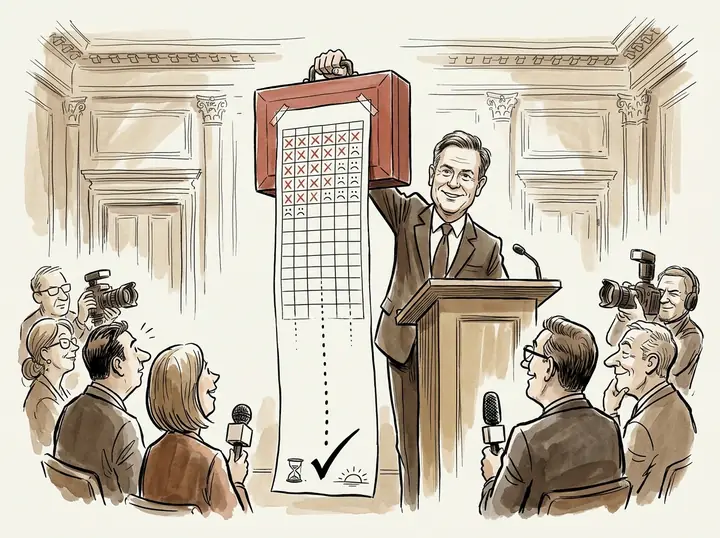
In his Budget speech on 28 October, Britain’s Chancellor, John Healey, assured MPs that “every policy in this Budget is fully funded.” The speech, as Labour published it, also promised that “from 2030 we will adjust the Triple Lock,” saving £15bn a year within that decade and “£50bn by 2050.” The Budget is paid for in full, on an instalment plan that matures in 2050.
Britain’s Chancellor, John Healey, is to publish a fiscal devolution roadmap alongside his Budget on 28 October, setting out “how income tax and business rates revenues will be assigned to mayors” in place of grants, the Institute for Government reports. The proposed start date is April 2028. Almost half of England “still does not have a mayor at all.” There, the money will be devolved to an empty chair.
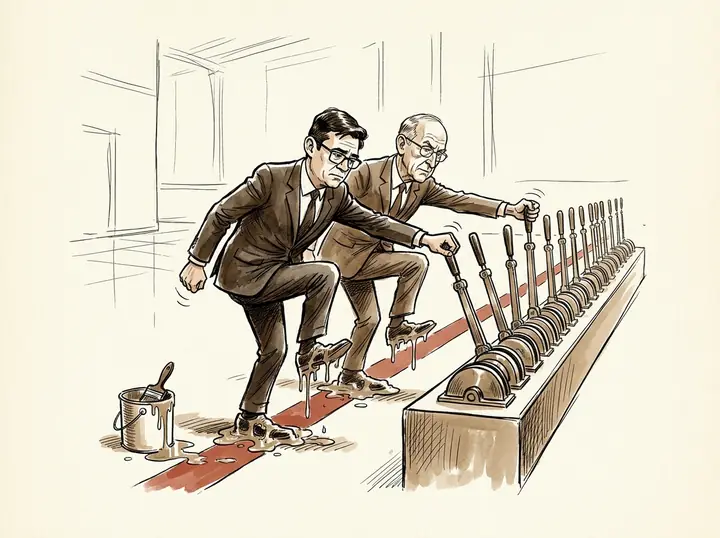
Britain’s prime minister, Andy Burnham, says he will “pull every single lever” to ease the cost of living. His Chancellor, John Healey, who presents the Budget on Wednesday, says the two are “lockstep in our commitment to meeting the fiscal rules,” the Institute for Government notes. Pulling every lever while marching in lockstep is possible, provided nobody moves.
Britain’s Treasury has told a lobby briefing that “there will be no additional borrowing in this Budget,” which Chancellor John Healey delivers on 28 October. His fiscal rules require debt to fall as a share of GDP by 2029/30. The Institute for Fiscal Studies warns that pencilling in cuts he has no intention of delivering would make the Budget “a work of fiction.” Novelists call this writing the last chapter first.
Conservative leader Kemi Badenoch told a London audience that with gilt yields at 6%, “every pound we borrow is already costing us £2 in less than 12 years.” A Labour spokesperson replied that the Conservatives have “zero credibility on the economy.” A pound doubling in twelve years at 6% is the rule of 72, which was in print before either party existed.
Economists expect Britain’s Office for Budget Responsibility to flag spending pressures in its analysis of Chancellor John Healey’s Budget, due on Wednesday. The watchdog has already warned that “technical efficiencies” worth nearly £17 billion across Whitehall by 2029 could make balancing the books harder. Asked about the forecast, the Treasury would not discuss “speculation”. A technical efficiency is a saving with a number and no address.
Britain’s farming minister Stephen Morgan told MPs that the government’s position on inheritance tax relief for farms was “now settled,” Professional Adviser reports, before the 28 October Budget. A Liberal Democrat MP had asked how a farm making £18,000 in annual profit could face a £650,000 bill. At that profit, the bill is settled in about thirty-six years.
Britain’s National Audit Office reports that 8.2 million taxpayers owed HMRC £43.8 billion at the end of 2025-26, or 4.7% of receipts. In July 2025 the then Exchequer Secretary set a target of 2.5%, which HMRC does not expect to reach until after 2029-30. The minister set no time limit. HMRC is therefore not late, merely in arrears.
Britain’s National Audit Office has reviewed six examples of innovation at the Department for Work and Pensions, which has “an ambition to be a leader in public service innovation.” The auditors find “indications of positive impact,” but say the department “has more to do to build a culture where staff feel confident to try new things within clear boundaries.” The boundaries, at least, are already in place.
British MPs have two days to examine the Northern Ireland Troubles Bill’s 98 clauses and six schedules, along with 156 government amendments, and to finish every Commons stage, the Hansard Society notes. Report Stage will be “a formality,” because amendments cannot be tabled until the committee stage ends. Counting amendments alone, the bill’s most determined critic is the government.
Commons Speaker Lindsay Hoyle protested after Britain’s reversal on the North Sea’s Jackdaw gas field reached the media before Parliament, The Critic reports. Energy Secretary Miatta Fahnbulleh was in Aberdeen speaking to broadcasters while a junior minister made the statement. “I’m sorry that Sky News is more important, rather than the members,” Hoyle said. Parliament still hears every decision first, as the repeat.
Britain’s Public Accounts Committee reports that UK Research and Innovation cancelled its airborne laboratory, an aeroplane that measured the atmosphere, after spending £46 million of a £49 million upgrade, then declined to find £30 million to run it. Its reasons included fewer willing researchers and drones. The committee says UKRI “could have taken action sooner.” About £46 million sooner, for a start.
Britain’s Chancellor, John Healey, has ruled out a rise in capital gains tax for the Budget on 28 October, the Times reports. The Financial Times had already reported that matching it to income tax rates was off the table. The Treasury declined to comment on “rumour, speculation or proposals.” Eight days before the Budget, that covers most of it.
Britain’s government is consulting on lowering its electric car target, the Financial Times reports: instead of 80% of new sales by 2030, options of 70%, 60% and 50%. The consultation closes on 23 October, and the Department for Transport says “no decisions have been made.” Manufacturers have been handed a multiple-choice question on which every answer is lower.
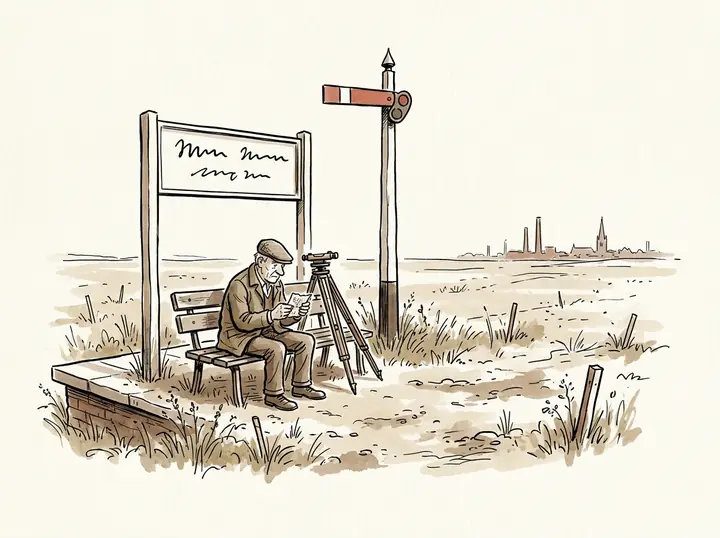
Britain’s government has appointed Sir John Kingman as the first chair of Great British Railways, starting immediately. The body has a headquarters in Derby and will be the third-biggest public sector organisation in Britain once it is “formally established”, which waits on the Railways Bill still going through Parliament. Until then it is the largest public body in Britain that does not exist.
Britain’s Chancellor, John Healey, may restore the bank surcharge, cut from 8% to 3% in 2023, in his 28 October Budget; the Treasury puts the yield at about £2 billion a year. Banks made about £1 billion a week in the first half, by the TUC’s count. Healey calls them “hard-wired into the economic fabric.” Full restoration would cost the fabric about a fortnight.
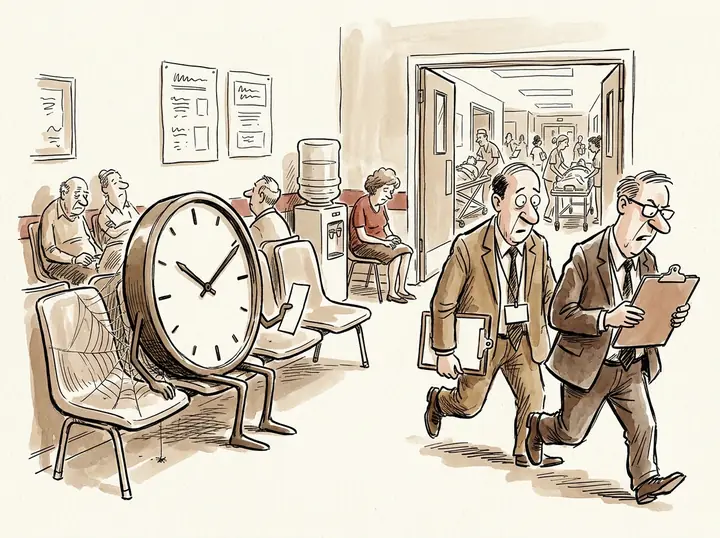
England’s A&E departments have not met the four-hour standard of 95% nationally since 2013-14, the National Audit Office reports; they managed 74.9% in 2025-26. NHS England’s latest interim goal is 85% by 2028-29. The auditors also found “not sufficient visibility or national measurement” of why discharges are delayed. The four-hour target has now been waiting twelve years to be seen.
Britain’s work and pensions secretary, Pat McFadden, told the Commons on 12 October that the employment rate is higher than in “all but one” of the Conservatives’ 14 years, then said it again. Full Fact checked the ONS figures: today’s 75.1% is below 2018 and 2019, and level with 2020, 2022 and 2023 when rounded. All but one, for values of one that include five.
Ofcom has provisionally found that a broadband firm failed to keep its lines over roads at least 5.5 metres up, and fell short on inspection and maintenance. Its metal poles stand as tall as 15 metres, against 9 or 10 for a wooden one. The company has 20 working days to respond. Very tall poles, it turns out, can still carry very low wires.
Thames Water’s creditors may lend new money to keep the company running until autumn 2027, according to reports. “Customers will be incredulous if the company’s creditors are now able to pile on another multi-billion pound debt,” the chair of the Commons environment committee said, urging ministers to “draw a line under this sorry saga.” The utility’s most dependable flow remains borrowing.
Derby was chosen as the home of Great British Railways in March 2023; the site has only now been confirmed. A planning application for an office of about 106,000 square feet, for up to 450 staff, went in this month, with funding “still” being worked out. The council projects a £151 million regional boost. The railway’s headquarters is, fittingly, delayed but expected.
Britain’s October 28 Budget will be “scorecard positive” in 2029/30, the Financial Times reports, and may drop planned fuel duty rises; last year’s deficit was 4.4 percent of GDP. “The UK economy is resilient and my Budget will protect Britain’s resilience,” the Chancellor said in Bangkok. The arithmetic balances, three fiscal years from now.
Northern Ireland has run without a 2026/27 budget since April, with departments allowed up to 95 percent of last year’s spending. The Northern Ireland Secretary said he had been “absolutely clear about 17 times now” that there is nothing beyond £525 million already set aside, and told the Executive to stop “overspending willy-nilly.” The First Minister called him “out of touch.” The eighteenth time is scheduled.
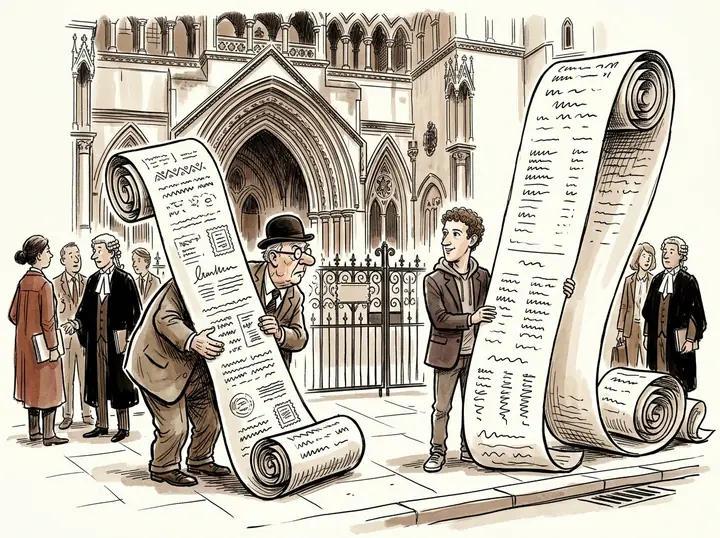
Meta has taken Ofcom to the High Court over how its online safety fees and fines are calculated; fines can reach 10 percent of worldwide revenue, a theoretical £15 billion for Meta. Ofcom has invoiced about £88 million in supervision fees for the year. “We currently have judicial reviews being run against us on our fees regime, twice, by Meta,” its online safety director told peers. The regulator is now the one being supervised.
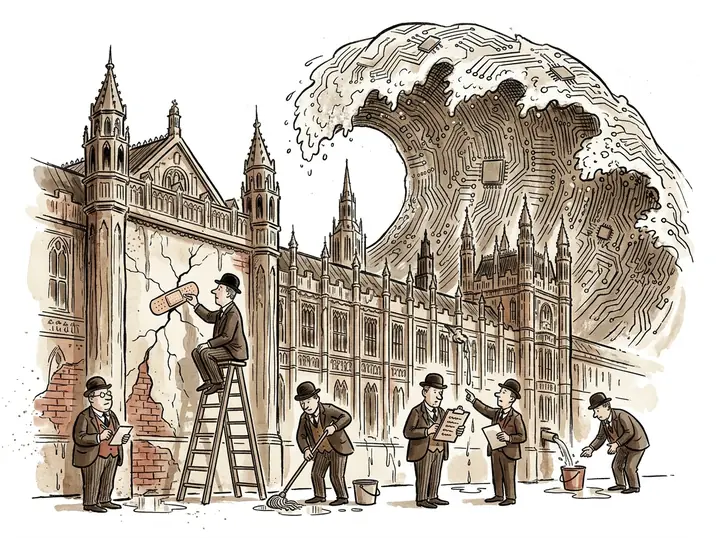
Britain’s spending watchdog chair warns that “AI is approaching government like a tsunami,” amid “a worrying lack of urgency” over legacy computer systems. Meanwhile the state pays £4 million a year for Dartmoor prison, which it cannot use because of radon gas, and about £1.5 million a week patching the Palace of Westminster. Only about 6 percent of civil servants work in digital roles. The wave will find the building damp.
Wales’s minister is “minded not to confirm” the proposed Glyndŵr National Park, which 67 percent of consultees supported, citing set-up costs “in excess of £11 million.” He then added: “this is not a final decision.” The park now exists in a protected state of its own, preserved from both development and designation.
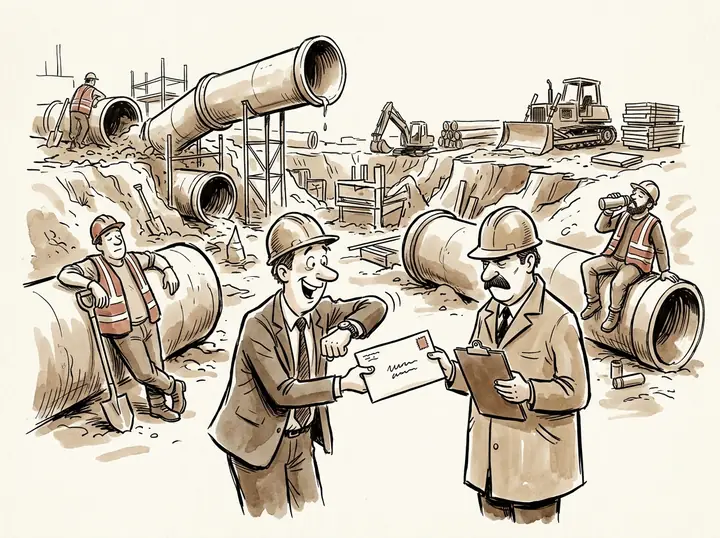
Ofwat now requires water companies to give formal written notice at least ten working days before they miss a deadline on a major project, and failing to warn can itself be penalized. Fines can reach 30 percent of eligible development costs. The regulator has accepted that projects will be late, and asks only for punctuality in announcing it.
Britain has promised a law so that non-compete clauses stop blocking start-ups from hiring. What the law will cover has not yet been decided. Workers will be free to move as soon as the law decides where it is going.