From the Río Bravo to Tierra del Fuego: decrees, congresses, central banks and grand projects, read with patience and a strong coffee.
Monday, November 2, 2026
Mexico City
Nothing Forgiven but the Fine
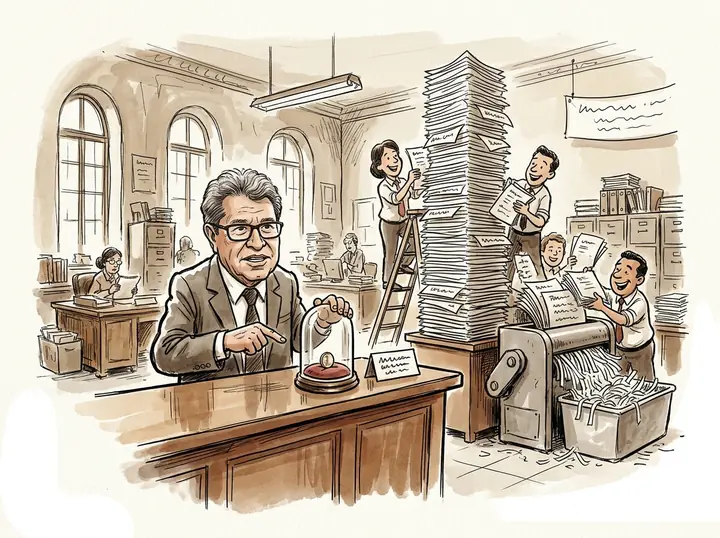
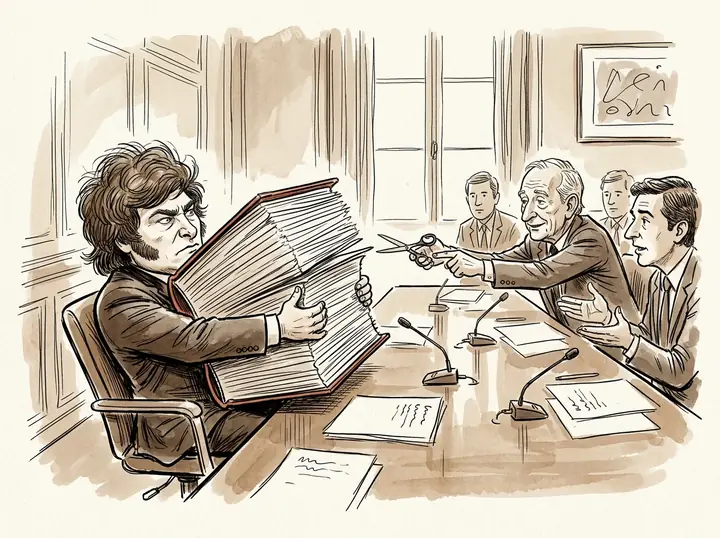
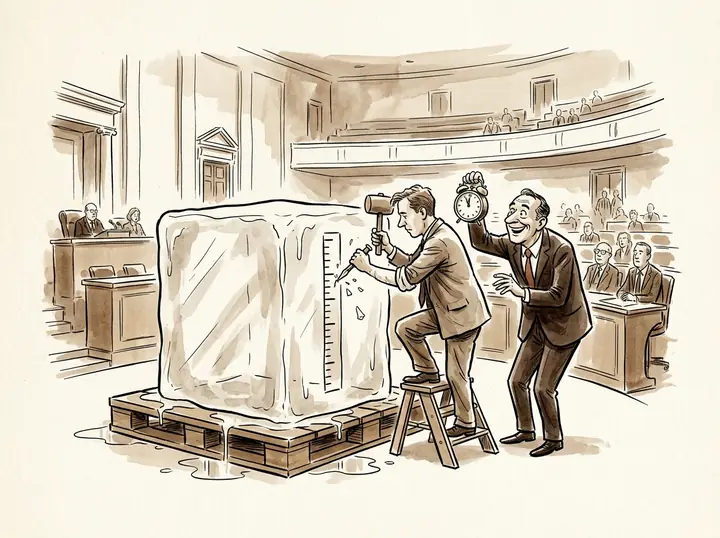
Mexico’s Chamber of Deputies passed the 2027 revenue law 340 to 109, after removing a 300 million peso income limit from a regularization scheme that reduces fines, surcharges and collection costs, Líder Empresarial reports. “No hay condonación de impuestos,” said Morena’s Ricardo Monreal. The tax is never forgiven, only the trouble of having ignored it.
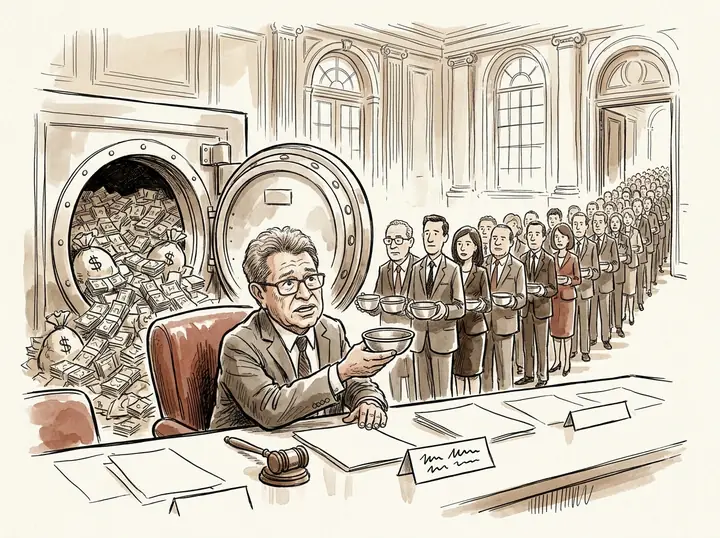
Mexico’s deputies approved a revenue law of about 10.6 trillion pesos on 14 October, and begin analysing the 2027 spending budget on 6 November, Por Esto! reports. Morena’s Ricardo Monreal said hundreds of requests to expand budget lines have arrived. “Partimos de una premisa fundamental: requiere la nación más dinero,” he said. The chamber had approved 10.6 trillion pesos a week earlier, as evidence.
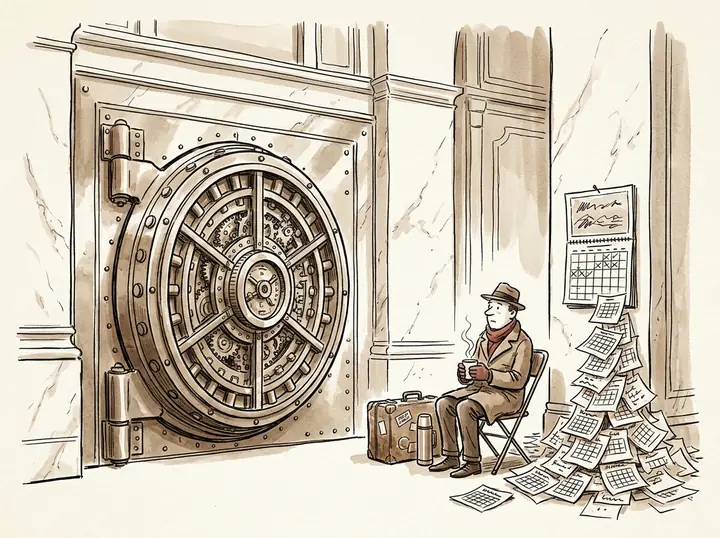
Venezuela’s acting president, Delcy Rodríguez, replaced her foreign minister on 30 October and gave the outgoing one, Félix Plasencia, a new post. “He must settle in the United Kingdom until we recover the gold,” she said: about 31 tonnes, worth about US$4 billion, frozen at the Bank of England since 2019. The gold has waited seven years in London. Caracas has sent a man to wait beside it.
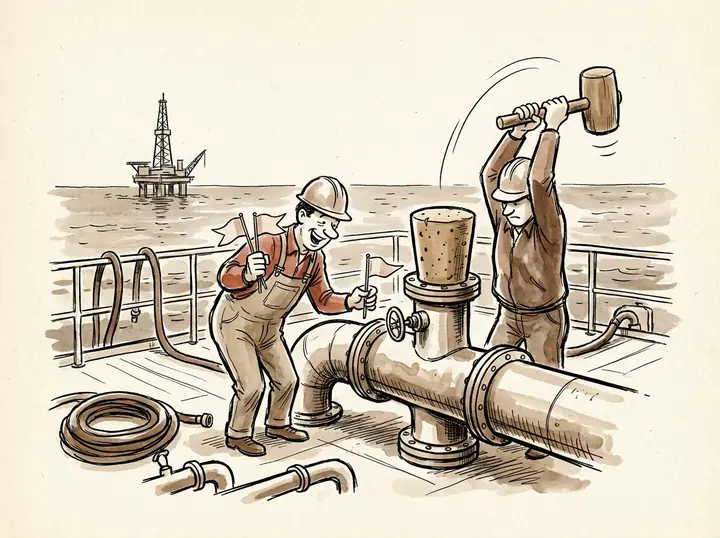
Brazil’s Petrobras has found oil for the third time in the same well, Morpho, at 2,886 metres off Amapá near the mouth of the Amazon. It has not disclosed volumes, quality or whether any of it can be produced, and the well will now be plugged and sealed. Ibama has cleared three more. Petrobras has found the oil three times and said how much exactly no times.
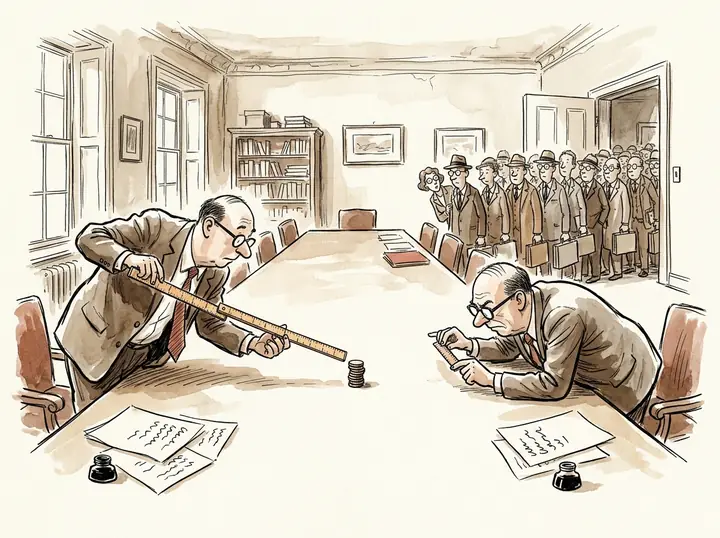
Chile’s opposition deputies want the justice minister, Fernando Rabat, and his undersecretary, Luis Silva, out over decrees reducing prison sentences. Of the 33 decrees reviewed, 10 carry the undersecretary’s signature and 22 the minister’s. Ten and 22 make 32. The thirty-third is the only paper in the ministry nobody can be asked to resign over.
Colombia’s central bank will buy US$2 billion straight from the Treasury, about 6.3 trillion pesos, per The Rio Times. That day its board voted four to three to hold rates at 12.25%, with inflation at 6.3%. How it will offset the new pesos is not yet known. Inflation is 6.3% and the cheque is 6.3 trillion; one of them is meant to come down.
Mexico’s Pemex lost 10.795 billion pesos, about US$574 million, in the third quarter, one quarter after a profit, The Rio Times reports, though its operating earnings more than doubled. Exchange-rate and derivatives losses did the damage. On Saturday the company’s investor pages redirected to a contingency site that did not carry the report. Pemex has a contingency site, if not yet a contingency.
The IMF has told Argentina to “stay the course with strong policies”, MercoPress reports, after staff agreed a review that would unlock about US$900 million. Earlier this month the fund cut its 2026 growth forecast for the country from 3.5 per cent to 2.1. It still wants a primary surplus of 1.4 per cent of GDP, which is exactly the growth it has just crossed out.
Peru’s Congress has approved a supplementary credit of about US$2.4 billion for this year’s budget, more than half of it raised through bonds, The Rio Times reports. For El Niño prevention, the finance ministry counts S/581 million and the chair of the joint budget committee counts S/702.9 million. The paper puts the gap down to how the money is grouped, a distinction the rain will not observe.
Argentina’s Chamber of Deputies suspended Wednesday’s committee sign-off on the 2027 budget, Parlamentario reports, the first missed date in its timetable. Allied blocs want money for the capital, provincial pension funds, roads and universities, and the PRO wants VAT taken off eggs. The government will accept changes that leave its fiscal framework untouched. Allies may ask for anything, provided the budget does not notice.
Mexico’s Senate approved the 2027 income tax changes, 78 to 34, with new limits on the deductions companies with income above 50 million pesos may claim, El CEO reports. Senators made one amendment, to article 78-E, exempting some firms under a specialized customs regime, similar to maquiladoras, from those limits. The limit on tax breaks has opened with a tax break.
Brazil’s real lost more than 8% against the dollar on the first session after Lula’s re-election, its steepest fall since 1999 according to El País, MercoPress reports. The Treasury cancelled its debt auctions for 27 to 29 October. A Citibank survey had found 80% of fund managers expecting a fall of more than 5% if Lula won. The only bet the market won on Sunday was the one against itself.
Brazil’s new value-added tax, approved in 2023, takes effect in January, the month Lula begins his fourth term, and its effective rate is still unset, MercoPress reports. Independent analysts put it at around 28%. After three years of preparation, the tax has everything ready except the one number anybody pays.
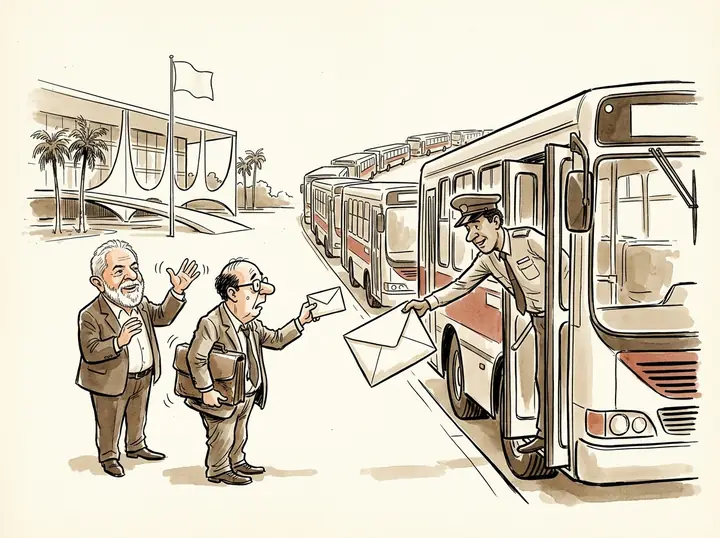
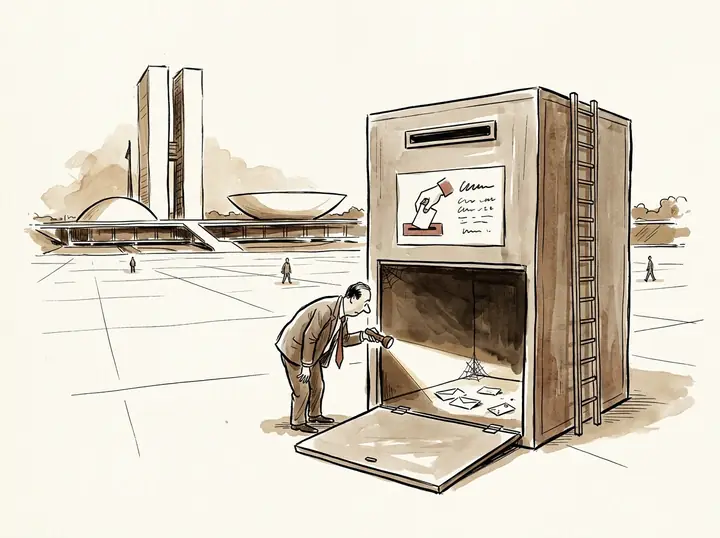
Brazil’s defeated presidential candidate, Senator Flávio Bolsonaro, says he will ask for Sunday’s runoff to be annulled, calling a Supreme Court justice’s extension of voting hours, granted at the request of Lula’s coalition over missing buses, “a disgrace,” MercoPress reports. Bolsonaro’s own campaign had earlier asked electoral courts to extend voting in rain-affected municipalities. Late voting, on the campaign’s reading, is a right reserved for rain.
Argentina’s President Javier Milei has sent no congratulations to Lula on his re-election in Brazil, MercoPress reports, though right-wing governments in Chile, Paraguay and Bolivia, Chile’s led by a Bolsonaro ally, sent theirs. Milei had accused Lula of seeking to “steal” the election. Buenos Aires foresaw the theft so clearly that it has nothing prepared for the result.
Peru’s Senate elected three directors to the central bank’s board on 21 October. A special commission had scored every candidate out of 100 and sent the plenary a merit order; the senators chose its first, its second and its fifth, Juan José Marthans, at 86.6 points. The new directors will now be asked to follow the numbers, a habit the Senate has kindly left entirely to them.
Mexico’s antimonopoly commission is preparing to approve the merger of Viva Aerobus and Volaris, possibly before the end of 2026, El CEO reports, citing Reuters sources, on condition that the airlines keep fares low and keep most existing routes. Between them they carry about three quarters of domestic flights. The new group is to be called Grupo Más Vuelos, More Flights, a name that at least escapes antitrust review.
Colombia’s state oil company Ecopetrol, 88.49% owned by the government, has a new chief and a recovery plan, and the president says his government “fully reopens the path of exploration,” fracking included. The Rio Times found no published numerical targets for the recovery. A plan with no targets has already hit every one of them.
A Citi survey of 36 analysts finds 25 expect the Bank of Mexico to leave its policy rate unchanged through 2027. The same analysts now see the peso at 18.20 per dollar at the end of 2026, 20 centavos weaker than they forecast 15 days earlier. Their prediction that Banxico will do nothing is the only one they have not had to revise.
Brazil’s opposition candidate Flávio Bolsonaro, in Sunday’s presidential runoff, promises a R$200 billion “tesouraço” and says he would cut at least 10 of the government’s 39 ministries, though no itemised list has been published. Finance Minister Dario Durigan, also economic coordinator of Lula’s campaign, calls the cut “totally impossible.” Which ten go will presumably be decided by the other twenty-nine.
US Deputy Secretary of State Christopher Landau says Washington is watching Argentina’s stalled sovereignty bill, which would extend Falklands oil sanctions to the shareholders, financiers and suppliers of companies involved. “We respect the legislative process of the great Argentine nation,” he said. According to Clarín, Washington proposed freezing the bill or amending it to exclude US companies. Respect comes easily to anyone who has already written both endings.
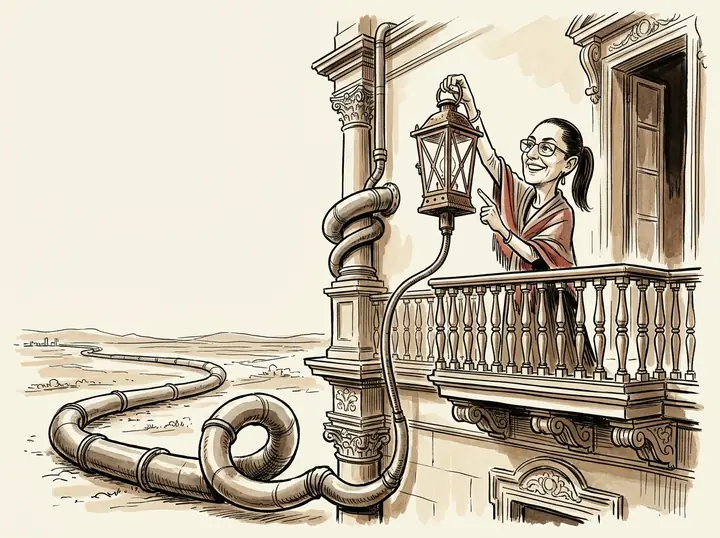
Mexico’s President Claudia Sheinbaum used Thursday’s morning conference to present 20 new industrial parks, bringing the total to 40 of the 100 promised for her term. The parks association put accumulated investment at 463 million dollars; the economy ministry’s speaker put it at more than 670 million for these 20 alone. Forty parks in, the programme already produces totals faster than parks.
Brazil’s government banned Polymarket and other prediction platforms in April, warning they could raise household debt, AFP reports. About US$185 million in contracts has been traded on Sunday’s presidential runoff all the same, and a VPN gets round the ban. The finance ministry says it is still monitoring how effective the ban is, a question someone, somewhere, is surely taking bets on.
Grupo Mexico has quit the bidding for Argentina’s state freight railway, Belgrano Cargas, which owns about 14,000 km of track and runs about 7,600 km of it, the Buenos Aires Times reports. The company objected to the “open access” rule letting several operators share the rails, kept because it “promotes competition.” So far it has promoted one competitor out.
Bolivia secured a US$1.9-billion IMF programme this month. A World Bank official says the bank is “agnostic, as much as we can, to the politics of reform” and wants “to reward the reformers.” The new lending, Bloomberg notes, targets governments led by Trump-backed presidents. The bank does not look at politics; it has simply been lucky with them.
Brazil’s government is sending mass WhatsApp messages signed “GovBR” telling Bolsa Família families their benefit “foi reajustado,” up 15% to R$691, four days before Sunday’s runoff, Poder360 reports. The benefit did not rise in Lula’s first three years; he told Globo he had not known it was frozen so long. The government can reach millions of phones in a morning; its president, by his own account, was not on the list.
Mexico’s ruling Morena leads early polling for the June 2027 midterms with 46%, according to an El Financiero survey reported by Mexico News Daily. The PAN has 8% and the PRI 6%. Second place, at 31%, belongs to “no preference,” which has no leader, no platform and nearly four times the support of the main opposition.
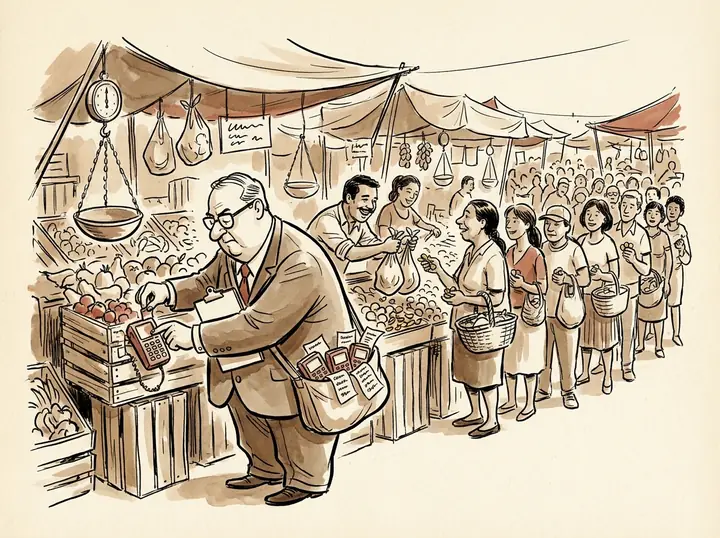
Mexico’s Senate has passed, 72 votes to 34, a law making cards, transfers and QR codes the only accepted payment in “strategic sectors,” Bloomberg Línea reports. The Finance Ministry will name those sectors after the law takes effect, though 85% of people mostly pay cash for small purchases. Coins remain unlimited legal tender, in every sector the ministry has not yet thought of.
Chile’s 2027 budget bill gives the Comptroller General 130.960.555.000 pesos, La Tercera reports, with 75 more staff and a 52.2% rise for software. Measured on the line items before Congress, the increase is 11.7%; on the base the Budget Office uses, it is 5.9%. Settling which figure is right is precisely a comptroller’s job, and the comptroller is hiring.
Brazil’s Planning Ministry says about 20 billion reais must be reshuffled in the 2027 budget to fit the measures President Lula announced before the runoff, Reuters reports. The 15% rise in Bolsa Família alone costs 22 billion reais, and the package also promises free weekend public transport nationwide. By the ministry’s arithmetic, the buses run for less than nothing.
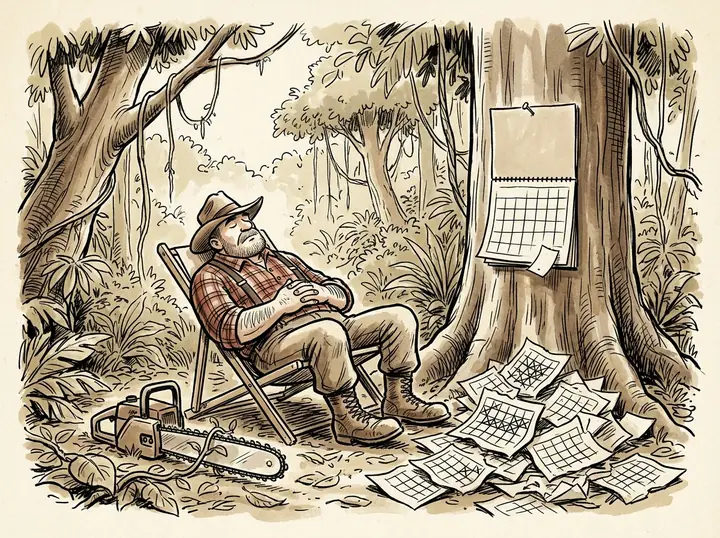
Brazil’s space research institute, Inpe, says Amazon deforestation in the twelve months to July fell about 42% to roughly 3,335 square kilometres, the lowest since its records began in 1988. In the mid-1990s the forest lost nearly 30,000 a year. By those standards, the chainsaws now take the rest of the year off after six weeks.
Argentina’s Chamber of Deputies has stalled President Javier Milei’s 133-article National Sovereignty Defence bill, which toughens sanctions over Falklands resources, MercoPress reports. The opposition backs the sanctions but not the security and intelligence provisions; the ruling La Libertad Avanza refuses to split it, so the bill misses the 21 October session. It would rather lose all 133 articles than pass some of them.
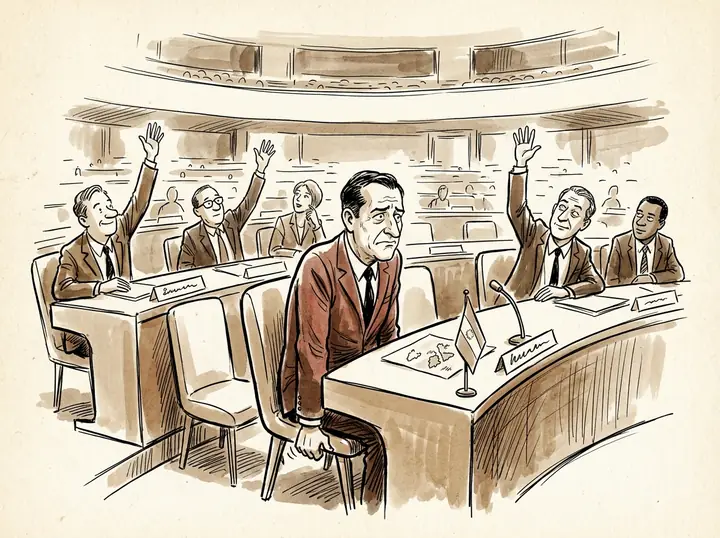
Colombia’s House of Representatives adjourned its debate on the 2027 budget on 14 October for lack of quorum, La República reports. If Congress does not approve the bill by about 20 October, it passes by decree. Before the room emptied, the chamber did vote on its members’ conflicts of interest, and then left to attend to them.
Argentina’s ruling bloc wants the 2027 budget’s committee reports signed on 28 October and a floor debate on 18 November, after Pope Leo XIV’s visit, Diputado Bertie Benegas Lynch told the budget committee. The bill assumes 4% growth, 18% inflation and a dollar at $1,848 by December 2027. Of all the dates and figures in the plan, only the pope’s are not projections.
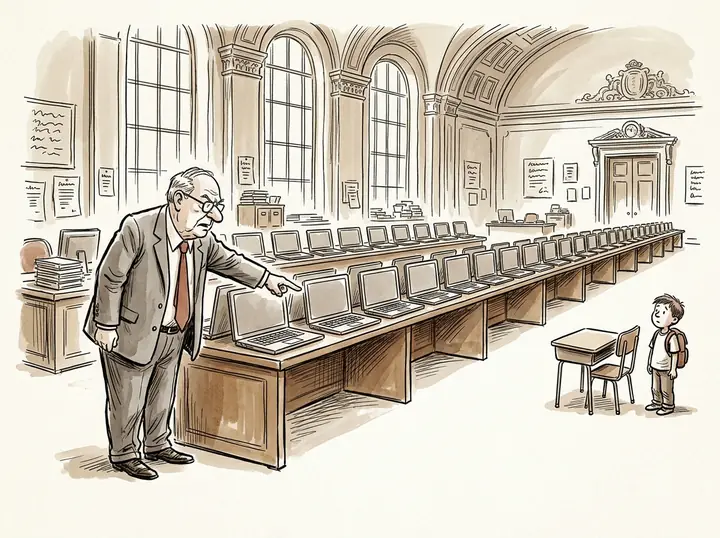
Chile’s Congress opened its review of the 2027 budget amid what Diario Financiero calls high tension: the subcommittee chaired by Senator Yasna Provoste rejected the higher education item, and the bill removes a programme called “Yo elijo mi PC”. The name means “I choose my PC”. The government chose.
Colombia’s labour ministry has published eight draft decrees to repeal or rewrite labour rules left by Gustavo Petro’s government. Its review found fines up to 50 times above legal limits and articles with duplicated numbering that refer to provisions that do not exist. Comments are open until 9 November, on the provisions that do.
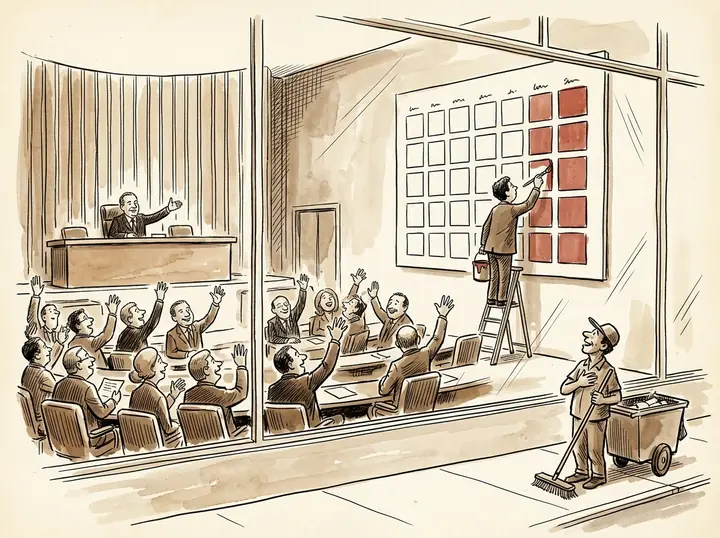
Brazil’s Chamber of Deputies voted 461 to 4 on 14 October to raise the micro-entrepreneur revenue cap from R$ 81 mil, frozen since January 2018, to R$ 110 mil in 2027 and R$ 140 mil in 2028. The government asked for the vote about two weeks before the presidential runoff. The cap is now indexed to the electoral calendar.
Peru’s restored Senate had seven working days to rule on the executive’s request for legislative powers, filed on 7 October. Opposition senators walked out of the constitution committee, leaving it without quorum, and if nothing happens by Monday the deputies’ text becomes law anyway. The Senate may make history by missing it.
Mexico’s government has made state control of energy its cause. It also relies on the United States for about three quarters of its natural gas, a record 6.8 billion cubic feet a day in the first seven months of 2026. President Trump has now pressed Mexico to sign energy deals with U.S. companies, the FT reported. The sovereignty is domestic; the gas is imported.
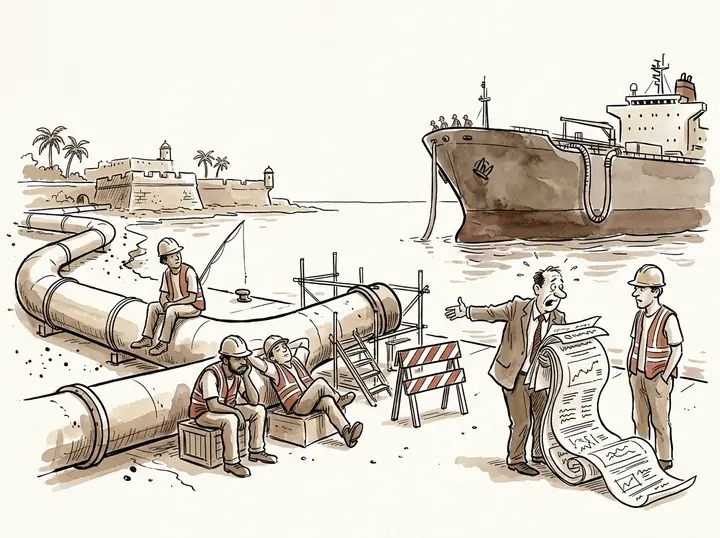
Pemex, Mexico’s state oil company, has begun a feasibility study for a biorefinery at its Pajaritos complex in Veracruz that would turn sugarcane into 5,000 barrels a day of aviation fuel. An unnamed external bank is paying for the study. Pemex carries US$77.5 billion of financial debt, and its crude output is in decline. After decades of drilling, it has struck sugar.
Colombia’s president, Abelardo de la Espriella, says the Ministry of Cultures, Arts and Knowledges will again be the Ministry of Culture and Heritage, three years after a law gave it the longer name. He calls it a “contrarrevolución cultural” and has told the minister to remove references to the former M-19 commander Carlos Pizarro from government spaces. A revolution, reversed one plural at a time.
Brazil’s data protection authority has published its analysis of the consultation on new duties for platforms and social networks under the country’s internet law. The consultation was open for 49 days and received 74 submissions, 47 percent of them from the private sector. The public was consulted about the internet and, characteristically, did not reply.
On October 1, Argentina told the UN the Falklands are a “special and particular” colonial case. Two weeks later it abstained on a Russian resolution about “contemporary forms of colonialism,” which passed 85 to 49 with Brazil, Uruguay and Mexico in favour. No explanation has followed. One opposition figure said the islands deserve “a diplomacy that is not on its knees.” It was, at least, sitting down.
Bolivia’s presidency minister has announced a “histórico gabinete binacional” with Peru, to meet in Bolivia in late November. In August the two countries’ foreign ministers had agreed to schedule it: the seventh binational cabinet. Bolivia will also host the Uruguay, Paraguay and Bolivia bloc in November, to find ways to “dinamizar el comercio.” History, in the Andes, now arrives in numbered editions.
Mexico’s tourism minister has confirmed a proposal to raise the entry fee for foreign visitors by 175 pesos in 2027, to 1,158. The fee’s revenue is split 57 percent to the defence ministry, 15 percent to the migration institute and 28 percent to the treasury. Yet the ministry says 173.70 of the extra 175 pesos would go to the migration institute’s technology. Somewhere between the two sums, the defence ministry is waiting for its change.
Brazil’s Senate voted 75 to 1 on 14 October for a constitutional amendment that cuts the maximum working week from 44 hours to 40, in two steps, and raises weekly paid rest from one day to two. It is the first such cut since 1988. Both camps in the 25 October runoff backed it. The Senate president said it might seem “a subtle change.” Not to anyone who works Saturdays.
Telecom Argentina has accepted US$450 million plus VAT from Metrotel for 6,005,425 mobile customers and 211,566 home internet customers, a condition the competition tribunal set for its purchase of Movistar’s Argentine business. The customers will move over about 60 days under the Tuenti brand. Staff transfer only with each employee’s consent. The customers’ consent does not come up.
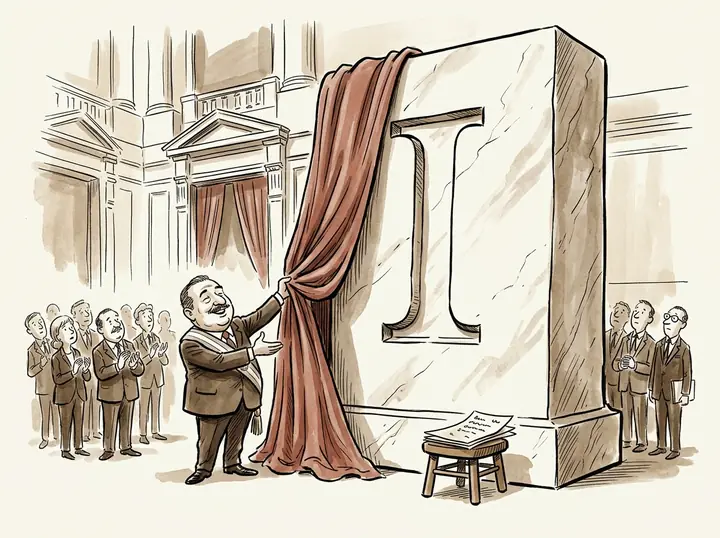
Argentina has made official two loans from the Inter-American Development Bank of up to $1.3 billion. One is named Transformación del Estado Nacional I. The boldest part of the plan is the Roman numeral.
Colombia’s energy minister warns of a gas shortfall from February 2027; imports already supplied 30 percent of available gas last month. About 60 percent of transmission projects are delayed, and the Caribbean regasification plant has “no firm date.” One proposed remedy is a decree letting environmental licensing and community consultation run in parallel. The delays, at least, already do.
Peru’s president, asking Congress for temporary decree powers, complained that lawmakers “are testing our patience.” A new poll puts her approval at 28.3 percent, down 14.5 points in a month, with disapproval at 53.6. Inflation has stayed above the 3 percent target for seven straight months. The patience under test turns out to be held by more than one party.
Four Mexican bars made the World’s 50 Best list, two of them in the top ten. Number six is a speakeasy. The whole world now speaks of it, rather loudly.
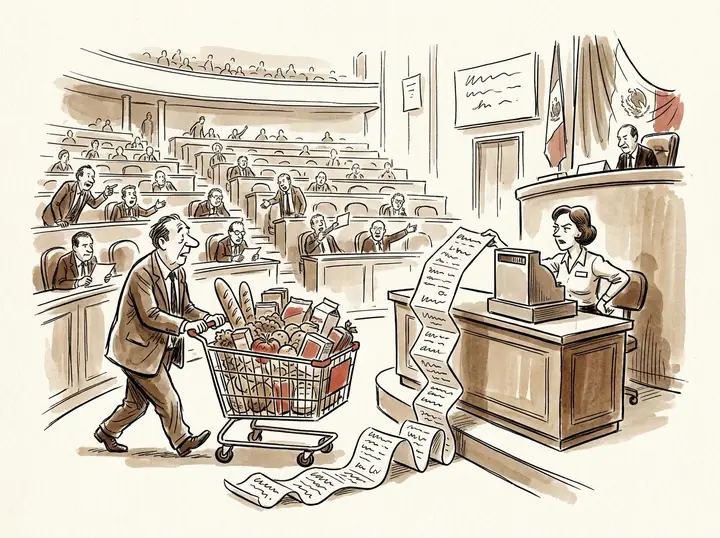
Mexico’s deputies approved the 2027 revenue law 331 to 118, authorizing 1.7 trillion pesos of net borrowing. “We’re borrowing to pay for the groceries,” an opposition deputy said. A governing-party deputy called the old fiscal model “deeply unfair, fragile and oil-dependent.” Both agree the pantry needs filling; only one asked who pays at the till.
“However much the haters dream of a cut, there won’t be cuts,” Ecuador’s president said on October 5. Unscheduled blackouts hit Guayaquil, Quito, Cuenca and three more cities on the 13th and 14th, without notice, while scheduled disconnections for industry rose from 48 to 72 hours a week. He then announced “maintenance and investment” for Saturday. The haters, it seems, dreamed efficiently.
In Costa Rica, rents rose 3.27 percent while prices rose 0.34. The legal increase on a rent of 300,000 colones is about 1,020. The cap fits; the rent declines to wear it.
El Salvador’s president announced a US$2.9 billion investment by a Spanish energy group, the “largest in history,” promising lower electricity rates “for the whole population.” Itemized, about US$1.8 billion goes to gas, over US$600 million to water and at least US$300 million to storage, leaving about US$200 million the published breakdown does not place. History will record the total; the remainder is still being written.
A cruise ship has called at Acapulco for the first time in 17 years, with 2,913 tourists aboard, and Acapulco has teamed up with its old rivals in Cancún to bring more. The grand old Riviera, it seems, has asked the new one for directions.
Colombia scores 0.71 on the OECD’s digital government index, against an OECD average of 0.70. Victory by one hundredth. Its digital ID still covers fewer than half of government procedures, so the celebration may have to be held in person.
Brazil has defined the abusive caller: a number making more than 1,000 calls a day, most of them under six seconds. The penalty is a 15-day block. Callers who pass authentication must now show their logo, so at least the interruption will introduce itself.
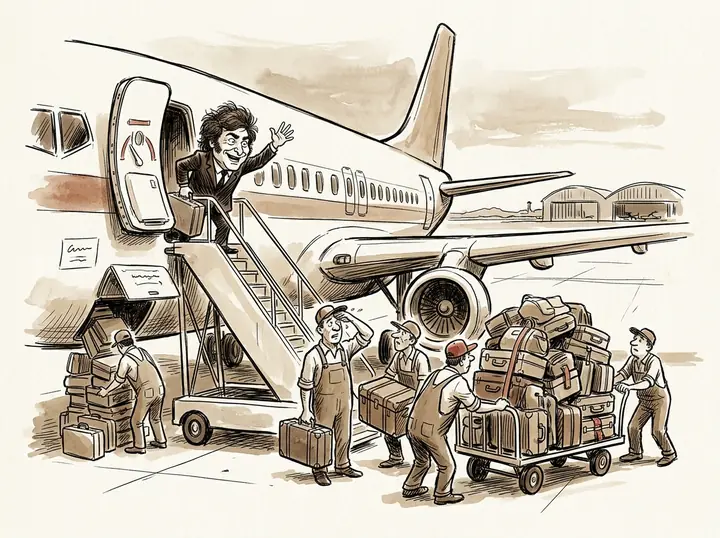
Argentina’s president has left for his fifth visit to the United States this year, to collect a free enterprise award. He is due back on Friday morning. A local paper described it, with admirable restraint, as a brief stay.
Nicaragua refused to accept the career diplomat Washington nominated as ambassador in August, and the United States recalled its chargé d’affaires “for consultations.” The State Department said the refusal “shows the hypocrisy of its rhetoric of mutual respect.” Separately, the Dominican Republic closed its embassy and Nicaragua closed its own in return. Managua’s diplomatic corps is now mostly consulting from abroad.
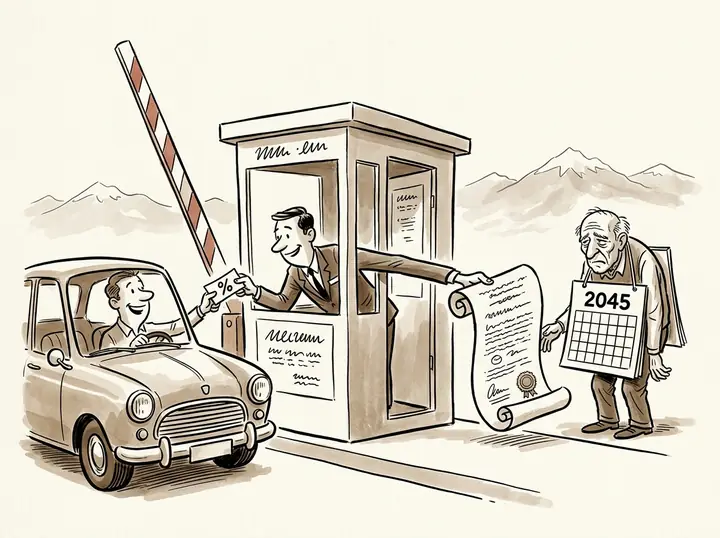
Chile has announced toll cuts of up to 25 percent for drivers who pay promptly. In return, the toll road reportedly gets 20 more months of concession. Today’s discount has been paid for by the future, which was not at the meeting.
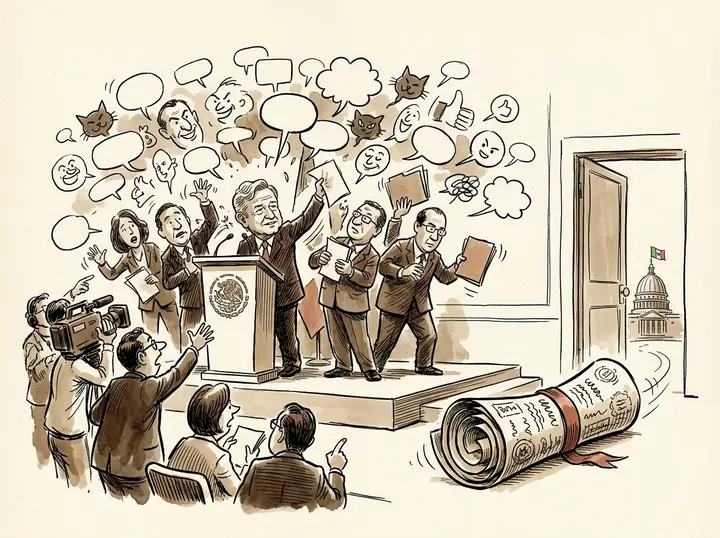
Mexico’s deputies passed a copyright reform 310 to 97 after nearly seven hours, carrying fines as high as 4.7 million pesos, and the country promptly named it the “anti-meme law.” The president insists: “Memes are not regulated, and we don’t intend to regulate or ban them,” citing instead a fake AI video touting Pemex investments. The law was named by the very thing it does not cover.
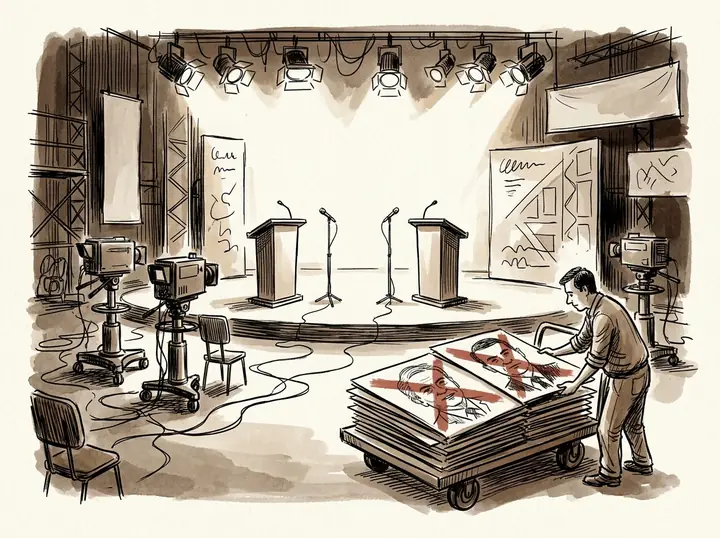
Neither of Brazil’s runoff candidates attended a single first-round debate, and all three were cancelled. Both now say they want one: “Now it’s important to have a TV debate,” said the president; “It’s what I always wanted,” said his challenger. Record then cancelled its runoff debate over “incompatible schedules,” and a joint network debate was reportedly heading the same way. Brazil’s debates are unanimous, in absence.