Ottawa and the provinces: procurement, pipelines, interprovincial trade and the national pastime of the review.
Monday, November 2, 2026
Ottawa
Capital, Broadly Defined
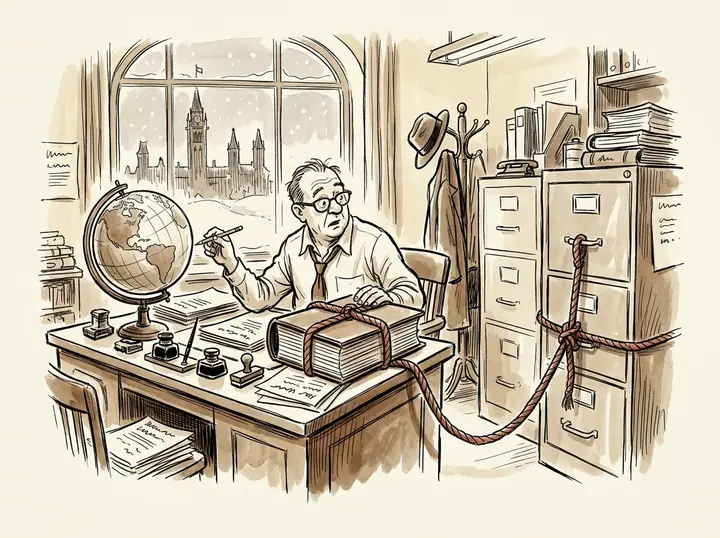
Canada’s federal budget arrives on 5 November, and the Parliamentary Budget Officer says the deficit will stay above $63 billion in 2030-31, against the $53 billion Ottawa projected in April. Ottawa wants its operating budget balanced by 2027-28, and the PBO estimates its definition of capital inflates capital spending by nearly $100 billion over six years. The operating budget will balance on time, once the paper clips are reclassified as nation-building.
The United Arab Emirates and Canada launched a strategic partnership this week, and Mark Carney says the trade pact was negotiated in 47 days, a record. His calendar through December runs from Antigua and Barbuda to APEC in China; a deal with the United States is still out. Diversification, on this itinerary, means visiting every partner except the one being diversified from.
Canada has delayed tougher passenger vehicle tailpipe standards to 2029, eight months after saying it wanted them in effect for 2027, The Canadian Press reports. Until then the rules stay at 2026 levels. The February auto strategy had promised standards twice as strict as existing ones. Consultations begin in early 2027, so something in the plan will arrive on time.
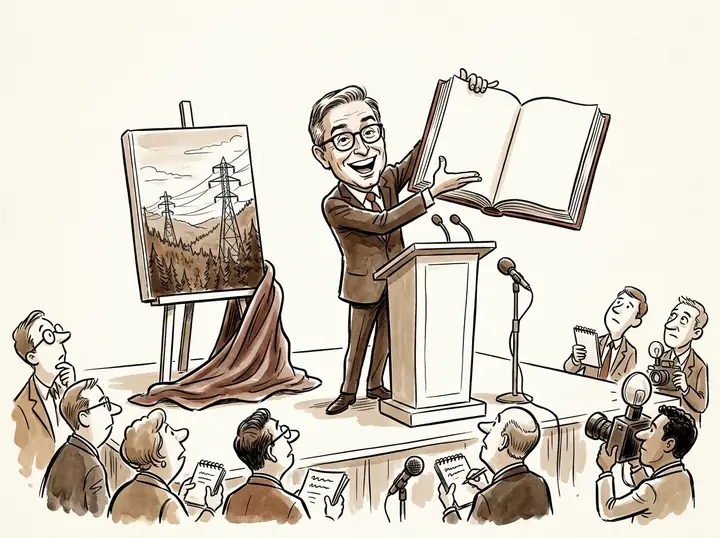
Canada’s government has given the budget it tables on 5 November a title before any numbers: “Masters of Our Destiny,” after Quebec’s 1962 slogan “Maîtres chez nous.” Its cover shows power lines over a forested valley. “Through Budget 2026, we reinforce that we are masters of our destiny,” says François-Philippe Champagne’s finance ministry office. Destiny has been announced a week ahead of its price.
Ontario’s fall economic statement raises this year’s deficit to $16.9 billion from $13.8 billion in spring, and lifts the contingency fund by $3.8 billion, citing trade. “We don’t know exactly how they’re going to land in the next five months,” says Finance Minister Peter Bethlenfalvy. Queen’s Park has now set aside more for the surprises it cannot see than the one it just had cost.
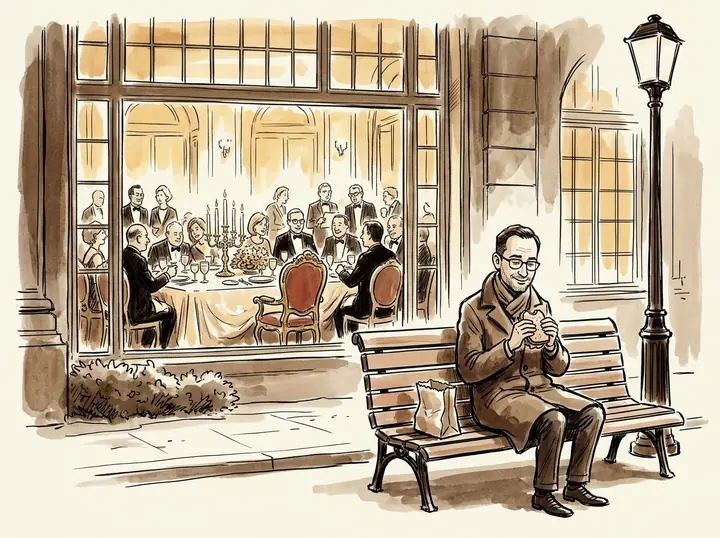
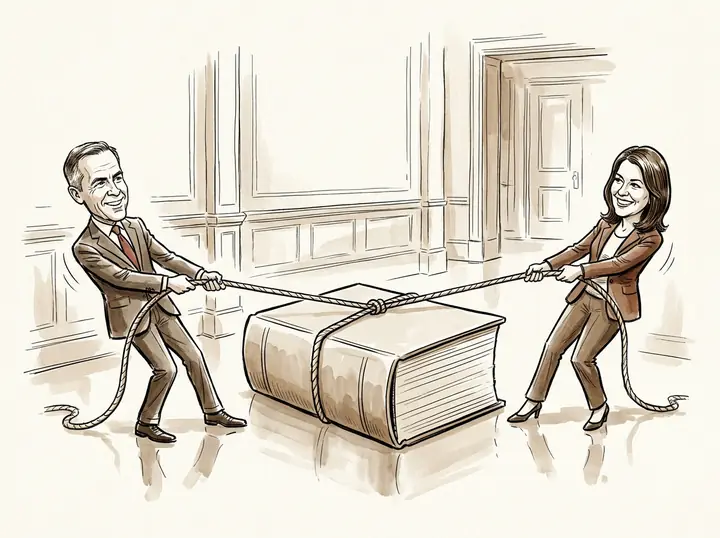
Quebec Premier Paul St-Pierre Plamondon says Ottawa is muzzling him at this week’s Canada-EU summit in Montreal: he will not speak, and Ottawa denied Quebec’s request to host a reception. Mark Carney replies that the premier was invited to the dinner and “it’s his decision to leave the chair empty.” A Quebec minister quoted Carney back at him: “When you’re not at the table, you’re on the menu.” By declining the dinner, Quebec has escaped both.
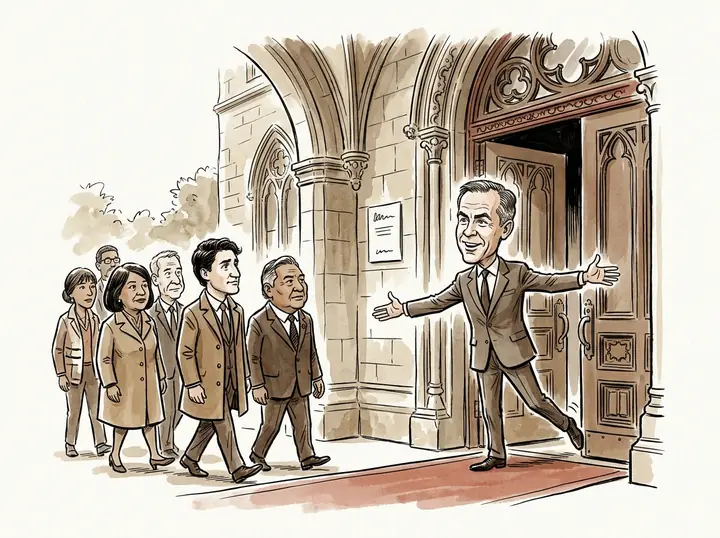
At a rare meeting of federal, provincial and First Nations leaders in Ottawa on Monday, Mark Carney declared himself “very open” to reforming or abolishing the Indian Act, the law that gives Canada’s government broad powers over First Nations communities. On Tuesday, before cabinet, he said the review has no “fixed conclusion.” One night later, very open had become open.
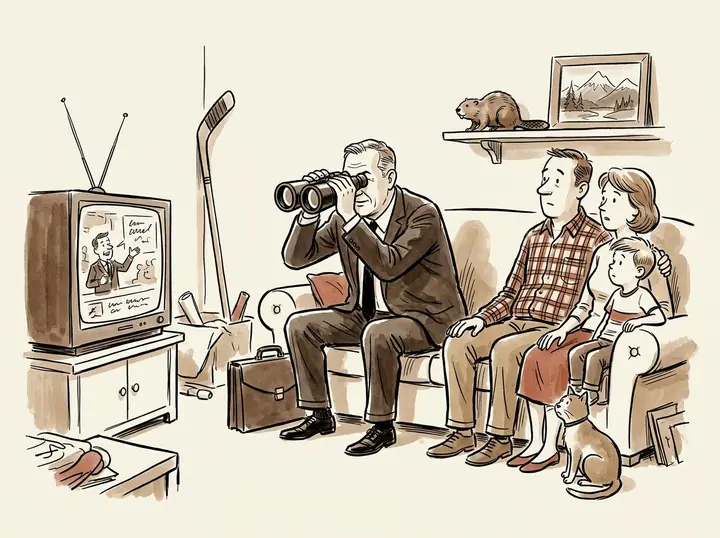
Mark Carney told reporters on 27 October that, on a trade deal with Washington ahead of next week’s US elections, Canada is “not at that position right now,” though Canadian officials see the week as a window for one, Global News reports. Formal negotiations between trade representatives “have not taken place yet,” says Canada’s lead negotiator. Ottawa has found its window and posted a negotiator beside it.
Ontario Premier Doug Ford has promoted Stan Cho, who resigned as tourism minister in July after expensing $16,000 in Toronto hotel stays while living in the city, to parliamentary assistant to the education minister, the Canadian Press reports. Cho says he made a mistake and has repaid the money. The new role pays $22,000 more. On Queen’s Park’s arithmetic, the apology came with $6,000 in change.
British Columbia’s Conservatives won a majority on 24 October under Lorne Doerkson, interim leader since 20 September, after Premier David Eby called a snap election two years early. The party’s constitution bars Doerkson from seeking the leadership permanently, and its directors are looking for a way to keep him. The province has chosen a premier whom his own party is not yet allowed to choose.
Canada’s development secretary, Randeep Sarai, says Ottawa is working with the European Union on aid financed by private money, where “the goal is (that) eventually the private sector will invest on their own.” Aid groups note that support for refugees inside Canada makes up more than 17% of the country’s development assistance. It is the rare foreign aid budget that can be audited without a plane ticket.
U.S. Ambassador Pete Hoekstra accuses Canadian politicians of meddling in close midterm races, and his embassy has issued a fact sheet of alleged interference. Prime Minister Mark Carney says there is “no merit to these claims” and that diplomats were told to “be careful who you are even seen with.” Ottawa told its people not to be seen, and Washington has published what it saw.
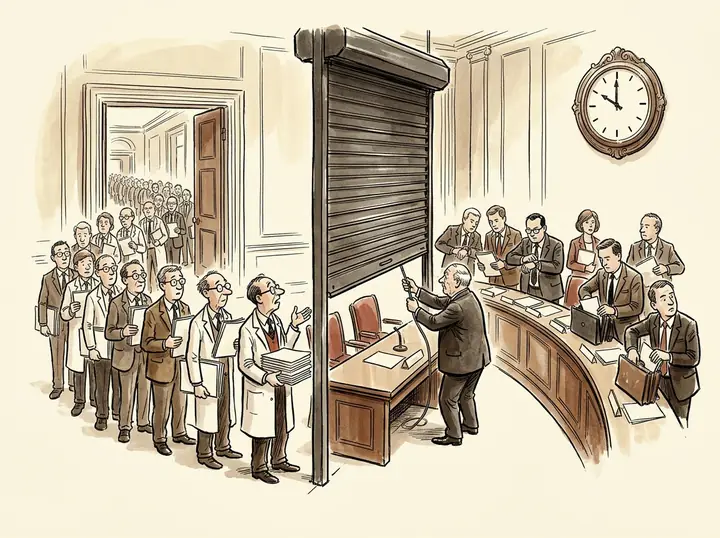
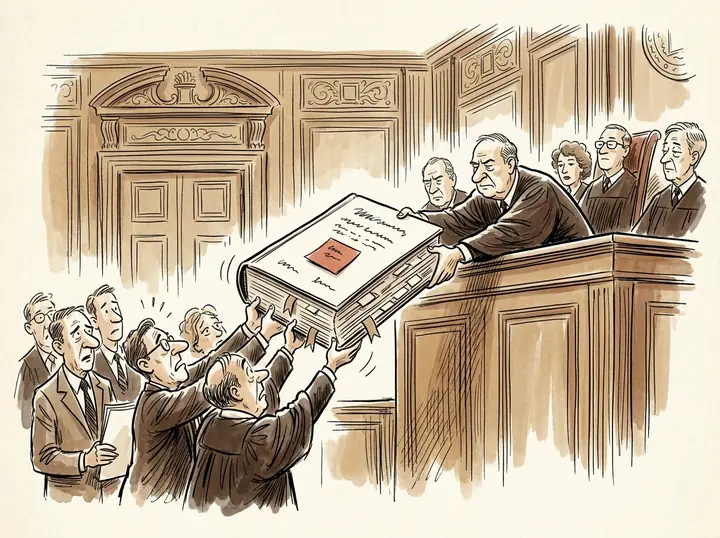
Fifty-six fellows of the Royal Society of Canada have asked to testify on Bill C-39, the Building Canada Strong Act, which fast-tracks major projects, and have not been invited. Prime Minister Mark Carney calls it “the most consequential legislation of this Parliament.” The Liberals have capped witness hearings at eight hours, so at least the bill is being studied in its own spirit.
Global Affairs Canada has told its diplomats in the United States to avoid midterm candidates before the 3 November vote and, if they find themselves “in the same physical space” as one, to avoid being photographed. The US embassy replied with a list of Canadian ministers’ remarks. Canada’s diplomats may still be in the room, provided they are not in the picture of it.
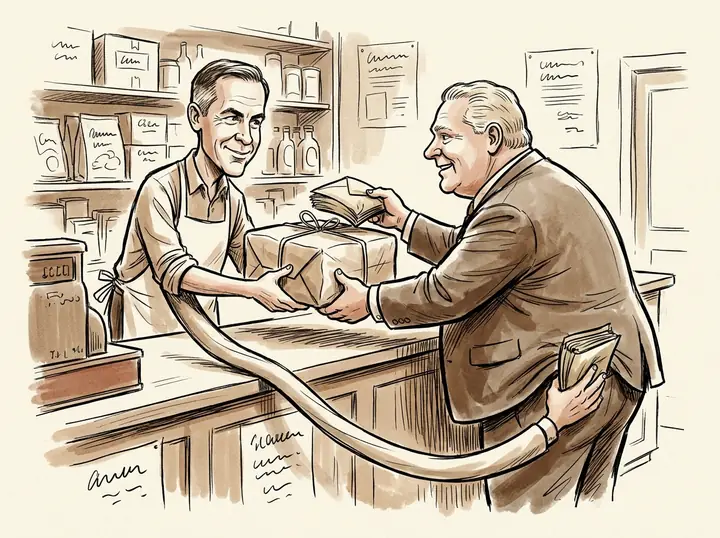
Prime Minister Mark Carney and Ontario Premier Doug Ford announced $8.7 billion on 21 October for steel mills, electric cars and roads to the Ring of Fire, CP24 reports, with a correction noting that Ontario is paying $2.67 billion of it. “It’s time to be our own best customer,” Carney said. Ontario, at least, has started buying from itself.
Canada’s prime minister, Mark Carney, said on 21 October that “we will not budge from overall levels that are sustainable,” after about 53% of Albertans voted to cut newcomers to “sustainable levels.” Last month he told The New York Times the next question was when to “resume some controlled increase in the population.” Ottawa and Alberta now agree completely on the word sustainable, and on nothing attached to it.
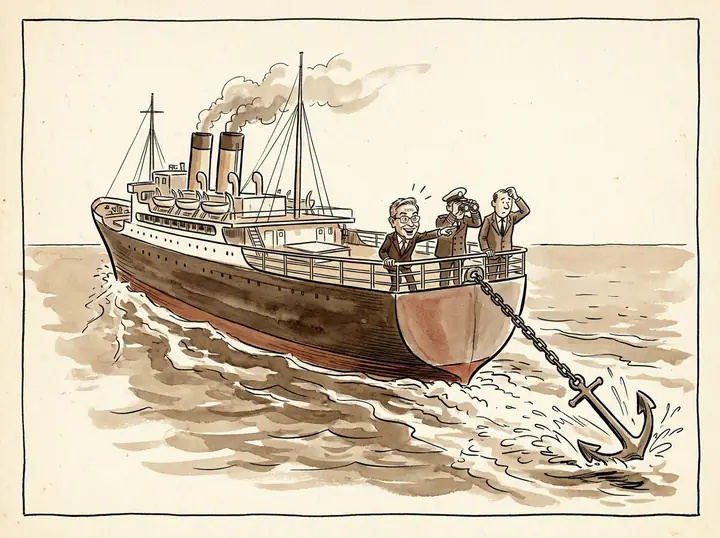
Canada’s finance minister, François-Philippe Champagne, announced on 20 October that his budget will be tabled on 5 November. The same day the Parliamentary Budget Officer reported that federal borrowing will grow significantly faster than deficits, and that the government will not meet its fiscal anchor of a declining deficit-to-GDP ratio. On the officer’s reading, the anchor is the one part of the ship still moving.
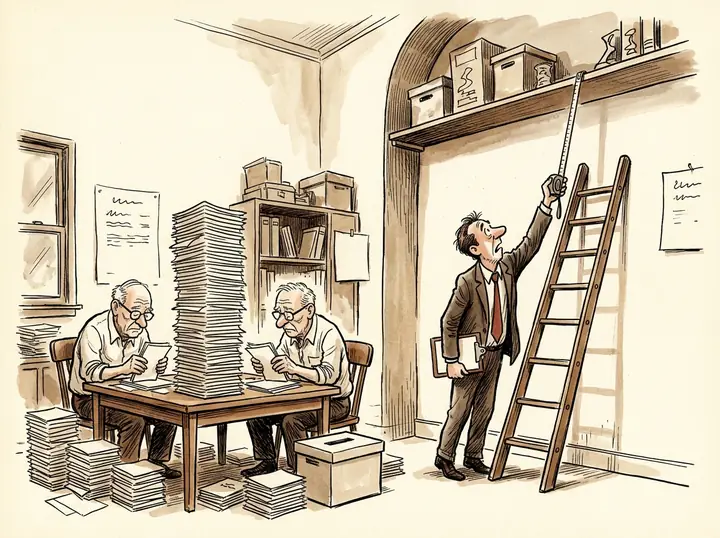
Paul St-Pierre Plamondon is sworn in on 21 October as Quebec’s 34th premier, returning the Parti Québécois to power with 59 seats, the Canadian Press reports; a majority takes 64. The party has asked for recounts in two ridings where its candidates finished second. If both go its way, the new government will be three seats short of a majority instead of five.
Alberta voted on 19 October on whether to hold a second, binding referendum on leaving Canada, and in early returns about 76% chose to remain, BNN Bloomberg reports. Critics had called it “a referendum on a referendum.” Jeff Rath of the separatist Alberta Prosperity Project said: “We’re not going anywhere.” On that point, so did 76% of the province.
British Columbia votes on 24 October facing a projected record deficit of $13.8 billion, The Tyee reports. The NDP proposes a higher tax on incomes above $190,000 to raise $1 billion, and a suspension of the 10-cent motor fuel tax, which one economist says would nearly cancel it out if made permanent. The new tax would pay, in the main, for the old one’s holiday.
Canada’s federal government has announced a $2 billion, eight-year heat pump rebate meant to retrofit one million homes, “aimed at Canadians who need emergency replacements for their home heating systems.” Lower-income households can get up to $10,000 back. Its details “haven’t been finalized.” Emergencies will be accepted from early next year.
Advance voting in British Columbia’s provincial election opened on 16 October, eight days before polling day, with no costed platform from the Conservatives. Interim leader Lorne Doerkson promises it soon, explaining: “I want the numbers to be right.” Premier David Eby puts the party’s promises at $5 billion. Early voters will be the first to learn what they chose.
Canada’s industry minister, Mélanie Joly, told Cleveland-Cliffs, Stelco’s American owner, to keep the jobs it promised under the Investment Canada Act “or face the prospect of having to sell their Canadian assets.” The company blames up to 500 Hamilton cuts partly on U.S. tariffs, which its chief executive has publicly supported. Cleveland-Cliffs may be the first company to lobby for its own excuse.
Canada’s immigration minister, Lena Diab, said that the country has “taken a step backwards on immigration,” with the slowest population growth since the Second World War; November’s plan may raise levels. Ottawa cut those levels on purpose, to 380,000 permanent residents a year from a target of 500,000. The government has hit its target and is now looking for whoever aimed it.
Albertans are voting on whether their province should begin the process toward a future referendum on independence; advance polls opened on 13 October. Prime Minister Mark Carney has toured the province urging it to stay, and divisions within the governing United Conservative Party are, CTV reports, “increasingly difficult to ignore.” A yes would commit Alberta, firmly, to being asked again.
A draft statement for the Canada-EU summit in Montreal on 29 and 30 October pledges to “strengthen digital sovereignty” and to align rules “through associated country status for Canada” under a proposed European law on cloud and AI. It would also let Canadian firms bid for European cloud and AI contracts, and buy 50 Canadian-made water bombers together. Canada’s digital sovereignty, it appears, will be administered from Brussels.
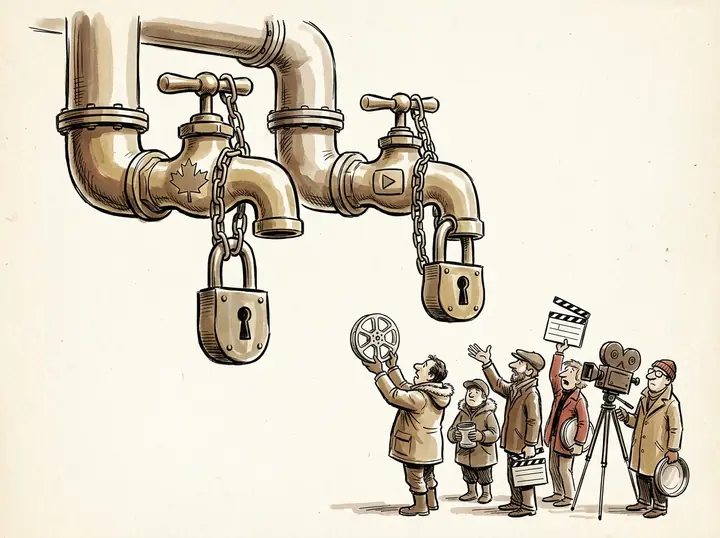
Canada promised its film and television producers $600 million when it told the CRTC to rethink making streamers pay into Canadian content funds. It has not said when the money will arrive, and the streamers’ payments are frozen by a court challenge, so the sector currently receives neither. “Funding that was supposed to reduce uncertainty is actually now leading to greater uncertainty,” said the producers’ association. Two taps, both shut, in the name of affordability.
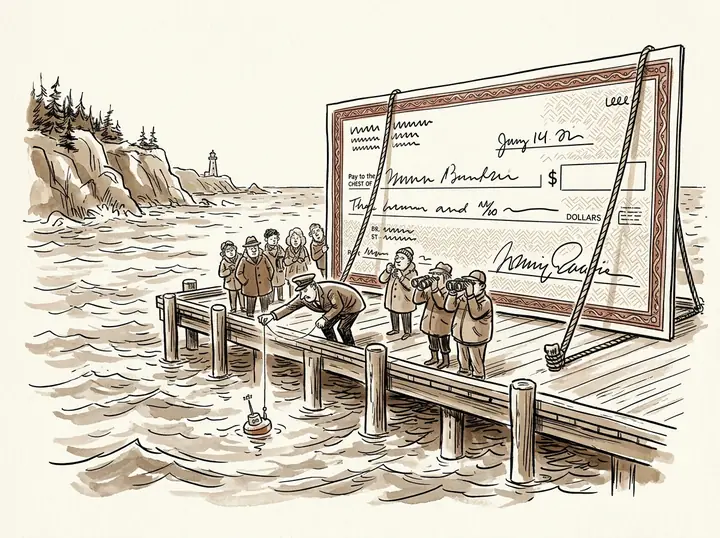
Ottawa has given $100 million to Wind West, an offshore wind project whose first phase alone would cost $60 billion and produce up to 5 gigawatts by 2033, in a province that needs about 2.4. About $5 million goes to buoys to measure the wind. “Before people start writing cheques for billions of dollars, they need more concrete data,” the premier said. Ottawa has written the cheque for the data.
The United States ambassador to Canada says Washington is “closely watching” Canadian politicians for interference before the 3 November midterms, and wants them to keep their “nose out” of American politics. His examples were an Ontario television advertisement and a minister’s remarks about where to aim retaliatory tariffs. Election security, Ottawa learns, now extends to the commercial breaks.
Canada has added $500 million over five years to its Regional Artificial Intelligence Initiative, bringing the total to $700 million, delivered through seven regional development agencies. Ottawa says each federal dollar approved has drawn $1.77 of other investment across 218 projects. A national strategy for artificial intelligence, administered in seven regional accents.
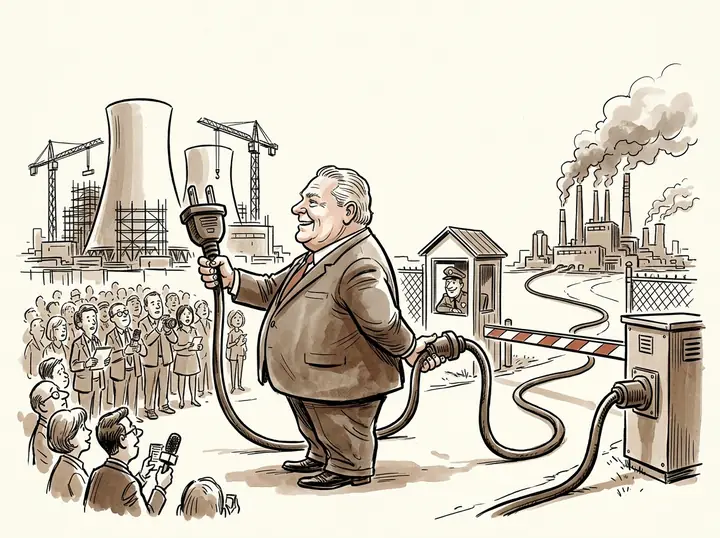
Ontario has signed a contract to import electricity from New York this winter while its Pickering nuclear plant is refurbished; critics say the power comes from oil-fired generation. The premier had once promised he would “not hesitate to shut the electricity off completely.” His office declined to comment and referred questions to the grid operator. The switch works in both directions, as it turns out.
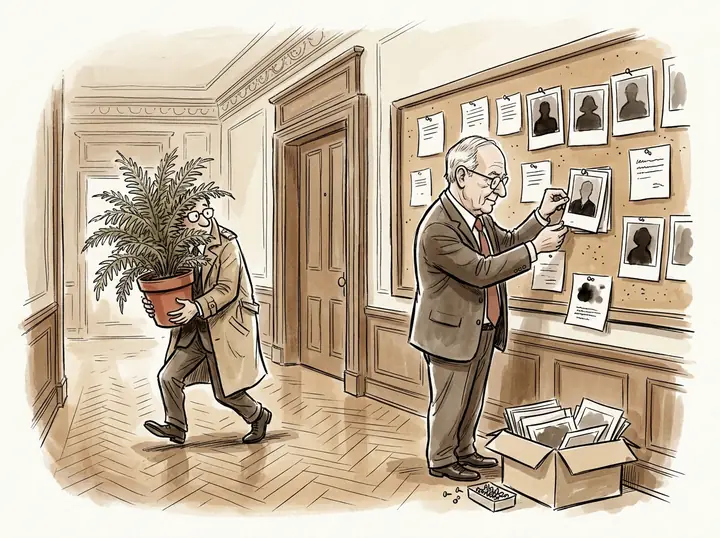
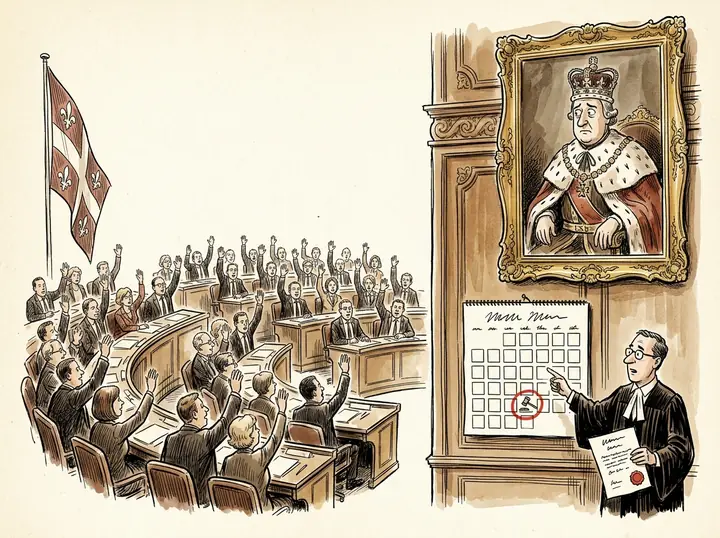
Fifty-nine Parti Québécois members swore to uphold Quebec’s laws and not the King, as supporters chanted “Quebec, a country,” while a law professor seeks an injunction to restore the royal oath, with a hearing due by early November. The new premier promises to move the lieutenant-governor’s $1.3 million budget to fighting homelessness. The Crown’s representative may soon be the province’s most frugal office.
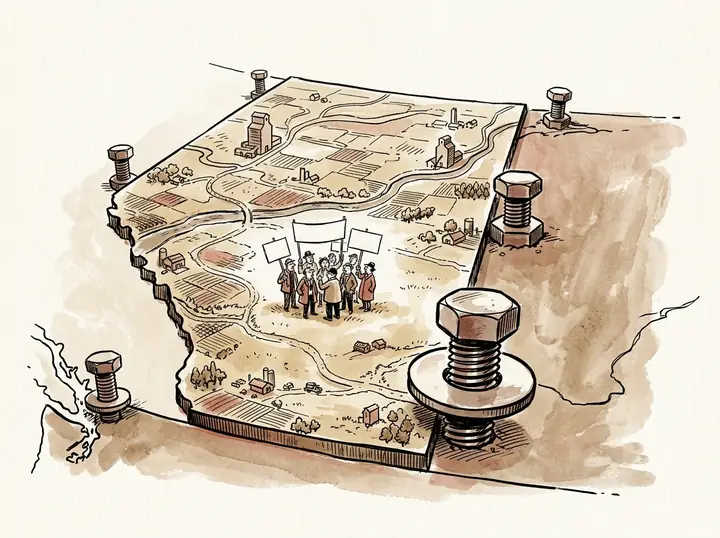
Alberta has given Edmonton three months to return to its pre-2024 infill rules and its pre-2020 parking minimums, despite $175 million Ottawa committed in 2024 to speed up 5,200 homes. Nearly a week on, the mayor said no detailed directions had arrived and called it “a really disorganized mess.” The minister described the order as a “conversation.” The conversation has a deadline and no second speaker.
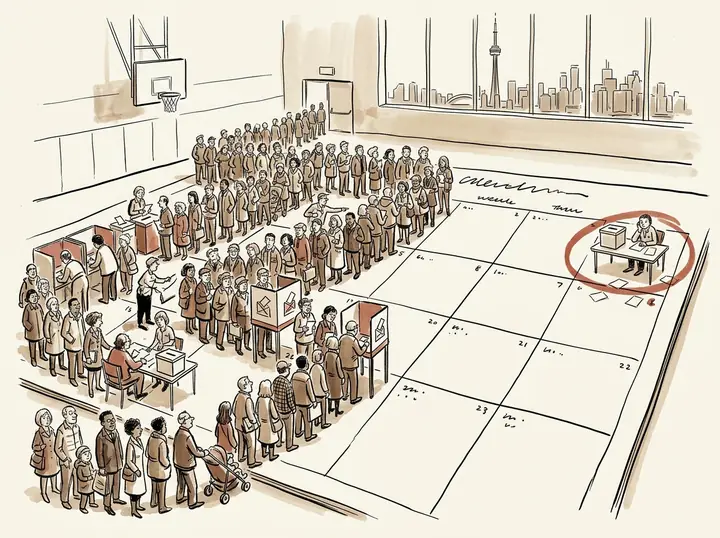
Toronto’s advance polls drew 222,550 voters, up from 115,911 in 2022, ahead of election day on October 26. Election day is now mainly for people who like a deadline.
Alberta is voting on ten ballot questions. One asks whether to work toward abolishing the Senate, a change that would need the Senate’s approval. The Senate is considering it.
Canada’s Parliamentary Budget Officer puts business costs of the official-languages law at $81.9 million over five years, against the government’s $230 million, then corrected the gap the next day from $158 million to $148 million. Of the $50.2 million federal cost, $35.6 million goes to the languages commissioner’s office to handle the complaints it expects. The law’s most reliable output is the complaint.
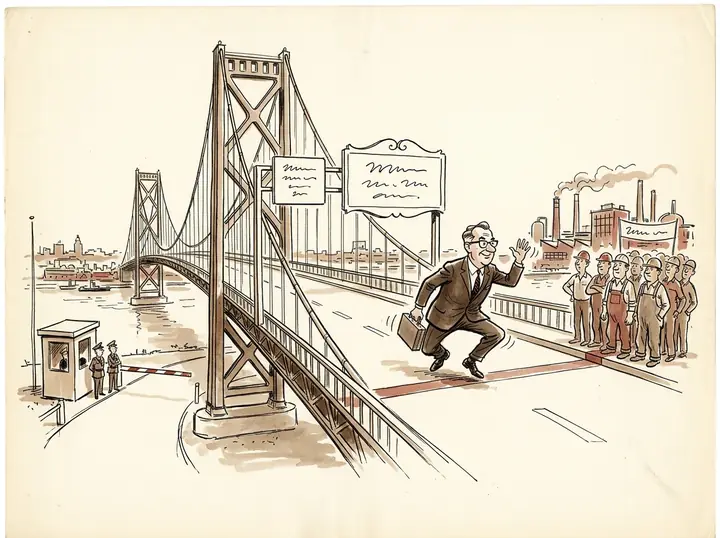
Canada’s opposition leader crossed from Windsor to Detroit to meet workers from General Motors and Ford plants and an electrical workers’ union, with a 25 percent US tariff on Canadian cars in place and 50 percent threatened for January. A visit three weeks before the US midterms, he said, is “not meddling.” Canada now has two trade policies, one with a ministry.
Alberta’s Court of Appeal ruled 4 to 1 that Ottawa’s rewritten Impact Assessment Act still intrudes on provincial jurisdiction, after the Supreme Court struck down much of the original in 2023. The law, the court said, “creates great uncertainty due to the potential for previously unpronounced standards to apply.” Alberta’s premier called it “yet another big win.” Ottawa assessed the impact of its own revision, and missed it.
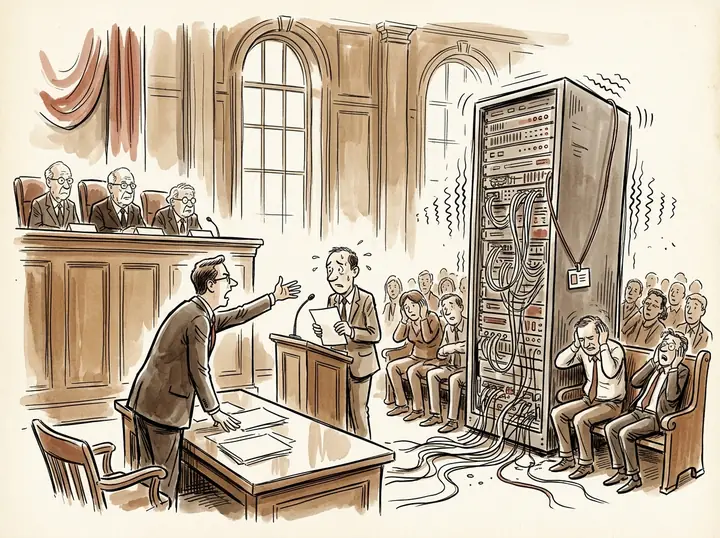
Hydro-Québec wants a separate rate for data centres drawing more than 5 megawatts, averaging 13 cents a kilowatt-hour, about double what they pay now, and its consultants expect data-centre demand to more than double between 2024 and 2030. Google’s lawyers questioned them at the energy regulator; the hearing resumes in December. The largest customer has arrived to discuss the bill in person.