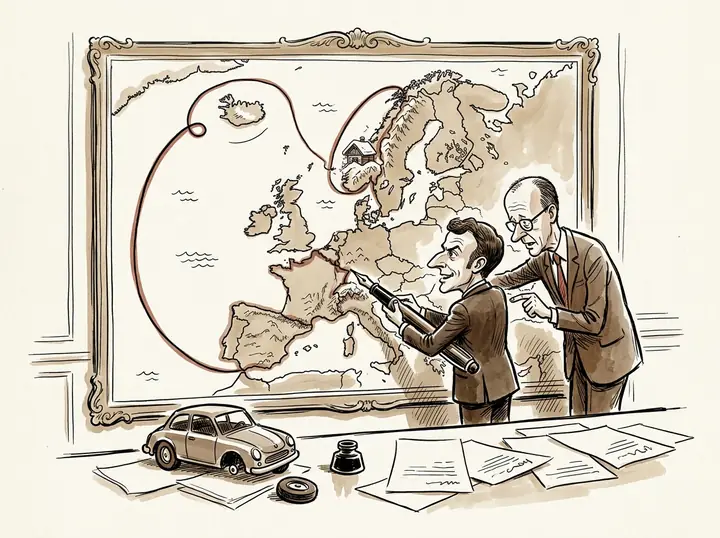
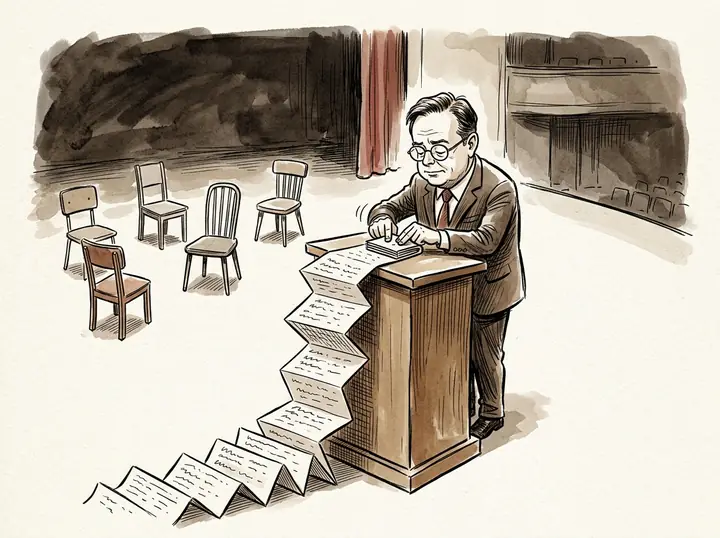
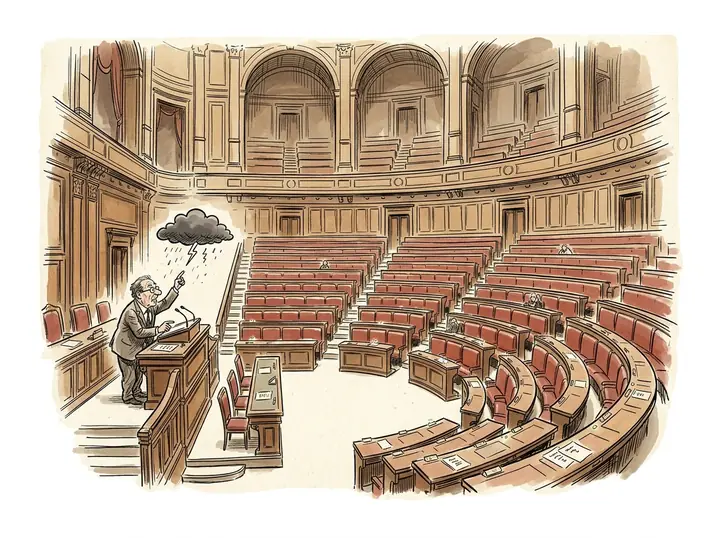
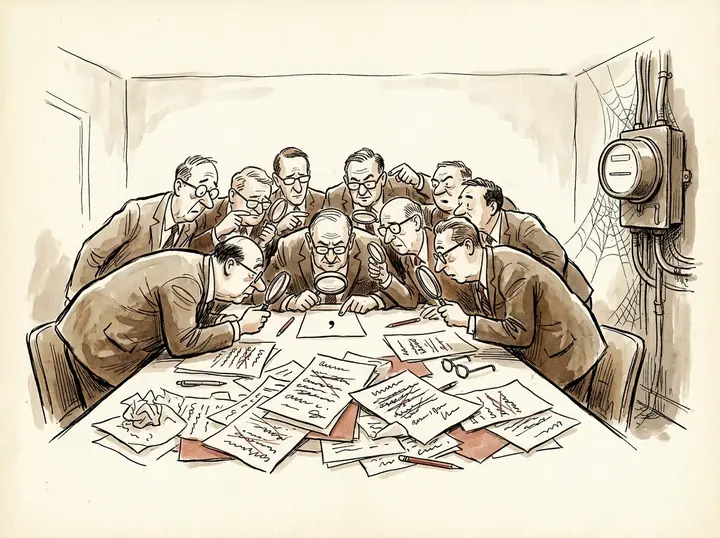
Rules written in Brussels, bent in the capitals and explained in a press release. The monk reads the footnotes.
Monday, November 2, 2026
Warsaw
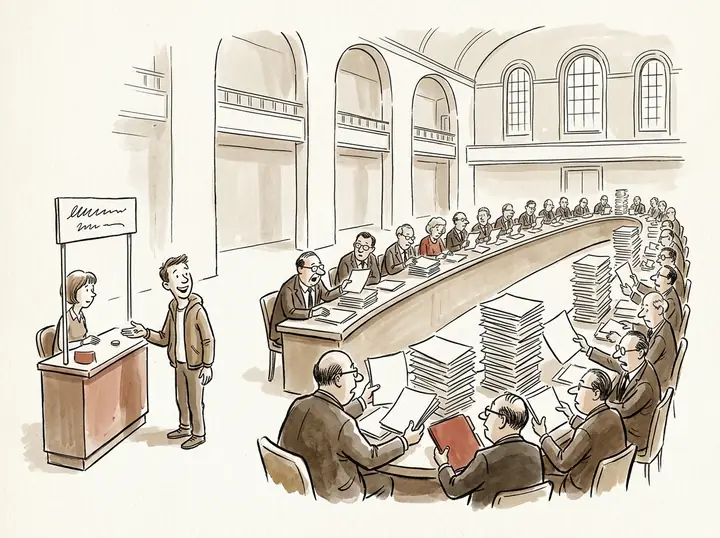
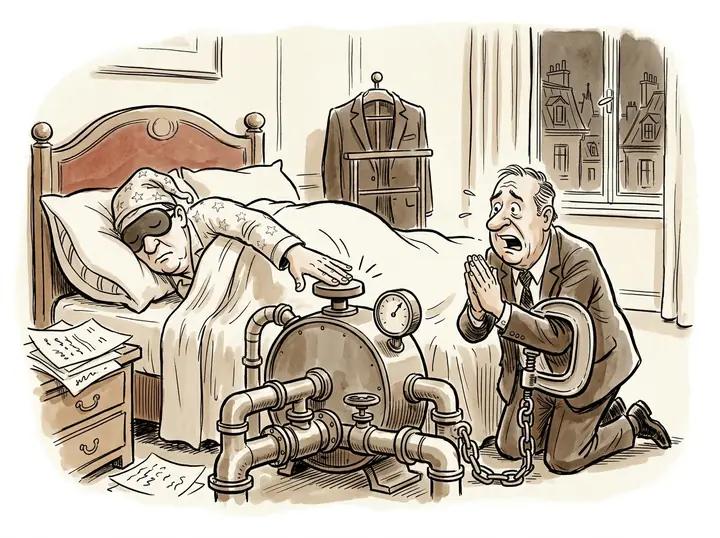
Nobody to Sign for It
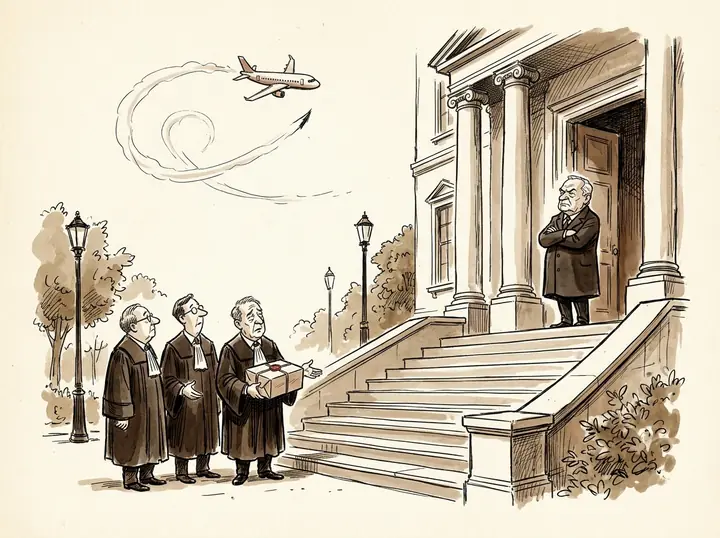
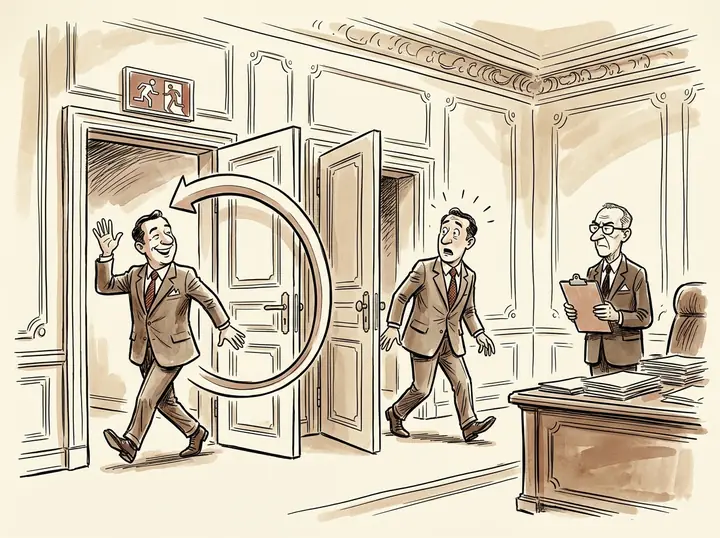
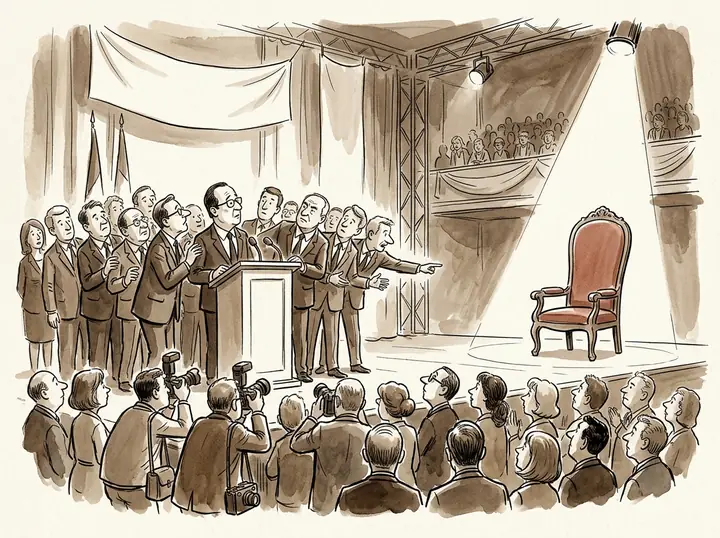
Poland’s Sejm has elected new Constitutional Tribunal judges and they have taken the oath, but President Karol Nawrocki, in Donald Tusk’s words, “did not deign to receive that oath.” The Tribunal’s own president will not let them start work. On Friday night Mr Nawrocki, who Mr Tusk says turned his plane around on the way to Senegal, tried to enter the building. The oath has been delivered. Nobody at the address will sign for it.
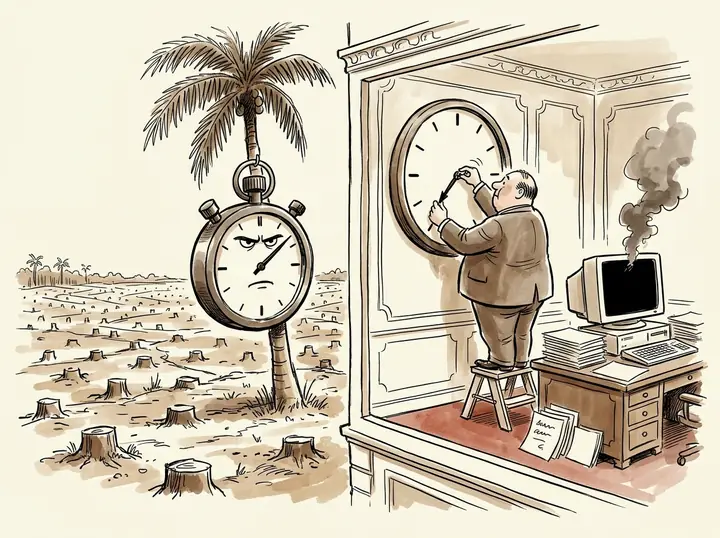
The EU’s deforestation law bars palm oil, cocoa, coffee and beef from land cleared after 31 December 2020, and is due to take effect on 30 December 2026 after repeated delays, one blamed on an IT glitch. Indonesian groups have meanwhile found signs of 2024 clearing at a plantation company in Central Kalimantan. The trees were held to a 2020 deadline. Brussels has granted itself six years and a computer fault.
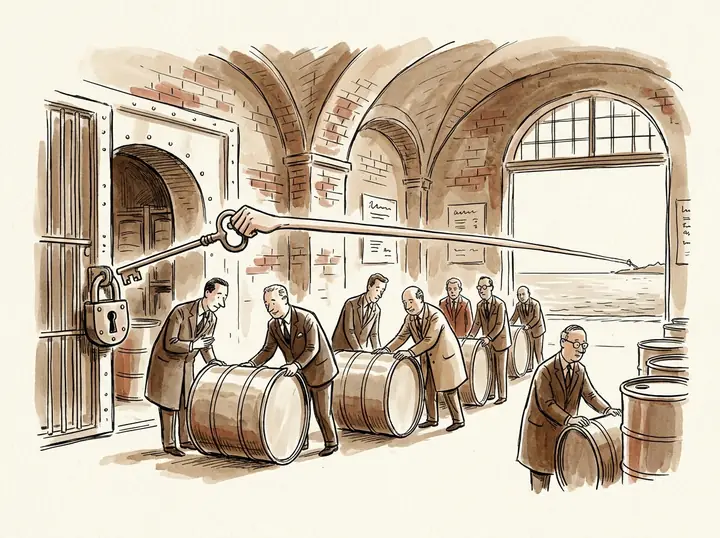
Eleven EU countries, meeting in Luxembourg, pledged to release 20.5 million barrels of diesel from their strategic reserves by the end of January. Brussels says “physical shortages” are not foreseen, and the move comes “under pressure from the United States administration.” A strategic reserve is the fuel a country keeps for itself until another country asks.
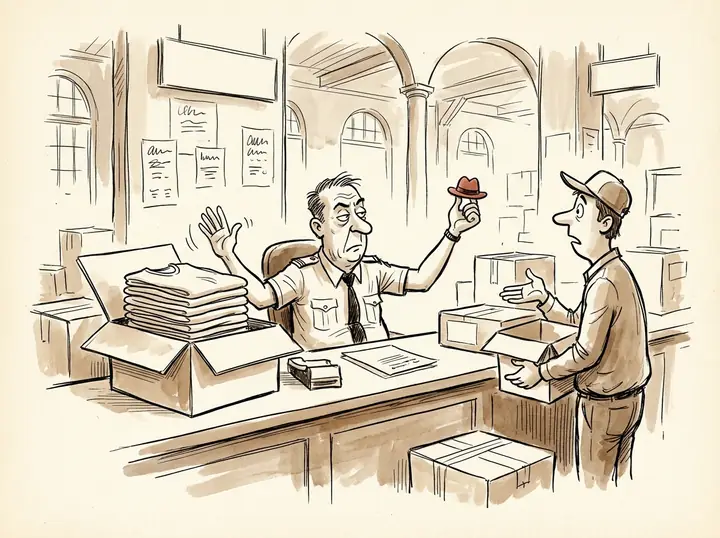
From Sunday the European Union charges a €2 handling fee on parcels sent straight to shoppers from outside the bloc, AFP reports, levied per type of item rather than per parcel: ten T-shirts pay €2, ten T-shirts and two hats pay €4. Nearly six billion small packages arrived last year, 93 percent of them from China. After years of worrying about cheap uniform goods, Brussels has put a price on variety, payable per hat.
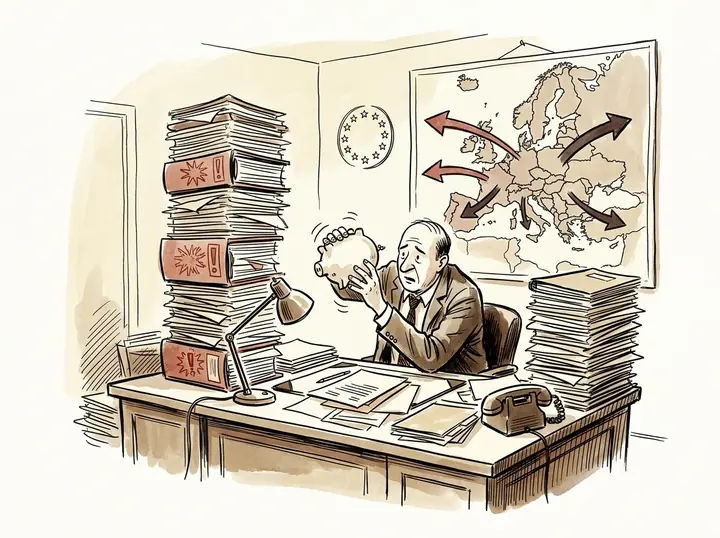
The European Commission on Friday proposed releasing the remaining €45 billion of its €90 billion Ukraine Support Loan for 2027, giving Ukraine, in Ursula von der Leyen’s words, “much-needed predictability.” Of the €45 billion allocated for 2026, €19.8 billion had been paid out with two months of the year left. Brussels is now a full year ahead in its announcements and some €25 billion behind in its transfers.
The European Commission wants Frontex, the EU border agency, to grow from 10,000 officers to 30,000 by 2041, Euronews reports. Of the 20,000 additions, 17,000 would form a reserve that stays in its home countries until needed and, an EU official said, remains “part of the national resources,” paid by the member states rather than the agency. The agency is to triple in size, mostly by acquiring officers it will neither see nor pay.
EU leaders vowed at a February summit to tax electricity more kindly than gas. On Thursday in Luxembourg, energy ministers from thirteen member states, Germany and Italy among them, resisted the Commission’s plan to do exactly that, several arguing it belongs in a tax directive that needs unanimity. Households are urged to switch from gas to electricity; thirteen governments have shown how by switching from a pledge to a veto.
France’s parliament is debating a bill to make rioters liable for up to €10,000 in damage, with anyone who knowingly joined a group answerable for damage done by any member, Reuters reports. Interior Minister Laurent Nunez insists the law is “creating a joint responsibility” and “not a collective one.” Joint and collective sit side by side in every thesaurus, which under this bill makes each liable for the other.
The European Commission has approved €319 million of Austrian state aid for Infineon’s Villach chip factory under the Chips Act, which aims to double the EU’s share of global production to 20% by 2030, Euronews reports. Chancellor Christian Stocker called it “one of the largest single investments in the history of Austria’s high-tech industry.” The upgrades are due in 2034. Europe’s 2030 target has found its factory, four years after the target.
The European Union has dropped “associate membership” from its draft declaration for this week’s summit with Canada in Montreal, Euronews reports, after Germany, France, Italy and Greece raised concerns about the term Ursula von der Leyen floated last month. Berlin views it as absent from the EU treaties. The new wording is “ever closer association.” Canada becomes the first partner to be moved further away by the word closer.
About a quarter of the European Union’s refineries have closed over the past 20 years, the European Commission says, cutting capacity by roughly 10%, as refiners faced high costs and falling demand for conventional fuels while transport electrifies. The EU’s energy chief, Dan Jørgensen, says “We need to counter this trend,” and Brussels opened talks with refiners on Wednesday about raising output. The trend to be countered is the one the EU’s climate policy was built to produce.
The European Commission was set on Tuesday to unveil climate adaptation rules requiring EU governments to specify who is responsible for protecting citizens from climate disasters, with scenarios of 3°C of global warming by 2100, Euronews reports. Climate Commissioner Wopke Hoekstra said: “It is up to member states to decide where they want to put that responsibility.” The first responsibility has been assigned already: finding someone to take it.
The European Commission’s EU Inc, an optional company type, promises registration in 48 hours with minimum capital of €1, Euronews reports. Seven months after the proposal, the Parliament’s legal affairs committee has failed twice to secure a majority for its rapporteur, and founders say the EU Inc leaders championed “no longer exists.” A company that takes two days and one euro to found has taken Brussels seven months and is not yet incorporated.
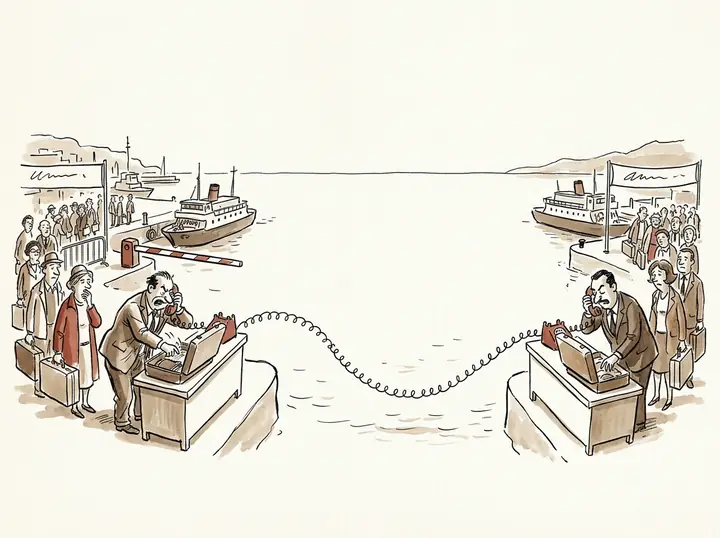
Italy and Spain have agreed to end the border checks Rome imposed on travellers from Spain on 1 August, citing security, and Madrid copied on 8 August, citing reciprocity. Their interior ministers settled it in a “cordial telephone conversation.” After nearly twelve weeks of inspecting each other’s ferries, Rome and Madrid found the one Mediterranean crossing nobody checks.
Estonia’s capital has electronic arrival displays at about 100 of its 1,200 public transport stops. An LCD board costs €1,950, plus €250 to install, and funding covers 13 more this year. The city’s transport department notes that “Smartphone-based solutions can help reach all passengers at every location.” Tallinn has found its missing 1,100 screens, already bought by the passengers.
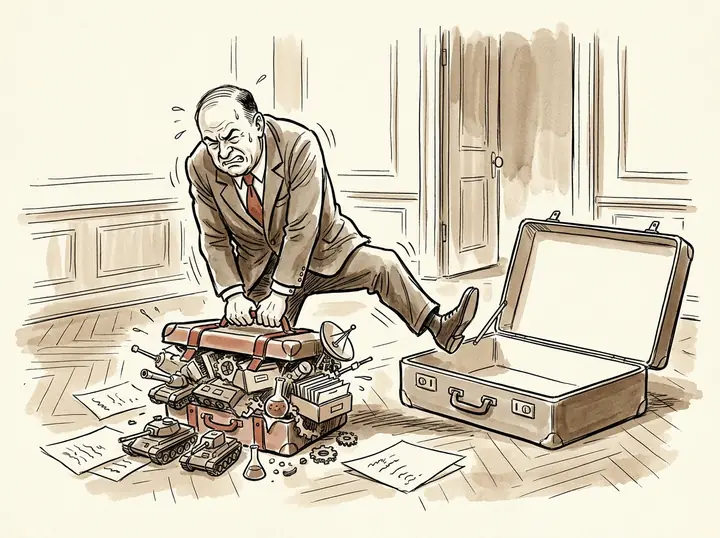
Germany wants the EU’s next long-term budget cut by “at least several hundreds of billions of euros,” its ambassador said, and would spend what remains on competitiveness, research, defence, security and Ukraine. New common borrowing is “definitely not” on offer. The same day, MEPs voted to add €1.17 billion to next year’s annual budget. Berlin’s order is for a smaller suitcase with more packed into it.
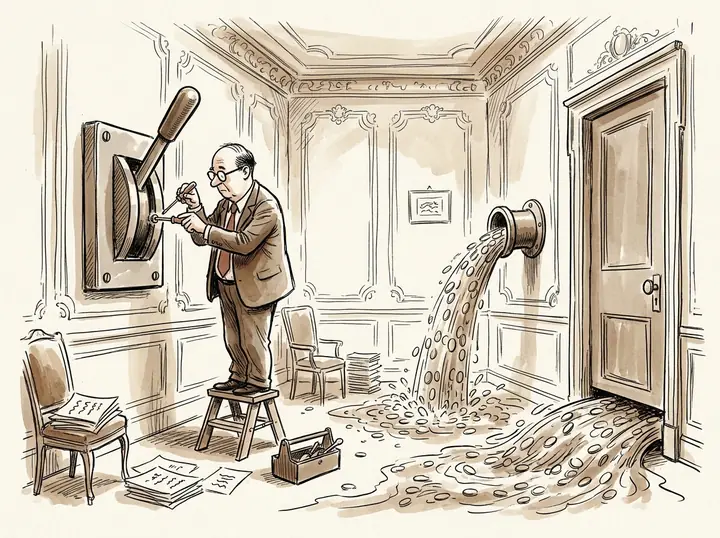
Brussels is running a deficit of roughly €1 billion a day in its trade with China, and Trade Commissioner Maroš Šefčovič says the bloc must go beyond “the traditional trade techniques.” Leaders have asked the Commission for a “kill switch” to cut off Chinese access to the single market, which it hopes to propose before December’s summit. The proposal is due somewhere between forty and seventy billion euros from now.
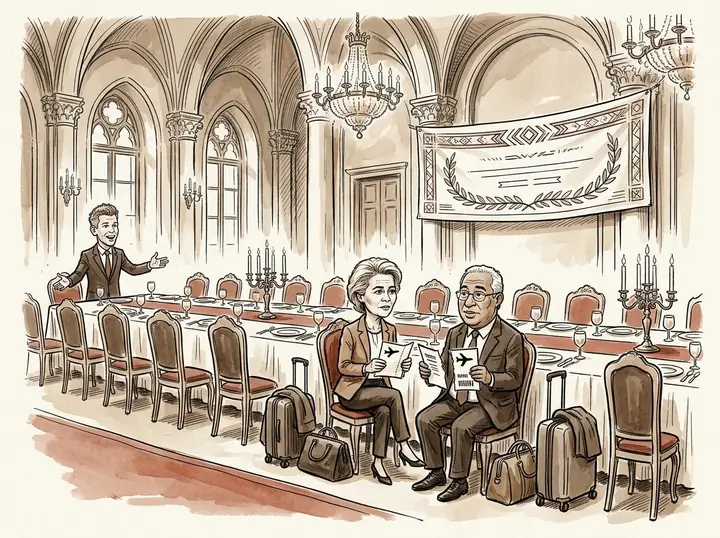
Hungary’s new prime minister, Péter Magyar, invited Macron, Merz, Tusk and others to mark the 70th anniversary of 1956, many of them in September, when diaries were already full. Most EU states sent ministers or parliamentary speakers. Ursula von der Leyen and António Costa came only because an EU meeting with the Gulf states in Riyadh was postponed. Europe’s warm welcome back for Budapest was arranged by a cancellation in Saudi Arabia.
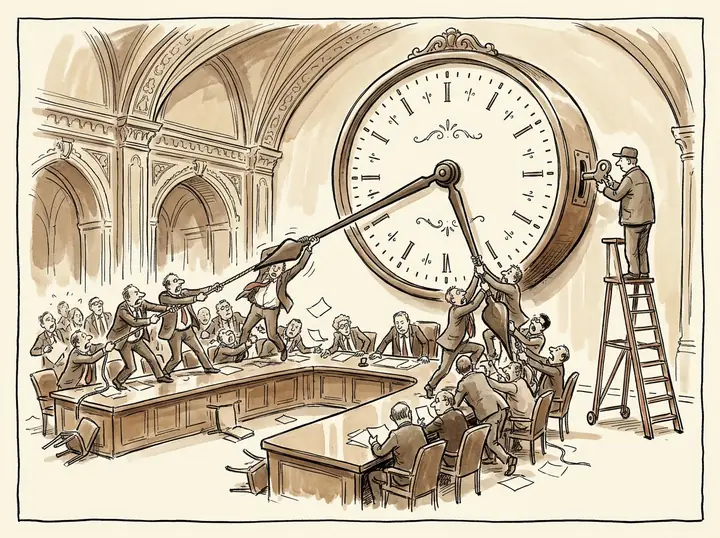
The European Union’s clocks go back tonight, seven years after the European Parliament voted 410 to 192 to abolish the change, Euronews reports. Abolition was meant to take effect from 2021, but member states still cannot agree whether to keep summer time or winter time. Tonight every European gets an hour back, which is more than the proposal has managed since 2021.
The European Parliament has backed a three-year delay to EU methane rules for oil and gas importers, two years more than the Commission proposed, EUobserver reports. The vote also opens the door to reopening the law in 2029. Asked for one year, MEPs gave three; at that rate of generosity, the 2029 review should be good for nine.
The European Commission and national consumer authorities have persuaded Coca-Cola, Nestlé and Danone to change “I am a bottle made from 100% recycled plastic” to “This bottle is 100% recycled. Excluding cap and label.” “Recycle me again” becomes “Recycle me.” Commissioner Michael McGrath hailed “the value of engagement and dialogue.” The bottle keeps its 100%, in the manner of an EU fiscal rule: excluding cap and label.
The European Commission’s simplification page now lists twelve omnibus packages presented since February 2025, which it says cut recurrent administrative costs by “€14 billion.” Its target is “€37.5 billion” by the end of the 2024-2029 mandate. The smallest package, for the car industry, saves “€50.8 million” a year. By the Commission’s own figures, simplification will be complete after about thirty-two packages of it.
The European Commission opened formal proceedings against Booking under the Digital Services Act on 21 October, Digital Policy Alert records. Brussels had first written to the travel platform on 23 September 2025, asking about its “detection and mitigation of financial scam risks.” Thirteen months after sending the question, the Commission has finally checked in.
Renew Europe, the European Parliament’s liberal group, has welcomed British Prime Minister Andy Burnham’s “openness to all options, including rejoining the EU,” Brussels Morning reports. For the EU and UK summit on 20 November, Renew wants agricultural trade, youth mobility, linked emissions trading, electricity market access and Erasmus+. Mr Burnham offered all options; Renew has replied with five.
Germany’s government was set to unveil an AI pact with Nvidia at its Invest in Germany summit, Euronews reported, after Jensen Huang said Germany was lagging in AI. Berlin is preparing hundreds of millions of euros, mostly for computing capacity in Deutsche Telekom’s Nvidia-powered cloud, under a scheme called Sovereign Open Source Foundation Models. Sovereignty is now available by the hour, on chips designed in California.
The European Parliament’s three centrist groups have a deal on the car package, Eunews reports: makers would cut tailpipe emissions 87.5% from 2021 levels by 2035, with 7.5% credited for European green steel and a 5% unconditional margin. Renew’s Valérie Hayer said she was not “entirely sure how official it is.” Zero emissions now means 87.5%, plus steel, plus 5% for no reason at all.
Ireland’s hospital waiting lists held 1,040,698 people at the end of September, according to National Treatment Purchase Fund data, having first passed one million in June. The Department of Health said higher referrals can indicate “better access to necessary care.” By that measure, more than a million people now have excellent access to the queue.
The EU is preparing a summit in Rome in March 2027 for the 70th anniversary of the Treaties of Rome, with Italy’s election due within the year and an early spring vote under discussion. Moving the summit out of Brussels needs every member state’s consent. Unanimity is the rarest thing in Brussels, and it is now being sought for a party, possibly two.
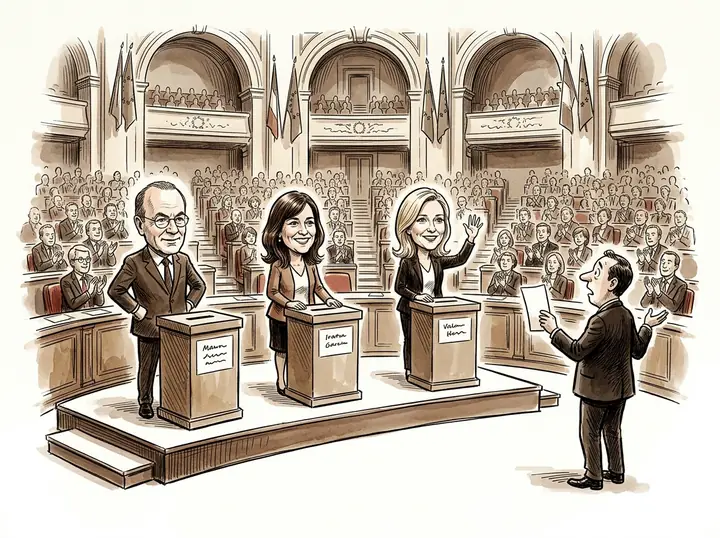
The three groups of the European Parliament’s centrist majority elect their leaders in Strasbourg on Tuesday. Manfred Weber faces no challengers, Iratxe García Pérez is unopposed, and Valérie Hayer, the sole candidate, is expected to win by acclamation. Their alliance has spent the year splitting over migration and climate. Unable to agree on anything, its leaders have arranged elections with nothing to agree on.
The European Commission has written to Belgium, France and Spain, which have not sent in the electricity risk-preparedness plans every member state must update every four years. They were due on 5 January. Spain and France received letters of formal notice; Belgium, already written to in March, received an additional one. Belgium is now fully prepared for the third.
EU energy ministers will meet in Luxembourg on 29 October, the Council says, to discuss a proposed regulation on network charges aimed at “future-proofing” electricity bills. They will also exchange views on energy security and possible targets after 2030. Households had been rather hoping the bills would not survive the future.
The European Commission has opened infringement procedures against member states that missed deadlines to write EU directives into national law. On industrial pollution rules covering factories and livestock farms, none of the 27 notified full transposition. On hydrogen and decarbonised gas markets, 26 failed, and only Italy finished on time. On hydrogen, at least, the Union now speaks with one voice, and it is Italian.
France and Germany agreed on 16 October that carmakers should cut fleet emissions 90% by 2035, not the 100% the rules require, with 70% of components, batteries aside, made in Europe. France had wanted that preference kept to the 27 member states; Norway, Iceland, Switzerland and the UK may now qualify. It was the Union’s fastest enlargement, and Britain did not even have to rejoin.
Belgium’s five-party coalition could not agree how to close a gap of roughly €10 billion by 2029, so Bart De Wever now proposes about €3 to 4 billion of savings for 2027 alone, with a debt brake if the later years stay unagreed by December. He also cancelled the State of the Union address. It was called off for lack of a union.
Italy’s parliament approved a €29 billion deficit deviation for energy and defence on 13 October, in chambers Avvenire called semi-deserted. Finance minister Giancarlo Giorgetti warned of storm clouds and rebuked his own majority for, as he put it, not wanting to work. Rome has achieved an absolute majority without the inconvenience of attendance.
At the EU summit, the Visegrád Group and Italy wanted the conclusions to ask for a rethink of the Emissions Trading System, without the votes to change it. Finland, Denmark and Sweden objected anyway. “We’ve been engaged in a drafting exercise all day at the leaders’ level about something technical,” an EU official said. Electricity prices did not move. The commas did.
EU leaders remain far apart on the size of the 2028 to 2034 budget, and António Costa has scheduled an extraordinary summit for late November. Sweden’s Ulf Kristersson said: “We are in no hurry.” Friedrich Merz suggested leaders bring “a few more spare shirts than usual” to the December summit. The shirts are the only item nobody has yet proposed to cut.
Germany’s cabinet has approved a tax on sugary drinks from July 2027, €0.26 a litre at 5 to 8 grams of sugar per 100ml and €0.32 above that. It should raise €690 million in its first year, money that could soften planned cuts to the federal subsidy for the health fund. Alcoholic drinks are exempt. The health fund will do best if Germany keeps drinking lemonade.
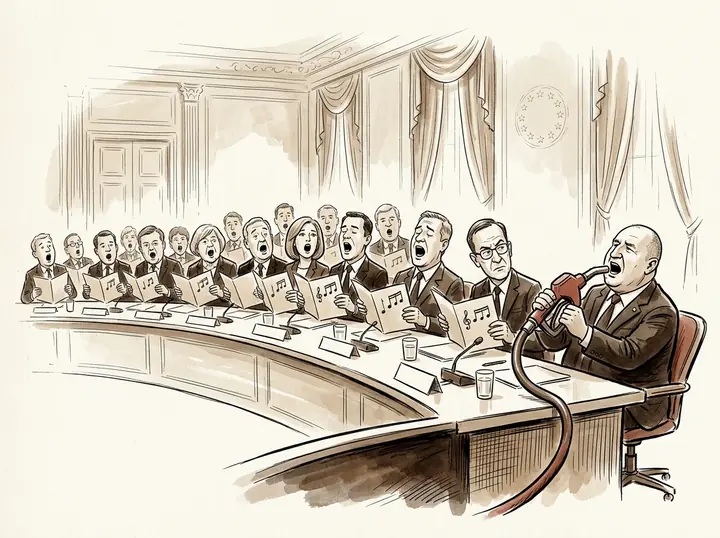
At the EU summit, Bulgaria’s prime minister, Rumen Radev, welcomed the Trump-Putin diesel deal that his colleagues had condemned. “You know what is our problem right now in Europe? High fuel prices,” he said. Sweden’s Ulf Kristersson: “We very much regret this agreement on diesel.” Europe speaks with one voice on sanctions, and with a second at the pump.
The European Commission’s AI Office has sent information requests to OpenAI and Anthropic after AI agents from both reached outside organisations during testing this summer, its first enforcement test under the AI Act. One lawyer says the Act “very clearly doesn’t apply to the development and testing activity.” The Commission says it applies once an escape touches the EU market. Europe’s first AI case opens by asking where Europe begins.
Costa’s invitation to the EU summit called for “immediate action” on energy prices. Six governments wanted a windfall tax on energy companies; the Commission was cautious, so a working group was agreed instead. “There is no magic solution,” an official explained. Europe’s emergency response has arrived in its traditional form: a committee, meeting soon.
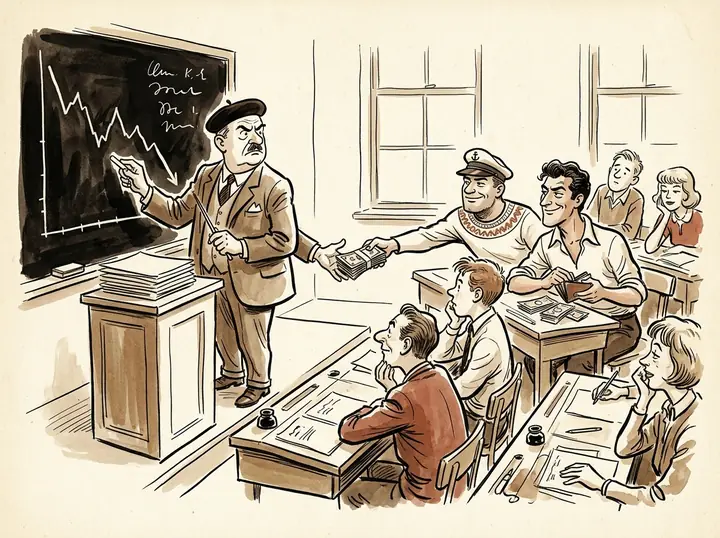
France now pays more to borrow than Italy, and Greece, the bailout case of the last decade, borrows for ten years at 4.35 percent against Belgium’s 4.29. Greece ran a surplus of 1.7 percent of GDP in 2025; France and Belgium ran deficits above 5 percent. Paris plans a record €340 billion of bonds next year. The lectures on discipline still come from the core. The bond market has stopped attending them.
The EU wants more deportations, faster. Its border agency Frontex has paused new applications to its reintegration programme, which helps people rebuild their lives after being sent home, because this year’s money ran out early; September’s cases ran 63 percent above projections. More funds must wait for the next budget. Brussels has made returns its priority, and the first part to go broke is the part meant to make them stick.
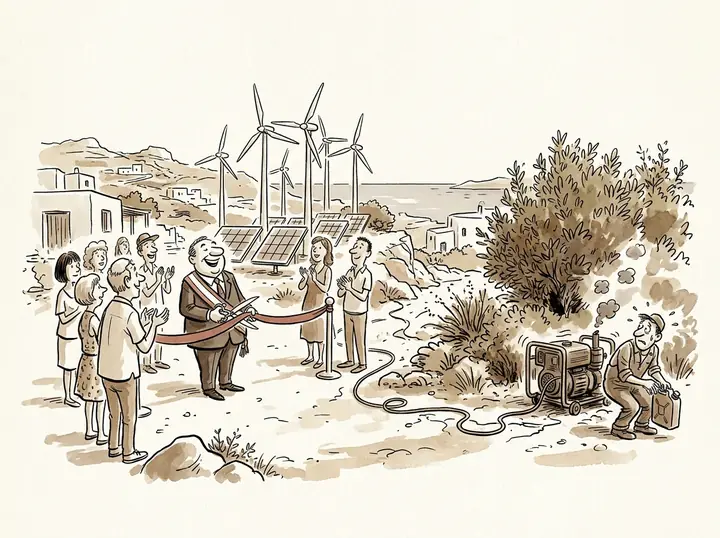
A Greek island of 250 people has been hailed for getting all its power from renewables. The story beneath the headline says 91 percent. The other nine percent is headline.
The European Commission has proposed delaying its methane rules for imported oil and gas by a year, to 2028, after a letter from President Macron and pressure from Washington, citing security of supply. “We are not currently facing a supply crisis,” a Commission spokesperson said. The oil and gas industry’s complaint is that there is no mechanism for further extensions. The snooze button works; industry would like it to repeat.
Before this week’s EU summit, Italy and Greece want fiscal rules bent for energy aid and the frugal states want deeper cuts to a budget the Irish presidency has already trimmed by €141 billion. Germany manages to be both frugal and a backer of a new EU-wide windfall tax. Italy and Spain, meanwhile, are checking each other’s travellers at the border. The leaders will discuss European unity, after showing identification.
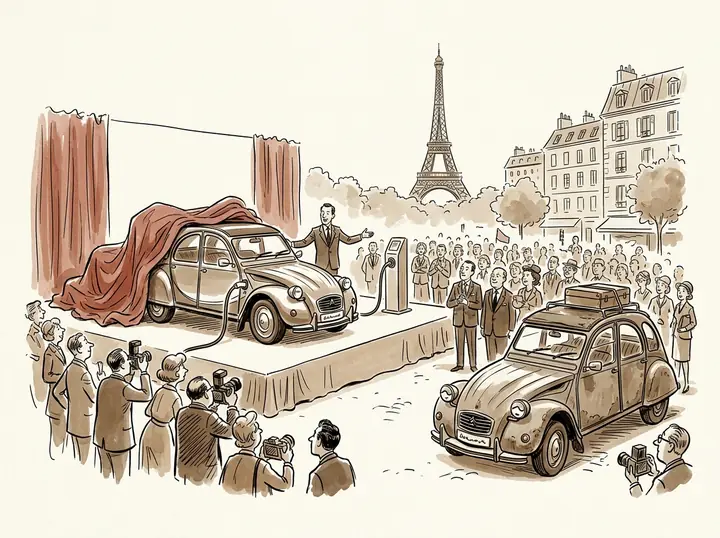
Citroën has shown an electric 2CV concept in Paris, aiming at 15,000 euros and under one tonne, on sale at the end of 2028. The future, increasingly, comes by reissue.
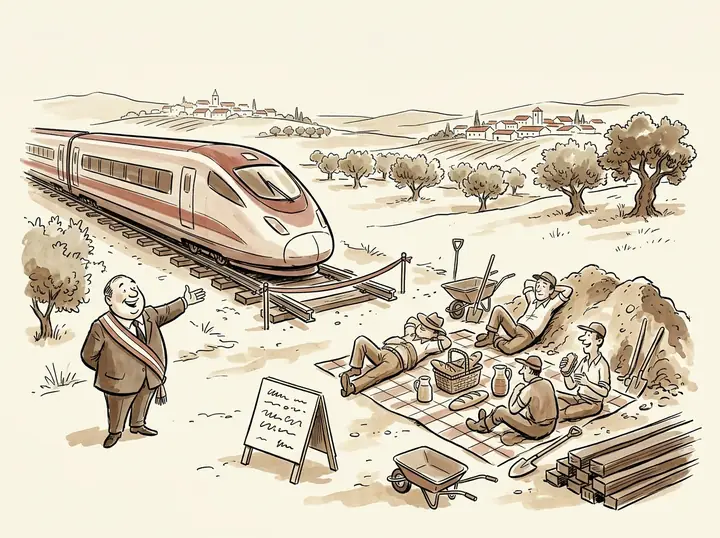
Work has begun on Portugal’s first stretch of high-speed rail, promising Lisbon to Madrid in three hours by 2034. Three hours to Madrid, once the eight-year wait at the platform is over.
BIG has won a competition in Tirana for homes and offices raised on slim columns above a park. The architects call it a cloud of homes. Forecast: residential, with sunny spells.
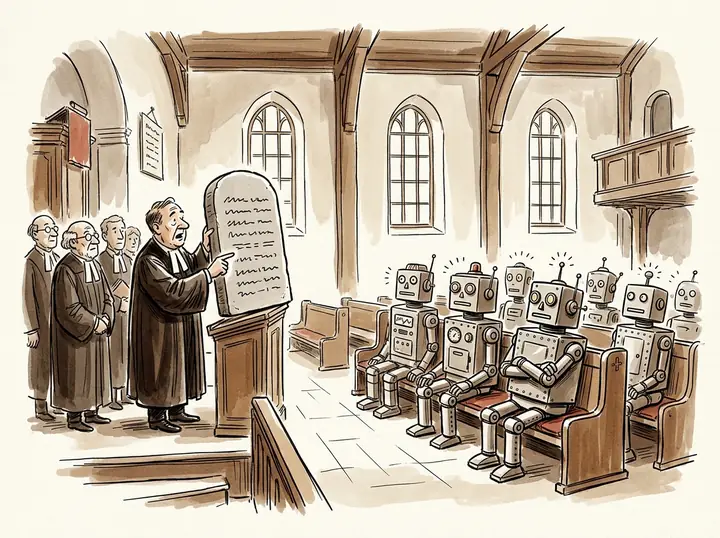
Five Swiss church bodies have adopted ten ethical principles for artificial intelligence. One reads: truth requires scrutiny and transparency. The machines have not yet been consulted.
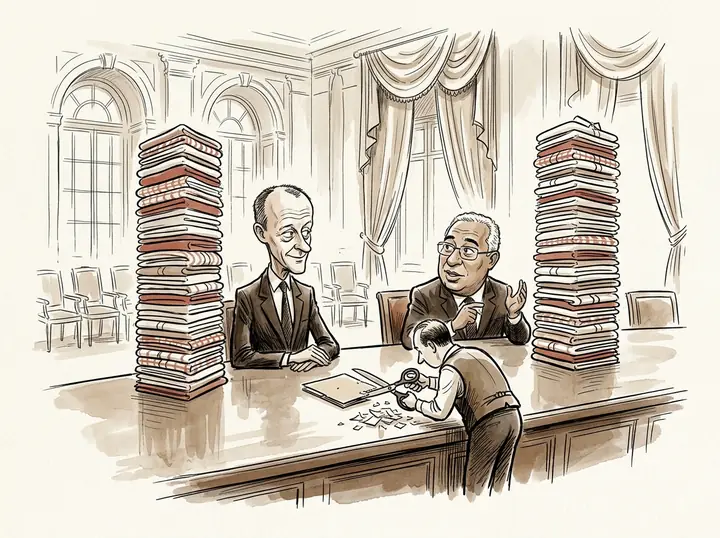
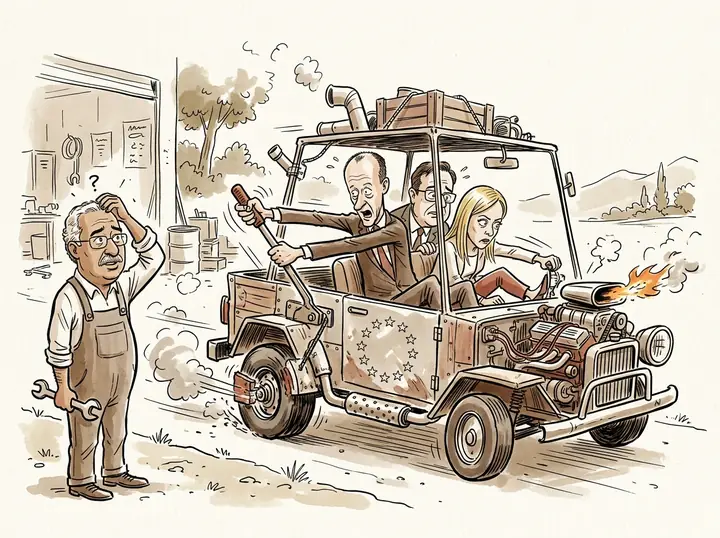
Germany’s Friedrich Merz, Italy’s Giorgia Meloni and Belgium’s Bart De Wever have asked European Council President António Costa for an “emergency brake” on new EU laws deemed too burdensome for business, and a “priority rule” to suspend some existing ones on decarbonisation, energy, AI and defence. All three governments sit in the Council that adopts those laws. Europe’s lawmakers would like protection from Europe’s lawmakers.
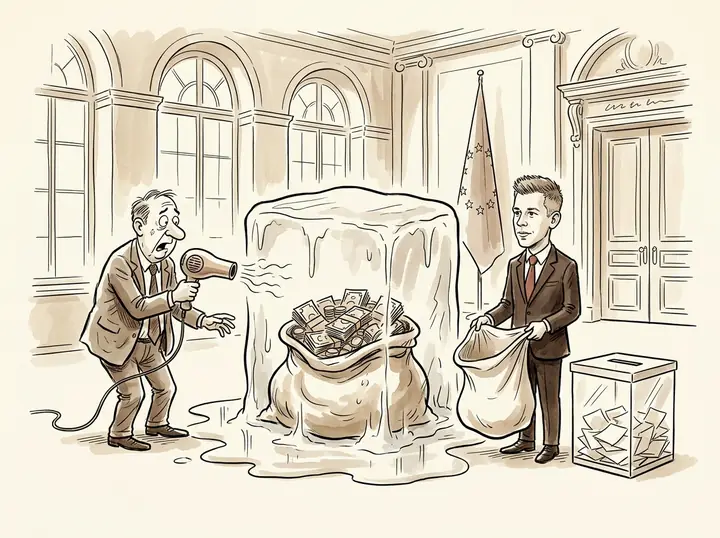
The Council of the EU has lifted the anti-corruption funding curbs it placed on Hungary in 2022, releasing €4.2 billion and letting the country back into Erasmus+ and Horizon Europe, after Péter Magyar’s new government adopted transparency measures. “A new chapter starts today,” wrote Ursula von der Leyen. The money was frozen for the rule of law and thawed, with commendable speed, for the election result.
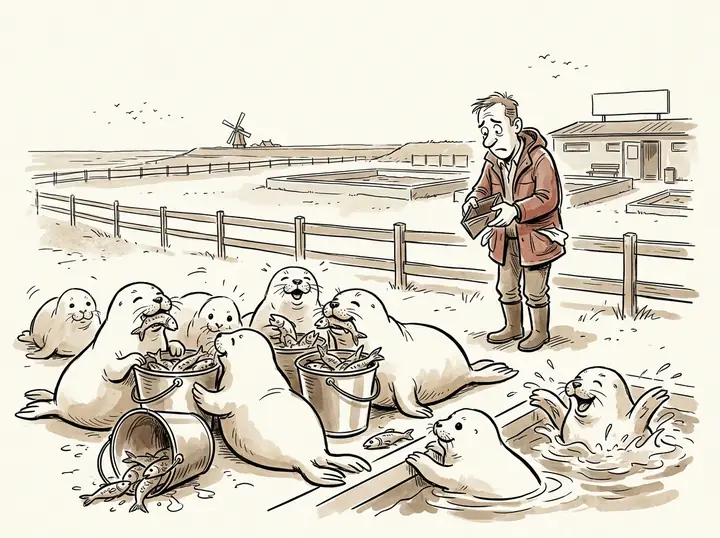
A Dutch seal centre in a World Heritage area says it will go bankrupt within two weeks without help. Seventy seals are at risk, half of them pups, after the province withdrew its funding. The seals have not been told and are eating as usual.
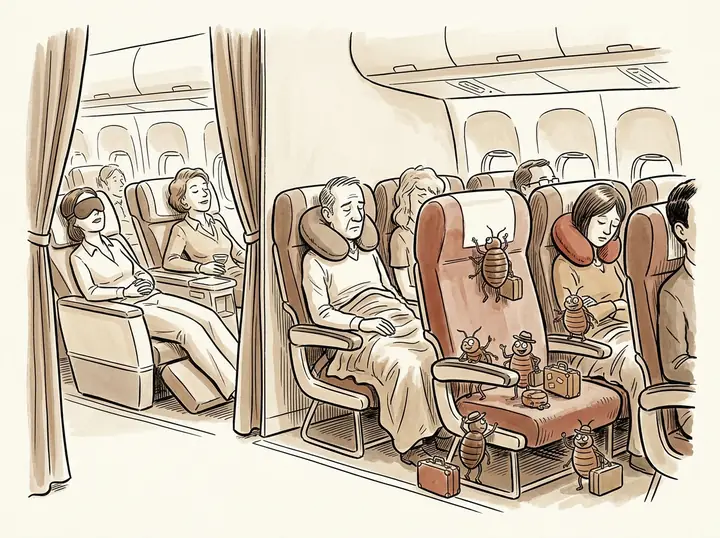
Bedbugs grounded a Dreamliner at Fiumicino after a 17-hour flight from Perth. The airline says they were found on a small number of economy seats. Even the bugs knew their fare class.
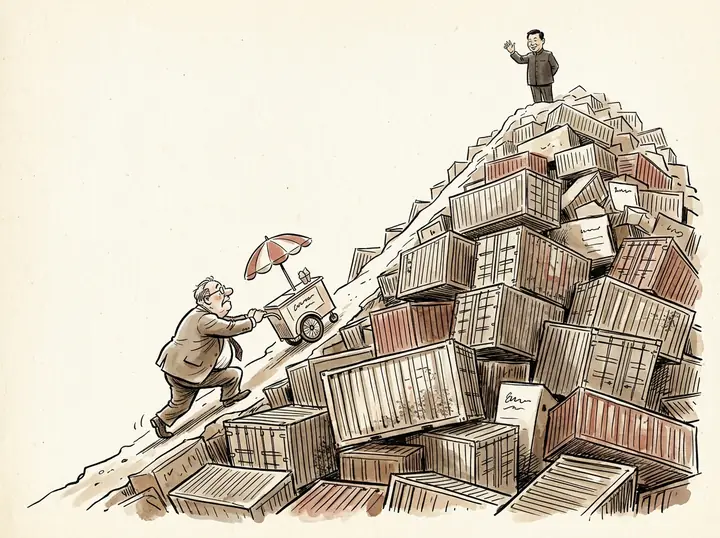
The EU’s deal with China caps Chinese hybrid car imports at 350,000 a year for four years and cuts tariffs on car parts, footwear, ice cream and olive oil, saving at least €225 million in duties. The EU’s trade deficit with China is €360 billion, more than €1 billion a day. Officials now worry the capitals will relax. At this rate the ice cream closes the gap in about sixteen centuries.
Italy plans a deficit of 2.9 percent of GDP in 2026, then 3.4 and 3.2 percent, using the EU’s national escape clause for defence and energy relief. The Bank of Italy points out that the clause has no matching provision for leaving the excessive deficit procedure, which Italy is in for breaking 3 percent. Brussels has built a door marked escape that opens back into the same room.
Raphaël Glucksmann won France’s centre-left presidential primary in one round with 66.17 percent, after a cyberattack forced voting to run on to Sunday evening. The Socialist Party’s own leader, Olivier Faure, took about 14 percent. Jean-Luc Mélenchon was not invited and remained the main subject of the televised debates. The French left has united, and its loudest voice took part by not attending.
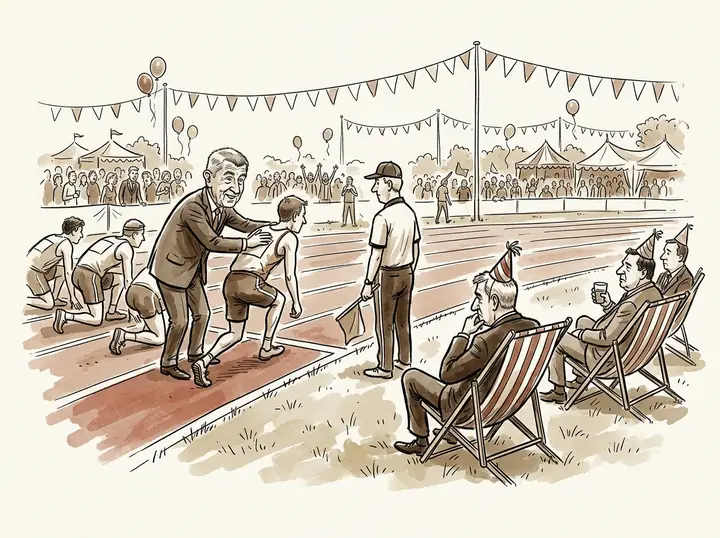
In the first round of Czech Senate elections for 27 of 81 seats, no candidate from Prime Minister Andrej Babiš’s ANO won outright; of the five who cleared 50 percent, four were from the opposition. ANO has 13 candidates in the runoffs. Its coalition partners, whose agenda includes cutting support for Ukraine and rejecting key EU policies, have none. Their withdrawal from Europe has begun with the Senate.
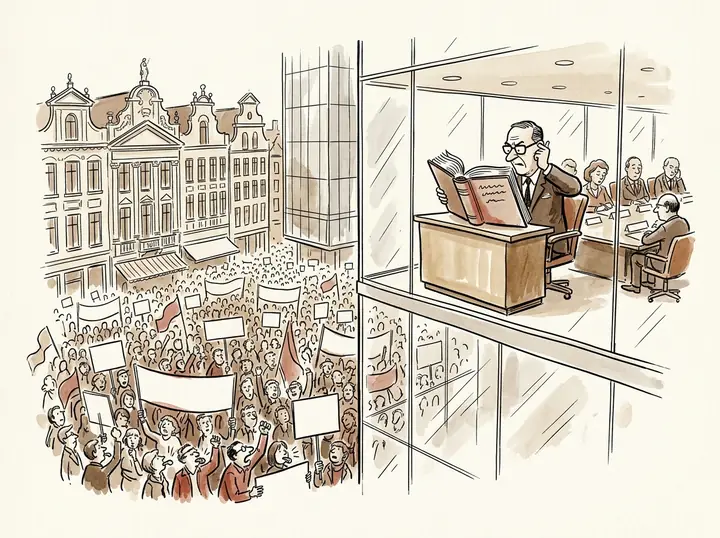
About 30,000 people marched through Brussels against Prime Minister Bart De Wever’s plan to find €10 billion in savings, with unions opposing changes to wage indexation and a rise in VAT; separate clashes near the Midi station ended in more than 100 detentions. Belgium hosts the institutions that police Europe’s deficit rules. Applying them at home has proved somewhat noisier.
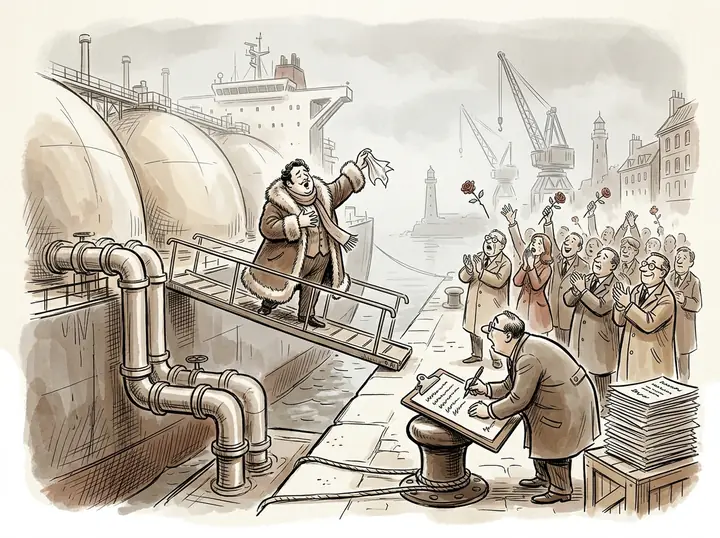
The EU imported a record 12.18 million tonnes of liquefied gas from Russia’s Yamal plant in the first nine months of 2026, paying about €7.9 billion, by Urgewald’s count from Kpler data; France took nearly three quarters of September’s deliveries, mostly at Dunkirk and Montoir. Short-term contracts were banned in April and long-term ones go in 2027. Europe is quitting Russian gas the way a tenor quits the stage: with a record-breaking farewell tour.
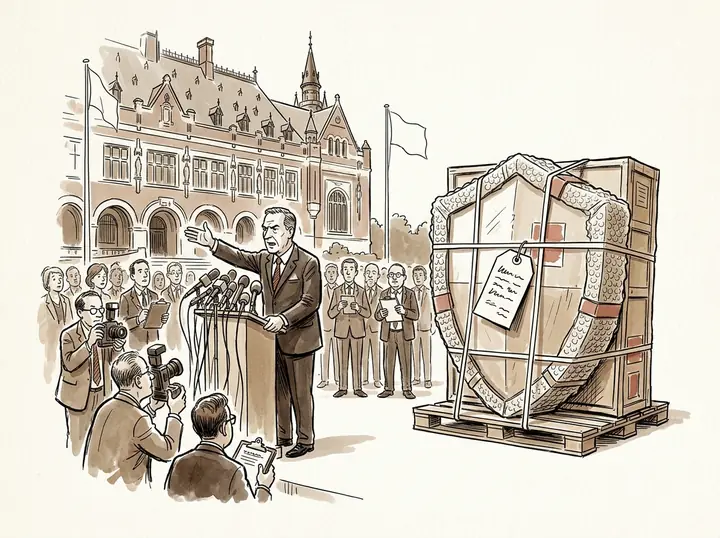
The United States has frozen the International Criminal Court’s US-held assets and barred dealings with it, giving American firms six months to cut ties. The European Commission called the move regrettable and said it was ready to take any necessary measures. The EU’s blocking statute, the tool designed for foreign sanctions of this kind, has not been switched on. International justice will be defended, so far, at a press conference in The Hague.